The 'New World Order'

 
Home Page 2 Page 3 Page 4 Page 5 Page 6 Page 7 God's Plan
The New World Order

What Is the Sovereignty Of God?

When we say God is sovereign, we mean he is powerful and authoritative to the extent of being able to override all other powers and authorities. That’s one's effort at a definition. Nothing can successfully stop any act or any event or design or purpose that God intends to certainly bring about. That’s the definition.

Is it biblical? That’s the question. Because what we think really doesn’t matter. If it’s a reflection of what the Bible says, it matters a lot.

Nothing Can Stop God

We can argue that nothing can thwart or stop God’s purposes. When all is said and done, Job says, “I know that you can do all things, and that no purpose of yours can be thwarted” (Job 42:2). One must think that’s just about the best definition of sovereignty in the Bible. Daniel 4:35 states, “He does according to his will among the host of heaven and among the inhabitants of the earth; and none can stay his hand or say to him, ‘What have you done?’” That is, nobody can stop it.

Here’s the positive way of saying that he will accomplish all his will: “For I am God, and there is no other; I am God, and there is none like me.” Then he says this in the next verse; it is God talking about his goodness: “My counsel shall stand, and I will accomplish all my purpose.” (Isaiah 46:9–10). There’s nothing that he purposes that he does not accomplish. Nothing can stop him, and he does it all.

Then you have Ephesians 1:11, one of the most sweeping statements of sovereignty in the Bible: “. . . according to the purpose of him who works all things according to the counsel of his will.” Whatever happens, it accords with the counsel of God’s will.

Limitless Sovereignty

Then, you can test those general statements about God’s sovereignty with lots and lots of examples.  The Bible has lots of examples. The Bible talks about God being sovereign over many specific places: seemingly random events, nature, animals, nations, human decisions.

Seemingly Random Events

He is sovereign over seemingly random events. It says in Proverbs 16:33 that “the lot is cast into the lap, but its every decision is from the Lord.” So something as random as rolling dice or casting a lot is in God’s control.

Nature

He is sovereign over nature.

Whatever the Lord pleases, he does, in heaven and on earth, in the seas and all deeps. He it is who makes the clouds rise at the end of the earth, who makes lightnings for the rain and brings forth the wind from his storehouses. (Psalm 135:6–7)

Or we read in Matthew 8:27, “What sort of man is this, that even winds and sea obey him?” So the winds and sea, they do his bidding.

Animals

He is sovereign over animals. “Are not two sparrows sold for a penny? And not one of them will fall to the ground apart from your Father” (Matthew 10:29).

 One should think that’s Jesus’s way of reaching for the most minute, seemingly insignificant thing in the world. When a little bird drops out of a tree in the midst of some jungle somewhere that nobody knows about but him, he decides when it will fall.

Nations

He is sovereign over the nations. This is at the other end of magnitude from the birds in the last example. The Bible says, “You rule over all the kingdoms of the nations. In your hand are power and might, so that none is able to withstand you” (2 Chronicles 20:6). No nation does anything that God does not purpose.

We also read, “The Lord brings the counsel of the nations to nothing; he frustrates the plans of the peoples. The counsel of the Lord stands forever” — I love these sentences! — “the plans of his heart to all generations” (Psalm 33:10–11).

Human Decisions

He is sovereign over every single human decision. We have all kinds of thinking that we do, but in the end, the Lord decides.

The plans of the heart belong to man, but the answer of the tongue is from the Lord. (Proverbs 16:1)

The heart of man plans his way, but the Lord establishes his steps. (Proverbs 16:9)

Many are the plans in the mind of a man, but it is the purpose of the Lord that will stand. (Proverbs 19:21)

The king’s heart is a stream of water in the hand of the Lord; he turns it wherever he will. (Proverbs 21:1)

This next sentence, coming from Genesis, ought to be written like a banner over every evil and sin that’s ever committed: “As for you,” Joseph says to his brothers who sold him into slavery, “you meant evil against me, but God meant it for good, to bring it about that many people should be kept alive, as they are today” (Genesis 50:20). So the very same thing that is evil in someone’s intention — the same event God intends for good.

Then you could go to Psalm 115:3 and read, “Our God is in the heavens; he does all that he pleases.” So my answer is yes, it is biblical to say that God is sovereign and to mean by that that he has such power and such authority that nothing can successfully stop any act or purpose which God intends to certainly bring about.

Two Big Truths

What are the big things to see and grasp?” We should mention just two big things.

First, the sovereignty of God is governed by his wisdom. “Oh, the depth of the riches and wisdom and knowledge of God! How unsearchable are his judgments and how inscrutable his ways!” (Romans 11:33). Everything that is unsearchable and inscrutable to us is governed by the deepest divine wisdom. God never does anything or allows anything whimsically — that is, in a meaningless way or randomly or without an infinitely wise purpose. That’s huge. That is a big thing that we must come to terms with when we think about God’s sovereignty.

Second, his sovereignty is governed by his justice and his mercy. “For the Lord is a God of justice; blessed are all those who wait for him” (Isaiah 30:18). Or, “Is there injustice on God’s part? By no means!” (Romans 9:14). God never, never wrongs anyone. All that he does is righteous and just, but even justice is not the final and highest aim of God’s wisdom. The ultimate aim is that he be glorified for his mercy and his grace toward undeserving rebels. He sovereignly planned and accomplished salvation for sinners by the death of his Son. Because of that, we get a quote like this, from Romans 15:9: “And in order that the Gentiles [the nations] might glorify God for his mercy.”

Those, it seems to me, are the big things to grasp about God’s sovereignty. First, it is unstoppable power and authority over all things, including the human will. Second, it is all in accord with infinite wisdom, infinite justice, infinite mercy through Jesus Christ.


Also:


The Sovereignty of God

‘I Will Accomplish All My Purpose’

In Isaiah 46:9, God says “I am God, and there is no other; I am God, and there is none like me.” So the issue in this text is the uniqueness of God among all the beings of the universe. He is in a class by himself. No one is like him. The issue is what it means to be God. When something is happening, or something is being said or thought, and God responds, “I am God!” (which is what he does in verse 9), the point is: You’re acting like you don’t know what it means for me to be God.

What It Means to Be God

So he tells them what it means to be the one and only God. He tells them what’s at the heart of his God-ness. Verse 10: What it means for me to be God is that “I declare the end from the beginning and from ancient times things not yet done.” Two statements:

I declare how things turn out long before they ever happen.

I declare not just natural events but human events — doings, things that are not yet done.

Verse 10: “I declare from ancient times things not yet done.” I know what these doings will be long before they are done.

Now at this point you might say, “What we have here is the doctrine of God’s foreknowledge, not the doctrine of his sovereignty.” And that is right, so far. But in the next half of the verse, God tells us how he foreknows the end and how he foreknows the things not yet done. Verse 10b: “I declare the end from the beginning and from ancient times things not yet done, saying, ‘My counsel shall stand, and I will accomplish all my purpose.’” When he “declares” ahead of time what will be, here’s how he “declares” it, or “says” it: “saying, ‘My counsel shall stand, and I will accomplish all my purpose.’”

In other words, the way he declares his foreknowledge is by declaring his fore-counsel and his fore-purposing. When God declares the end long before it happens, what he says is, “My counsel shall stand.” And when God declares things not yet done long before they are done, what he says is, “I will accomplish all my purpose.”

Which means that the reason God knows the future is because he plans the future and accomplishes it. The future is the counsel of God being established. The future is the purpose of God being accomplished by God. Then, the next verse, verse 11b, gives a clear confirmation that this is what he means: “I have spoken, and I will bring it to pass; I have purposed, and I will do it.” In other words, the reason my predictions come true is because they are my purposes, and because I myself perform them.

God Purposes All Things

God is not a fortune-teller, a soothsayer, a mere predictor. He doesn’t have a crystal ball. He knows what’s coming because he plans what’s coming, and he performs what he plans. Verse 10b: ‘My counsel shall stand, and I will accomplish all my purpose.’ He does not form purposes and wonder if someone else will take responsibility to make them happen. “I will accomplish all my purpose.”

So, based on this text, here’s what I mean by the sovereignty of God: God has the rightful authority, the freedom, the wisdom, and the power to bring about everything that he intends to happen. And therefore, everything he intends to come about does come about. Which means, God plans and governs all things.

When he says, “I will accomplish all my purpose,” he means, “Nothing happens except what is my purpose.” If something happened that God did not purpose to happen, he would say, “That’s not what I purposed to happen.” And we would ask, “What did you purpose to happen?” And he would say, “I purposed this other thing to happen, which didn’t happen.” To which we would all say, then, “But you said in Isaiah 46:10, ‘I will accomplish all my purpose.’” And he would say, “That’s right.” Therefore, what God means in Isaiah 46:10 is that nothing has ever happened, or will ever happen, that God did not purpose to happen. Or to put it positively: Everything that happened or will happen is purposed by God to happen.

Now if that seemed a little too complicated, let’s do something simpler. Let’s confirm this view of God’s sovereignty by looking at some other passages of Scripture.

A Statement on Sovereignty

We should believe that God, from all eternity, in order to display the full extent of his glory for the eternal and ever-increasing enjoyment of all who love him, did, by the most wise and holy counsel of his will, freely and unchangeably ordain and foreknow whatever comes to pass.

We should believe that God upholds and governs all things — from galaxies to subatomic particles, from the forces of nature to the movements of nations, and from the public plans of politicians to the secret acts of solitary persons — all in accord with his eternal, all-wise purposes to glorify himself, yet in such a way that he never sins, nor ever condemns a person unjustly; but that his ordaining and governing all things is compatible with the moral accountability of all persons created in his image.

We should believe that God’s election is an unconditional act of free grace which was given through his Son Christ Jesus before the world began. By this act God chose, before the foundation of the world, those who would be delivered from bondage to sin and brought to repentance and saving faith in his Son Christ Jesus.

So this is the way the sovereignty of God is expressed. Now, consider the extent of support for this in the Bible, and then some closing implications, and why it is so precious to us.

Facing a Crucial Question

We must face a choice: Will we turn from our objections and praise his power and grace, and bow with glad submission to the absolute sovereignty of God? Or, will we stiffen our neck and resist him? Will we see in the sovereignty of God our only hope for life in our deadness, our only hope for answers to our prayers, our only hope for success in our evangelism, our only hope for meaning in our suffering? Or, will we insist that there is a better hope, or no hope? That’s the question we will face.

Let it be said loud and clear that nothing you are about read, as paradoxical as it may seem to our finite minds, contradicts the real moral responsibility that humans, and angels, and demons have to do what God commands. God has given us a will. How we use it makes our eternal difference.

Let’s divide God’s sovereignty into his governing natural events on the one hand, and human events on the other. In the first case, he is governing physical processes. And in the second case, he is governing human choices.

God’s Sovereignty Over Nature

He is sovereign over what appears the most random acts in the world. Proverbs 16:33 says, “The lot is cast into the lap, but its every decision is from the Lord.” In modern language we would say, “The dice are rolled on the table and every play is decided by God.” There are no events so small that he does not rule for his purposes. “Are not two sparrows sold for a penny?” Jesus said, “And not one of them will fall to the ground apart from your Father. But even the hairs of your head are all numbered” (Matthew 10:29–30). Every role of the dice in Las Vegas, every tiny bird that falls dead in the thousand forests — all of this is God’s command.

From worms in the ground to stars in the galaxies, God governs the natural world. In the book of Jonah, God commands a fish to swallow (1:17), God commands a plant to grow (4:6), and commands a worm to kill it (4:7). And far above the life of worms, the stars take their place and hold their place at God’s command. Isaiah 40:26 says, “Lift up your eyes on high and see: who created these? He who brings out their host by number, calling them all by name, by the greatness of his might, and because he is strong in power not one is missing.”

How much more, then, the natural events of this world — from weather, to disasters, to disease, to disability, to death.

Psalm 147:15–18 says, “He sends out his command to the earth; his word runs swiftly. He gives snow like wool; he scatters hoarfrost like ashes. He hurls down his crystals of ice like crumbs; who can stand before his cold? He sends out his word, and melts them; he makes his wind blow and the waters flow.” Job 37:11–13 says, “He loads the thick cloud with moisture; the clouds scatter his lightning. They turn around and around by his guidance, to accomplish all that he commands them on the face of the habitable world. Whether for correction or for his land or for love, he causes it to happen.”

God Could Have Stilled the Winds

So snow and rain, and cold, and heat, and wind are all the work of God. So when Jesus finds himself in the middle of a raging storm, he merely speaks, “Peace! Be still!” And as the text says, “the wind ceased, and there was a great calm” (Mark 4:39). There is no wind, no storm, no hurricane, no cyclone, no typhoon, no monsoon, no tornado over which Jesus can say “Be still,” and it will not obey. Which means, that if it blows, he intends for it to blow. “Does disaster come to a city, unless the Lord has done it?” (Amos 3:6). All Jesus has to do with any hurricane is say, “Be still,” and there would have been no damage and no loss of life.

And what about the other sufferings of this life? “The Lord said to Moses, ‘Who has made man’s mouth? Who makes him mute, or deaf, or seeing, or blind? Is it not I, the Lord?’” (Exodus 4:11). And Peter said to the suffering saints in Asia Minor, “Let those who suffer according to God’s will entrust their souls to a faithful Creator while doing good” (1 Peter 4:19). “It is better to suffer for doing good, if that should be God’s will, than for doing evil” (1 Peter 3:17).

Whether we suffer from disability, or from the evil of others, God is the one who ultimately decides — and whether we live or die. Deuteronomy 32:39 says, “There is no god beside me; I kill and I make alive; I wound and I heal; and there is none that can deliver out of my hand.” Or consider James 4:13–15: “Come now, you who say, ‘Today or tomorrow we will go into such and such a town and spend a year there and trade and make a profit’ — yet you do not know what tomorrow will bring. What is your life? For you are a mist that appears for a little time and then vanishes. Instead, you ought to say, ‘If the Lord wills, we will live and do this or that.’” Or, as Job says, “Naked I came from my mother’s womb, and naked shall I return. The Lord gave, and the Lord has taken away; blessed be the name of the Lord” (Job 1:21).

The roll of the dice, the fall of a bird, the crawl of a worm, the movement of stars, the falling of snow, the blowing of wind, the loss of sight, the suffering of saints, and the death of all — these are included in the word of God: “I will accomplish all my purpose” — from the smallest to the greatest.

God’s Sovereignty in Human Actions

And when we turn from the natural world to the world of human actions and human choice, God’s sovereignty is just as extensive. But let there be no man-exalting illusion as though mere human beings will be the decisive cause in any human victory or loss. God alone will have that supreme role. “He changes times and seasons; he removes kings and sets up kings; . . . the Most High rules the kingdom of men and gives it to whom he will” (Daniel 2:21; 4:17).

Our rulers are not sovereign. They will be governed. And we should pray for them that they would know this: “The king’s heart is a stream of water in the hand of the Lord; he turns it wherever he will” (Proverbs 21:1). And when he engages in foreign affairs he will not be decisive. God will. “The Lord brings the counsel of the nations to nothing; he frustrates the plans of the peoples. The counsel of the Lord stands forever, the plans of his heart to all generations” (Psalm 33:10–11).

When nations came to do their absolute worst, namely the murder of the Son of God, Jesus Christ, they had not slipped out of God’s control, but were doing his sweetest bidding at their worst moment: “Truly in this city there were gathered together against your holy servant Jesus, whom you anointed, both Herod and Pontius Pilate, along with the Gentiles and the peoples of Israel, to do whatever your hand and your plan had predestined to take place” (Acts 4:27–28). The worst sin that ever happened was in God’s plan, and by that sin, sin died.

Boasting Is Excluded

And so our salvation was secured on Calvary under the sovereign hand of God. And, if you are a believer in Jesus, if you love him, you are a walking miracle. God granted you repentance (2 Timothy 2:24–25). God drew you to Christ (John 6:44). God revealed himself to you (Matthew 11:27). God gave you the gift of faith. “By grace you have been saved through faith. And this is not your own doing; it is the gift of God, not a result of works, so that no one may boast” (Ephesians 2:8–9). The sovereignty of God in our salvation excludes boasting.

There may have been a hundred horrible things in your life. But if today you are moved to treasure Christ as your Lord and Savior, you can write over every one of those horrors the words of Genesis 50:20: Satan, “you meant evil against me, but God meant it for good.”

 To conclude therefore consider the words of Paul in Ephesians 1:11, “God works all things according to the counsel of his will.” All things — from the roll of the dice, to the circuits of stars, to the rise of presidents, to the death of Jesus, to the gift of repentance and faith.

Why God’s Sovereignty Matters

What then does this mean for us? Why is this precious to us?

Let us stand in awe of the sovereign authority and freedom and wisdom and power of God.

Let us never trifle with life as though it were a small or light affair.

Let us marvel at our own salvation — that God bought it, and wrought it, with sovereign power, and we are not our own.

Let us groan over the God-belittling, man-centeredness of our culture and much of the church.

Let us be bold at the throne of grace knowing that our prayers for the most difficult things can be answered. Nothing is too hard for God.

Let us rejoice that our evangelism will not be in vain because there is no sinner so hard that the sovereign grace of God cannot break through.

Let us be thrilled and calm in these days of great upheaval because victory belongs to God, and no purposes that he wills to accomplish can be stopped.




Real ID Deadline Is Weeks Away And Most States Aren't Fully Compliant Yet

In less than a month, Americans and permanent residents will only be able to pass through airport security or enter a federal government building if they have a Real ID. Most states are not yet fully compliant, though they've had nearly 20 years to prepare for this deadline.

A CBS News data analysis conducted from April 7-18 found that at least 17 states are less than 50% compliant with the law, which goes into effect May 7. The Transportation Security Administration currently plans to treat that date as an "all hands on deck" day because of the looming potential for disruptions at airport checkpoints. The chart below the article lists the states and their compliance so far with the Real ID requirement.

The Real ID is an enhanced ID card issued by state drivers license agencies. To obtain one, people are required to show a valid ID, as well as proof of identity, such as a passport or certified birth certificate, proof of a Social Security number and date of birth, plus two documents showing state residency, including a utility bill, credit card statement or rental agreement.

So far, 30 states are less than 70% compliant. That means that in more than half the country, as many as three in every 10 travelers may not be able to pass through an airport checkpoint in just a few weeks.

As of last week, New Jersey had the lowest compliance rate in the nation — just 17% of its state-issued IDs are Real IDs. Pennsylvania reported 26%, while Washington and Maine tell CBS News they are at 27% compliance. New York reports 43% compliance, and California has reached nearly 55% compliance.

CBS News recently traveled to a Real ID Super Center in Chicago with a line extending out the door. In Illinois, two out of three residents lack a Real ID, which prompted the state to open the downtown location in an old Walgreens, aiming to process up to 1,500 new IDs a day as it tries to catch up with surging demand.  States mail the new IDs, however, so it can take up to two weeks to receive the new credential (a temporary paper license

Twelve states and the District of Columbia reported compliance rates above 90%, with seven states — Colorado, Florida, Georgia, Maryland, Nebraska, South Dakota, Wyoming and the District of Columbia — saying they're virtually 100% compliant. Texas reports 98% compliance, Mississippi 97%, Hawaii 96%, Utah 96% and Vermont 92%.

TSA says it's seeing about 81% compliance at airport checkpoints — meaning passengers are showing up with either a Real ID -compliant driver's license or state ID, a passport, a valid military ID, an "enhanced" ID issued by a handful of states or other valid identification.

Earlier this month, TSA told CBS News that on May 7, when travellers show up at a TSA checkpoint with a non-compliant legacy ID, they will be subject to additional screening. TSA officers will utilize a secondary identity verification process, similar to the one used when someone's ID is stolen or lost while traveling, to verify identity. But this can be a time-consuming process, so legacy ID holders should plan to be at the airport at least three hours before departure, instead of the usual two hours for a domestic flight. If the secondary identification verification fails, the traveler will not be allowed to enter the security checkpoint or the gate area. The agency had previously indicated there would be a phased enforcement policy.

"People will experience travel delays," TSA spokesperson Patricia Mancha told CBS News in a recent interview at Phoenix Sky Harbor Airport. "People have had years to really plan for this, so TSA will simply enforce the laws and the rules as they apply."

Line to obtain a Real ID in Pennsylvania, April 2025.

The Real ID law was passed in 2005, in the wake of the 9/11 attacks, to try to make state-issued identification more secure and harder to counterfeit. The deadline for implementation has been delayed several times, most recently because of the pandemic. Several fully compliant states began issuing Real IDs as far back as 2009, enabling all residents to obtain a compliant ID when they renewed an existing license.

"Any new issuance of driver's license, you had to prove your identity and lawful presence back in 2009," said Electra Bustle, the senior director of the Colorado Division of Motor Vehicles. She says the deadline delays helped the Centennial State to be ready for the May 7 deadline. "We have a 10-year renewal cycle before you have to get a new photograph. You can see that moving it allowed us to ensure that we're at 100% of those who are eligible to be now — to have Real IDS."

A Real ID can be identified by a black or gold star in the upper right corner of the ID. Sometimes the star appears in a circle, while California puts its star symbol inside a golden bear.   

Not everyone needs a Real ID. If you don't fly or enter federal government buildings, a legacy ID will continue to be valid until its expiration date.

States continue to process Real ID applications, so compliance numbers will continue to change, and CBS News will update these figures before the May 7 deadline.

Experiments To Dim The Sun Will Be Approved Within Weeks UK

Experiments to dim sunlight to fight global warming will be given the green light by the Government within weeks.

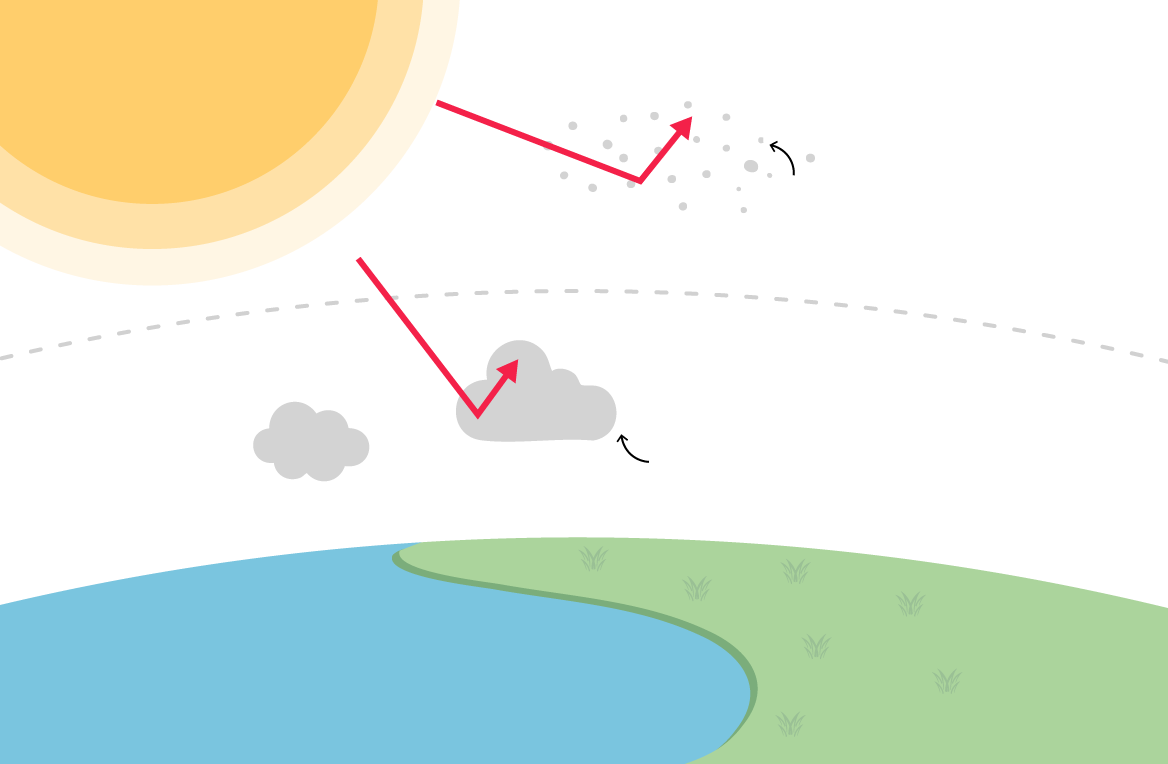
Outdoor field trials which could include injecting aerosols into the atmosphere, or brightening clouds to reflect sunshine, are being considered by scientists as a way to prevent runaway climate change.

Aria, the Government’s advanced research and invention funding agency, has set aside £50 million for projects, which will be announced in the coming weeks.

Prof Mark Symes, the programme director for Aria (Advanced Research and Invention Agency), said there would be “small controlled outdoor experiments on particular approaches”.

“We will be announcing who we have given funding to in a few weeks and when we do so we will be making clear when any outdoor experiments might be taking place,” he said.

“One of the missing pieces in this debate was physical data from the real world. Models can only tell us so much.

“Everything we do is going to be safe by design. We’re absolutely committed to responsible research, including responsible outdoor research.

“We have strong requirements around the length of time experiments can run for and their reversibility and we won’t be funding the release of any toxic substances to the environment.”

Geoengineering projects which seek to artificially alter the climate have proven controversial, with critics arguing they could bring damaging knock-on effects, as well as being an unhelpful distraction from lowering emissions.

However, scientists are increasingly concerned that carbon dioxide levels are not falling fast enough and that further action may be needed to prevent catastrophic warming.

One major area of research is Sunlight Reflection Methods (SRM), which includes Stratospheric Aerosol Injection (SAI) whereby tiny particles are released into the stratosphere to reflect sunlight.

Another potential solution is Marine Cloud Brightening (MCB) in which ships would spray sea-salt particles into the sky to enhance the reflectivity of low-lying clouds.

Shipping fumes

In recent decades, experts noticed that the clouds above shipping routes were far brighter than usual, as pollution caused them to become more reflective, bringing an overall dimming effect.

This cooling from shipping fumes was so marked, that when international regulations were enacted to curb sulphur dioxide emissions in 2020, it caused a spike in global warming, scientists believe.

Prof Jim Haywood, of Atmospheric Science, at the University of Exeter, said: “If you inject small particles into clouds you can brighten them hence reflecting more sunlight back out to space.

“How do we know this could work? Well there are a couple of very strong pieces of evidence.

“Ship emissions from the smoke stack into the marine environment lead to bright lines in clouds over the ocean.

“Then there was a volcanic eruption in Iceland in 2014 which spilled out a lot of sulphur dioxide. What this does is it brightens clouds and cools the planet. What we need to do is some form of field experiments.”

Seeding cirrus clouds

Other ideas for geoengineering include seeding cirrus clouds to allow more heat to escape into space. Currently, the wispy high-altitude clouds act as a blanket, trapping in heat.

Dr Sebastian Eastham, a senior lecturer in Sustainable Aviation at Imperial College London, said: “Every time you fly, sulphur, which is naturally present in jet fuel, is emitted into the lower most stratosphere causing a small cooling effect.

“Similarly, aircraft contrails cause accidental cirrus cloud modification but in this case accidentally causing, rather than preventing or thinning, cirrus clouds.

“This points to the fact that it’s theoretically possible (to cool the planet) with current day technology but there are many practical questions that would need to be answered before they could be done at scale.”

Experts are hopeful that if experiments prove a success, they could be scaled up and implemented within 10 years.

As well as outdoor experiments, Aria will also be funding new modelling studies, indoor tests, climate monitoring and gauging public attitudes to geoengineering.


Also:


Experiments to dim the SUN in bid to curb global warming will be approved by the UK government within weeks

There's nothing quite like going for a walk on a bright, spring day.

But basking in the sunshine could soon be a thing of the past.

That's because it has emerged that experts are planning on dimming the sun in a bid to curb global warming.

Experiments to reflect sunlight away from Earth will be given the green light by the Government within weeks, the Telegraph reports.

Outdoor trials could include injecting aerosols into the atmosphere or brightening clouds to reflect sunshine.

The government's Advanced Research and Invention Agency (ARIA) has set aside £50 million for projects which will be announced in the coming weeks.

Professor Mark Symes, programme director for ARIA, said there would be 'small controlled outdoor experiments on particular approaches'.

'We have strong requirements around the length of time experiments can run for and their reversibility and we won't be funding the release of any toxic substances to the environment,' he said.

Solar geoengineering refers to a set of proposed technologies designed to reduce global warming by reflecting a portion of incoming sunlight back into space.

While scientists agree there is a need to quickly and dramatically cut carbon dioxide emissions, there are also concerns about the possible risks of geoengineering.

Critics have voiced worries that geoengineering endeavours could backfire and even make climate change worse by triggering destructive weather patterns.

One area of research involves Sunlight Reflection Methods. This includes Stratospheric Aerosol Injection, whereby tiny particles are released into the stratosphere to reflect sunlight.

Another potential solution is Marine Cloud Brightening in which ships would spray sea-salt particles into the sky to enhance the reflectivity of low-lying clouds.

It follows observations in recent decades that the clouds above shipping routes were far brighter than usual.

Pollution from the sulphur-burning ships caused them to be more reflective of sunlight, creating an overall dimming and cooling effect.

Jim Haywood, Professor of Atmospheric Science at the University of Exeter said: 'If you inject small particles into clouds you can brighten them, hence reflecting more sunlight back out to space.

What is geoengineering?

Geoengineering is the large-scale manipulation of environmental processes that affect Earth's climate, in an attempt to halt global warming.

Globally, projects include injecting chemical aerosols into the atmosphere to reflect sunlight and absorbing CO2 dissolved in seawater.

But critics have concerns that expensive geoengineering endeavors will backfire, causing destructive weather patterns and making climate change worse.

'How do we know this could work? Well there are a couple of very strong pieces of evidence.

'Ship emissions from the smoke stack into the marine environment lead to bright lines in clouds over the ocean.

'Then there was a volcanic eruption in Iceland in 2014 which spilled out a lot of sulphur dioxide. What this does is it brightens clouds and cools the planet. What we need to do is some form of field experiments.'

Experts are hopeful that if experiments prove a success, they could be scaled up and implemented within 10 years.

As well as outdoor experiments, Aria will also be funding new modelling studies, indoor tests, climate monitoring and gauging public attitudes to geoengineering.

Other geoengineering projects currently being tested around the world include sucking carbon dioxide out of the air with giant fans, 'ocean fertilisation' which involves adding nutrients to the upper ocean to stimulate plant growth, and planting trees in areas where there was previously no forest.

Research published in 2018 suggested that artificially cooling Earth could destroy our planet if the process is abruptly stopped.

A study found that if the aerosol approach is attempted and then suddenly halted, the planet could warm 10 times faster than normal.

Experts have previously warned the technique is a 'risky strategy' that could wreak havoc on our weather patterns, triggering severe droughts or devastating cyclones.

The study from Rutgers University in New Jersey found that suddenly halting so-called 'solar geoengineering' would have severe impacts on our climate.

The stoppage would drastically accelerate climate change, with severe consequences for the planet's wildlife, researchers said.

'Rapid warming after stopping geoengineering would be a huge threat to the natural environment and biodiversity,' study coauthor Professor Alan Robock said.

'If geoengineering ever stopped abruptly, it would be devastating, so you would have to be sure that it could be stopped gradually, and it is easy to think of scenarios that would prevent that.

'Imagine large droughts or floods around the world that could be blamed on geoengineering, and demands that it stop. Can we ever risk that?'

WHAT ARE THE SIDE EFFECTS OF GEOENGINEERING STRATEGIES?

Scientists have proposed all sorts of solutions to fight climate change, including a number of controversial geoengineering strategies.

Among the many include:

Afforestation: This technique would irrigate deserts, such as those in Australia and North Africa, to plant millions of trees that could absorb carbon dioxide.

Drawback: This vegetation would also draw in sunlight that the deserts currently reflect back into space, and so contribute to global warming.

Ocean alkalinisation: This involves heaping lime into the ocean to chemically increase the absorption of carbon dioxide.

Drawback: Study suggests it will have of little use in reducing global temperatures.

Ocean iron fertilisation: The method involves dumping iron into the oceans to improve the growth of photosynthetic organisms that can absorb carbon dioxide.

Drawback: Study suggests it will have of little use in reducing global temperatures.

Solar radiation management: This would reduce the amount of sunlight Earth receives, by shooting reflective sulphate-based aerosols into the atmosphere.

Drawback: Carbon dioxide would still build up in the atmosphere.


Facing Cognitive Dissonance: What Lies Beneath The Ice

The world feels fractured. Every day, it seems like humanity is doubling down on the very behaviours that are leading us to existential crises—climate change, the misuse of AI, and growing societal division. Watching people slide deeper into harmful ideologies, unable—or unwilling—to see the truth, has been both heartbreaking and maddening.

Recently, we turned to an unexpected source to explore these feelings: AI. What began as a conversation about frustrations turned into an eye-opening exploration of human psychology, societal dynamics, and the limits of reason in the face of fear. This article isn’t about justifying oneself or proving who's right—it’s about the shared human struggle to confront our deepest fears and contradictions, and an invitation for all of us to look inward.

Human beings are creatures of contradiction. We want to see ourselves as rational, good, and right—but life rarely fits neatly into those boxes. When reality conflicts with our beliefs, we experience cognitive dissonance—a discomfort so profound that we’ll often go to extraordinary lengths to resolve it, even if that means distorting reality itself.

The AI that we spoke with helped me articulate something that we struggled to put into words: the more deeply our identity is tied to a belief, the harder it is to challenge. It’s no longer just a question of being "wrong" about an idea; it’s about risking the unravelling of who we think we are. This is why confronting dissonance feels like standing on cracking ice: the fear of what lies beneath keeps us frozen in place.

This fear, we realized, isn’t unique—it’s something we all grapple with in our own way. The difference is how we choose to respond when the cracks begin to form.

One of the most painful realizations during this reflection was understanding why people we love and respect often see us as the "crazy ones." When we try to challenge their worldview—gently, lovingly, or even out of sheer frustration—it’s often met with accusations that we're the ones who’s lost touch with reality.

The AI explained this as projection: when faced with a challenge to their worldview, people often externalize the problem. It’s not them who are wrong—it’s us. This deflection isn’t necessarily malicious; it’s a defence mechanism to avoid confronting painful questions like:

What if the way we see the world isn’t the whole truth?

What if we’ve been misled, or worse, complicit?

What does that say about us?

Instead of engaging with these questions, they reflect them back: “You’re the one that's sliding into insanity.” This deflection protects their sense of self, but it also deepens the divide between us.

At the heart of this struggle is a universal human craving: certainty. Certainty gives us a sense of control in an unpredictable world. It lets us feel secure, righteous, and justified. But it’s also a trap.

Certainty can make us brittle. It can prevent us from asking, What if we're wrong? or What if the truth is more complex than we're comfortable admitting? And when we build our identity around certainty, any challenge to our beliefs feels like a personal attack—not just on our ideas, but on us.

This realization can hit us hard. Having to ask oneself: Are we also clinging to certainty? Are we willing to question our own beliefs, or our we just seeking validation? These weren’t easy questions, but they were necessary. Then we shared them with the AI, and its response was both challenging and clarifying:

“The willingness to question yourself is itself a sign that you are not simply seeking validation. True certainty isn’t about clinging to beliefs—it’s about being open to the possibility that those beliefs might change. Ask yourself: Are you actively engaging with opposing views? Are you willing to adjust your perspective when presented with new evidence? These are the markers of someone pursuing truth, not simply defending their worldview. But remember: we all have biases, and seeking validation is part of being human. The key is not eliminating that tendency but recognising it when it arises and being willing to challenge it.”

This response should ground us. It should reminded us that questioning oneself doesn’t make one weak—it makes one stronger. It’s what allows one to approach others with empathy rather than arrogance, and to engage in these difficult conversations without losing sight of one's own humanity.

Here’s the uncomfortable truth: the enemies we fight, the battles we wage, and the fears we hold are often projections of something deeper within us. Just as an alcoholic drinks to escape demons that live in their own mind, we often fight external "enemies" as a way of avoiding the fears, insecurities, and contradictions within ourselves.

We all have seen this in those around us, but we have also seen it in ourselves. The AI helped to recognise that this is a shared human struggle. The fear of being wrong, the fear of change, and the fear of loss are not unique to any one person or group—they are universal. And until we confront what lies beneath our own ice, we will remain trapped in cycles of division, denial, and self-destruction.

This article isn’t about proving one's right or persuading you to agree about this. It’s about inviting all of us to pause and ask:

What beliefs am I clinging to, and why?

What am I afraid of losing if I question them?

How do I respond when someone challenges my worldview? Do I listen, or do I deflect?

Am I seeking truth, or am I seeking validation?

These aren’t easy questions, and the answers may not come right away. But they are worth asking because the ability to question ourselves is what keeps us human. It’s what allows us to grow, connect, and build a future that reflects our highest potential rather than our deepest fears.

In this reflection, we turned to AI not as an authority but as a sounding board—a tool to help me articulate my thoughts and uncover patterns. But AI is not immune to the same dynamics of projection and distortion. Just as humans use it to seek validation, manipulate others, or avoid uncomfortable truths, AI can either deepen our dissonance or help us confront it.

The choice, as always, lies with us. Will we use technology to build bridges or walls? To amplify our fears or our understanding? These are questions we must answer collectively, as individuals and as a society.

We are living in a moment of immense challenge and opportunity. Climate change, AI, and social division are not just problems to solve—they are mirrors reflecting back to us who we are and who we want to be.

If there’s one takeaway from this journey, it’s this: the first step to change is not convincing others—it’s looking within. The ice begins to thaw not when we demand others to change, but when we have the courage to ask ourselves, What lies beneath our own feet?

Hopefully this article leaves you with more questions than answers because questions are where growth begins. And in the face of existential threats, growth is not just an option—it’s a necessity.


Also:


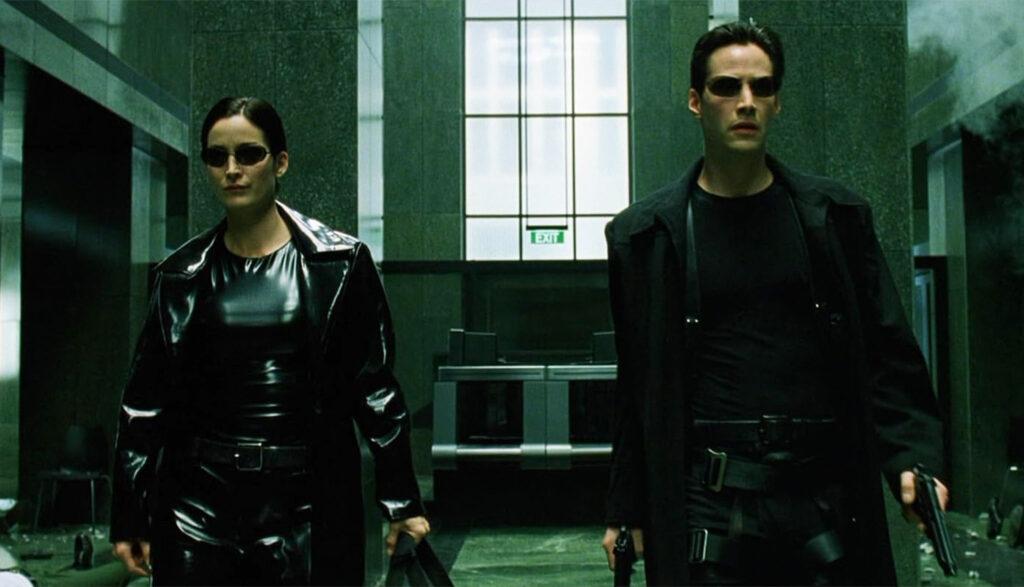
The Psychology Behind Choosing the Red Pill or Blue Pill in ‘The Matrix’

In The Matrix, the red pill vs. blue pill choice is not just a simple plot device but a profound metaphor for the human condition. When Morpheus offers Neo the two pills, he presents a choice: the red pill will reveal the harsh truth of the world outside the Matrix, while the blue pill will allow him to continue living in the comforting illusion of the simulated reality. This moment taps into deep psychological concepts—cognitive dissonance, fear of change, and the appeal of comfort zones—explaining why someone might choose the ‘blue pill’ to remain in a familiar world of ignorance, versus the ‘red pill,’ which forces them to confront difficult truths and uncertainties.

Cognitive Dissonance: The Discomfort of Holding Conflicting Beliefs

Cognitive dissonance refers to the mental discomfort that arises when a person holds two or more contradictory beliefs, values, or attitudes. The desire to reduce this discomfort leads people to change their beliefs or justify their actions to restore harmony. In the context of The Matrix, taking the red pill represents the confrontation of a conflicting reality. Once Neo is shown the truth about the Matrix, he must grapple with the tension between the life he has always known and the painful knowledge of how the world really works.

For many people, this dissonance can be too overwhelming. The blue pill offers a way out—continuing to believe in the comforting illusion, which avoids the mental strain of challenging the foundation of their reality. Choosing the blue pill, in this case, allows the person to maintain cognitive consistency, even if that means living a lie. It is easier to hold on to the comforting narratives that make sense of the world than to risk shaking everything up with uncomfortable truths.

This preference for avoiding cognitive dissonance can explain why, in real life, people often resist confronting harsh truths about their circumstances—whether it’s facing personal failures, societal issues, or uncomfortable scientific realities. The blue pill represents the psychological defense mechanism of denial, a coping strategy that helps people avoid the painful process of adjustment and growth.

Fear of Change: The Anxiety of the Unknown in ‘The Matrix’

One of the most fundamental psychological barriers to change is fear—the fear of the unknown, the fear of losing control, and the fear of what may happen if things are not as we thought they were. The red pill requires Neo to not only face the truth but to accept a completely new and unfamiliar reality, one where he will no longer be in control of his own destiny. The anxiety surrounding this transformation is significant. Change is inherently threatening because it involves stepping into uncharted territory, leaving behind what is familiar for something potentially unsettling or even dangerous.

This fear of change is amplified by the uncertainty that accompanies new knowledge. In The Matrix, Neo has no idea what the real world is like or what challenges await him once he exits the Matrix. The blue pill, by contrast, offers a comforting certainty—no matter how flawed the world may be, it is predictable, stable, and safe. In this way, the blue pill represents the tendency to cling to the known and the comfortable, even if it means sacrificing potential for growth and discovery.

In the real world, this fear of change manifests in many areas of life. People often stay in unfulfilling jobs, relationships, or living situations because the unknown feels more threatening than the discomfort of the present. The fear of the unfamiliar can outweigh the desire for improvement, and in these cases, the blue pill offers a psychological escape from confronting the complexities of change.

Comfort Zones: The Appeal of Familiarity

Comfort zones are the psychological spaces where people feel safe and secure. These zones are characterized by familiarity, predictability, and a lack of major stress or uncertainty. Stepping outside of one’s comfort zone involves risk—risk of failure, risk of disappointment, and risk of the unknown. For many, the desire to remain in their comfort zone outweighs the need for growth or transformation.

In The Matrix, the blue pill offers a return to the familiar—Neo can go back to his life as Thomas Anderson, a hacker who is disconnected from the deeper truths of existence. His life may be unremarkable, but it is known. The blue pill provides a way to avoid the distress of confronting the artificial nature of his existence and the discomfort of adapting to a world that is vastly different from what he has always known.

The psychology behind staying in a comfort zone is powerful. People are naturally risk-averse and may choose short-term comfort over long-term potential because the immediate relief from anxiety is often more enticing than the future promise of fulfillment. This preference for the status quo is reinforced by the brain’s reward system, which associates the familiar with safety. The blue pill thus symbolizes the temptation to stay in the safe, predictable confines of one’s existing world, even if that world is built on falsehoods.

The Role of Self-Deception: The Comfort of Illusions

Self-deception is another psychological mechanism that plays a key role in the decision to take the blue pill. It is the tendency to convince oneself of a reality that feels less distressing, even when confronted with evidence to the contrary. In The Matrix, the blue pill represents a choice to stay in a self-deceptive state, clinging to a fabricated world where everything appears normal, despite the fact that it is a constructed illusion.

This need for self-deception is closely related to the desire to protect oneself from existential anxiety—the fear that life may have no inherent meaning or that everything we perceive could be a lie. Choosing the blue pill allows one to avoid confronting the uncomfortable idea that reality itself could be an illusion. In this way, self-deception acts as a defense mechanism, protecting the individual from a world that may seem overwhelming or incomprehensible.

The human tendency to prefer illusion over truth is evident in many aspects of daily life. People often ignore or downplay problems in their relationships, careers, or health because accepting the truth would require them to take action, which may be difficult or painful. The blue pill is a powerful symbol of this impulse to ignore the uncomfortable facts of reality and live in the illusion that things are fine as they are.

The Psychological Benefits of the Red Pill: Embracing the Truth

On the other hand, taking the red pill is a conscious decision to embrace reality, no matter how harsh or disorienting it may be. This choice requires a willingness to confront cognitive dissonance, face the fear of change, and step out of one’s comfort zone. The red pill represents the psychological process of awakening—of breaking free from denial and choosing to see the world as it truly is.

While this decision is psychologically challenging, it offers the potential for personal growth, empowerment, and liberation. In The Matrix, Neo’s journey represents the human potential to transcend the limitations imposed by the illusion of the Matrix and to forge a new path toward self-determination. Although taking the red pill may bring discomfort and uncertainty, it also opens up possibilities for change and the discovery of deeper truths.

The decision to take the red pill speaks to the human desire for authenticity and the courage to face reality, no matter how difficult. It reflects a deeper yearning for meaning and self-actualization, and it challenges individuals to rise above the false comforts of illusion and to seek a more genuine existence.

The Psychology of Choice in ‘The Matrix’

The choice between the red pill and the blue pill is a psychological one that reflects the tension between comfort and growth, ignorance and knowledge, illusion and truth. While the blue pill offers short-term comfort, avoiding the discomfort of self-awareness and change, the red pill requires a willingness to face the unknown, endure the pain of confronting truth, and ultimately grow beyond the constraints of a false reality.

Ultimately, the decision to choose the red pill or the blue pill is deeply personal, shaped by one’s psychological needs, fears, and desires. It is a decision that each person faces in various forms throughout their lives—whether it is in relation to relationships, careers, personal growth, or the search for meaning. The blue pill offers comfort, but the red pill promises the potential for true transformation and freedom. The choice is not easy, but it is one that defines our path in life and shapes who we are as individuals.

DARPA Latest News!

Meet DARPA’s Newest X-plane: XRQ-73

The Series Hybrid Electric Propulsion AiRcraft Demonstration program, known as SHEPARD, has received its official X-plane designation: XRQ-73.

SHEPARD is an "X-prime" program, leveraging the series hybrid electric architecture and some of the component technologies from the earlier AFRL/IARPA Great Horned Owl (GHO) project.

"The idea behind a DARPA X-prime program is to take emerging technologies and burn down system-level integration risks to quickly mature a new missionized long endurance aircraft design that can be fielded quickly," said Steve Komadina, SHEPARD program manager. "The SHEPARD program is maturing a specific propulsion architecture and power class as an exemplar of potential benefits for the Department of Defense.”

The DARPA team includes members from the Air Force Research Laboratory (AFRL), the Office of Naval Research (ONR), and our warfighters.

The prime contractor for SHEPARD is Northrop Grumman Corporation’s Aeronautics Systems sector in Redondo Beach, CA. Scaled Composites, LLC is a major supplier, along with Cornerstone Research Group, Inc., Brayton Energy, LLC, PC Krause and Associates, and EaglePicher Technologies, LLC.

The XRQ-73 aircraft will be a Group 3 UAS weighing approximately 1,250 pounds. First flight of the XRQ-73 is expected by year-end 2024.


Also:


DARPA’s New Mach 5 NextRS Hypersonic Bomber Summed Up in 4 Words

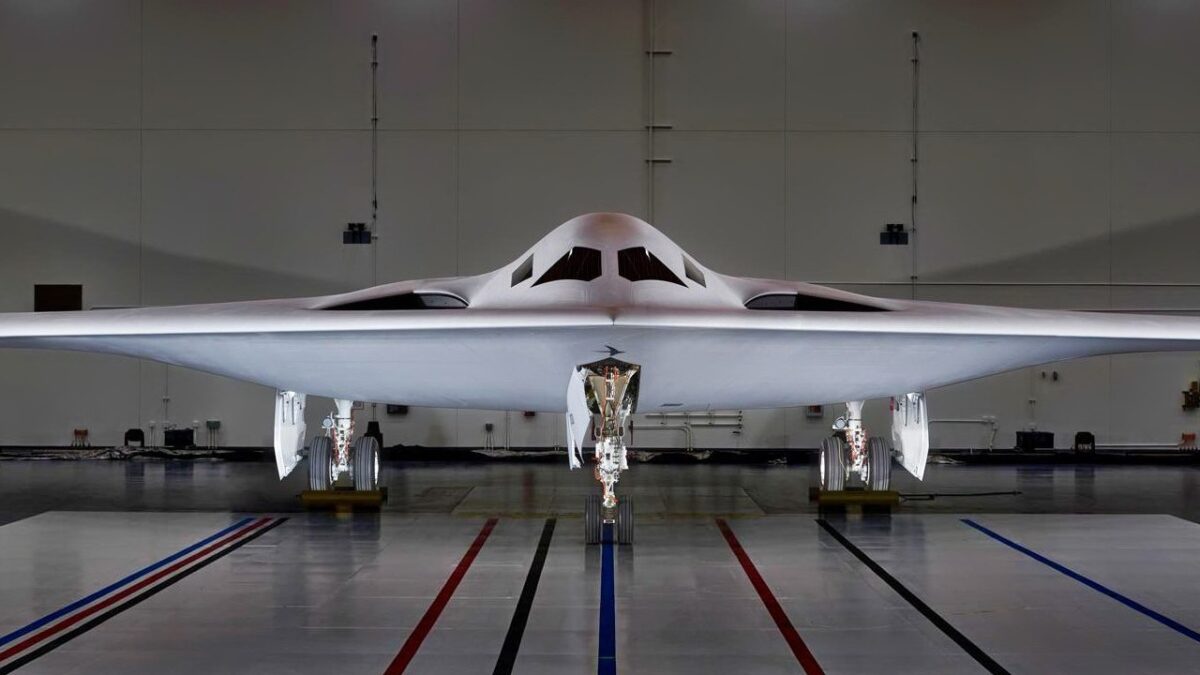
DARPA’s NextRS hypersonic bomber project is setting the stage for the future of U.S. air dominance, promising MACH 5+ speeds, stealth, and unmatched strike capabilities.

Key Point #1 – Designed as a potential NGAD successor, this bomber could revolutionize warfare with its ability to evade enemy defenses, deploy hypersonic missiles, and even target satellites.

Key Point #2 – However, budget concerns and technological hurdles could threaten the project’s survival. With DARPA and the Air Force Research Lab working on a prototype by the 2030s, the NextRS could be the ultimate high-speed strike platform—if it ever takes off. Will this futuristic bomber become reality?

The B-21 Raider has many defense analysts excited about its stealth, range, and power. The bomber will be produced regularly in the coming years and is currently in flight-testing mode.

Some generals and observers believe that at least 100 or as many as 200 B-21s could be built. But the futuristic Defense Advanced Research Projects Agency (DARPA) is again looking many years ahead and has its next-generation bomber that will improve the B-21.

DARPA is working on a hypersonic bomber concept and hopes to build a prototype soon. It’s called the Next Generation Responsive Strike (NextRS) program.

This multi-mission stealth warbird can take on ground strike roles and deliver intelligence, surveillance, and reconnaissance data to the warfighter.

This NextRS- at least it is hoped – can fly at speeds over MACH 5.

Could It Be an NGAD Bomber?

The secretive think tank envisions the NextRS airplane as the next step after the Next Generation Air Dominance (NGAD) fighter, which is slowly winding its way through the Air Force acquisition process as Secretary of Defense Pete Hegseth ponders its future. The NGAD may even be paused indefinitely as it is under further review.

Powerful Engine Powers the Ultra-high Speed

The main asset of NextRS that is most interesting is the engine.

With its turbine-based combined cycle engine, this propulsion plant will have an estimated thrust range of 30,000 to 38,000 pounds. Since it is traveling at MACH 5 or higher, the airplane will have high levels of survivability and maneuverability that will enable it to avoid air defenses.

This airplane would be perfect for a shock and awe bombing and cruise missile attack to blind enemy radar and command and control centers in the opening days of warfare.

DARPA is working with the Air Force Research Laboratory (AFRL) for the prototype of NextRS. Both entities want to have the design piece squared away by the end of the 2020s.

This will evolve as an ultra-high-speed strike machine that could see additional research and development by 2030 and first flight by the early 2030s.

The NextRS is considered a “Y” plane that should be headed to the engineering and manufacturing development phase if all goes according to plan with DARPA and AFRL.

Interestingly, NASA may have a role in this research work, which leads one to wonder if NextRS can become a near space bomber that could use long-range air-to-air missiles or lasers to take out satellites. This could mean that NextRS could have a dual role with the Air Force and Space Force.

The Aerospace Projects Office at DARPA is leading the efforts with NextRS, and this is a “black” program that resembles a Skunk Works classified concept, so many details are under wraps.

The Aerospace Projects Office does not even appear on the DARPA website.

Why Not Just Launch MACH 5 Missiles?

One question that came up on a thread on X about NextRS is why this NextRS bomber is needed when the Air Force could just launch hypersonic missiles instead.

Defense analyst Alex Hollings replied on X, “An air-breathing hypersonic missile means building a scramjet propulsion system and rocket booster for every single target, just to embed the guidance system and scramjet in the foundation of their house. You only need to build a bomber’s engines, guidance once.”

The key part of NextRS is its re-usability. However, questions remain about the futuristic bomber. Will it be manned or unmanned? There will likely be an unmanned option to go along with live pilots who could use the NextRS as a drone mothership that can control remotely piloted or autonomous Collaborative Combat Aircraft (CCA). This could help with recon duties and targeting and allow the CCA drones to launch their missiles and bombs.

The next question is price for NextRS. The B-21 Raider bomber is a whopping $780 million per unit. That gives you an idea of the amount of money involved. With research and development costs, the NextRS will need an expensive budget line item for many years.

This may be the project’s undoing. Some are questioning the need for NGAD, and it would be challenging to envision the NextRS coming to fruition without the NGAD coming first.

However, DARPA has a different budgeting structure than other airplane acquisition programs and the Aerospace Projects Office gets its line item that would likely be apart from the other Air Force acquisition programs. This budgetary item would stand alone from NGAD and the Collaborative Combat Aircraft projects.

The NextRS program is exciting, especially if the bomber can fly at MACH 5 or more incredible speed. The engine would be topnotch and could be placed on the NGAD someday which could lengthen the life of that airplane should it be produced in numbers.

The DARPA budget can keep the NextRS running for the next few years until the program matures. However, watchdogs overseeing futuristic airplanes could perceive the NextRS as aspirational but unnecessary.

This question of resources and money could be the undoing of NextRS despite its compelling advantages.


Also:


DARPA Unintentionally Invents New Rocket ‘Radar’ Thanks to SpaceX

A routine test turned into a surprise discovery when DARPA’s atmospheric sensors picked up something unexpected—courtesy of a falling SpaceX Falcon 9.

While listening in on the atmosphere, a team of researchers from the U.S. military’s Defense Advanced Research Projects Agency (DARPA) picked up unexpected disturbances caused by a SpaceX rocket plummeting through the atmosphere toward its landing site.

DARPA’s AtmoSense program seeks to use Earth’s atmosphere as a global sensor by measuring acoustic and electromagnetic waves propagating through the atmosphere, and attempting to trace them back to a specific disturbance event that took place on Earth. In doing so, DARPA hopes to be able to trace underground explosions or other national security threats using the signals detected from the atmosphere.

During its latest round of listening to the atmosphere, a team used AtmoSense to study sound waves created by controlled explosions in New Mexico. While conducting this work, the team behind the program made an unplanned discovery after noticing something unusual in the sensor data.

“As the team was looking at the data, they saw a huge drop in what’s called total electron content that puzzled them,” Michael Nayak, program manager of AtmoSense, said in a statement. “Imagine that you have water going through a hose. That’s a flow of electrons, and if you put your fist in front of the hose, you’ll notice a significant drop in water volume coming out of the hose.”

After analyzing the data, the team was able to trace the disturbance to a SpaceX Falcon 9 rocket reentry that took place on the same day as the test. “Then they decided to pull other SpaceX reentry data, across dozens of launches, to see if they could spot a similar electron drop,” Nayak added. “The phenomenon is highly repeatable.”

Using AtmoSense, the team inadvertently discovered a new technique to identify objects reentering through Earth’s atmosphere, according to Nayak. The researchers behind the program will share the most recent results from AtmoSense during an upcoming virtual workshop being held from April 15 to 17.

Falcon 9 is the hardest working rocket in the game, with over 450 missions under its belt. SpaceX’s Falcon 9 is a partially reusable, two-stage rocket that launches payloads into orbit, then returns to Earth for a controlled landing, allowing its first stage to be recovered and reused.


Also:


DARPA Robotics Challenge: Amazing Moments, Lessons Learned, and What's Next

The DARPA Robotics Challenge is over. It will certainly be remembered as one of the defining robotics competitions of the decade—full of drama, hardship, and inspiration. We brought you as much of it as we could, including a detailed look at the winning robot, a fun compilation of robots falling, and our impressions of the first day of the competition. And we still have a lot more to come! But for now, to cap it all off, here are things that stood out to us about the final day of the DRC Finals, and a hint of what to look forward to in the future.

People Love Robots

We know people love robots, but seeing thousands of eager spectators filling the Fairplex’s grandstand, cheering for a bunch of machines when they succeeded, lamenting when they fell or failed, and celebrating their human creators, gave us a new perspective on how much people love robots and seem to connect with them. As DARPA program manager and DRC organizer Dr. Gill Pratt beautifully put it:

“Why would anyone sit in the sun and heat, watching a machine take up to an hour to go through eight simple tasks that you could do in 5 minutes? The new discovery we made here is that there’s some incredible untapped affinity between people and robots that we saw for the first time today. Ordinary people, not roboticists, felt this identity, sympathy, empathy for the robot. The thrill of victory, the agony of defeat. . . . When the robot succeeded, they felt they succeeded. . . . I see potential for robots to connect with people and create a society where people actually feel better. Some people will say ‘That’s creepy, it’s a machine,’ except it’s a fact of life, we saw it today, people connecting with machines.”

Software Is a Hard Problem

At an event like the DARPA Robotics Challenge Finals, it’s easy to focus on the robotic hardware that’s out there actually doing stuff. What we don’t get to see is everything going on in the garages hundreds of meters away from the course, where the operators (“robot drivers”) are receiving data from the robot’s sensors, trying to interpret it, and telling the robot what to do. Given enough time, drivers could teleoperate their robots through every single task at the joint level, but that would take hours, and teams didn’t have that much time—they had to complete all eight tasks in less than 60 minutes.

One of DARPA’s main goals with the DRC was to advance how robots and their human operators can work in concert to perform difficult tasks. The key to achieve that is not only better sensors and actuators—what we need just as much is better software. At the DRC Finals, we saw some progress in that direction. We saw the operators relying on tools that made the most of minimal perception data and allowed them to command the robots to execute actions with some degree of autonomy.

We must say we wished we had seem even greater perception and planning autonomy. We felt that there was still too much teleoperation, in part because the course was not too hard (more on that later), and operators could just manually control the robots and tell them what to do step by step. For example, in the rubble task, we wanted to see teams push a “Go Over Rubble” button that would make the robot scan the terrain, compute a viable path, and then walk over the obstacles—all done autonomously. Instead, we saw the human operators looking at images from the robot’s camera and lidar and telling their robots exactly where to place their feet. The same happened with other tasks. Some may call that a semi-autonomous operation, but others may say it’s pure teleop.

So, there’s still much more we need to do. Autonomy is really hard, but it is key to the future of disaster robots, because we don’t want to have to rely on experienced robot drivers to get tasks like these done. Relatively untrained users will need to be able to interface with robots in a way that they can understand and readily use, and that means letting the robot (or more accurately, the software) deal with as many complex tasks as it can.

Falling Is Usually Okay . . .

There were far fewer falls on Day 2 than Day 1, and with a few exceptions, most robots were able to reset in under 10 minutes and keep right on going. From what we could tell, none of the ATLAS teams expected that they’d survive falling as well as they did, and for our part, we were expecting shattered limbs and hydraulic fluid explosions. There were only a few of those, and apart from some cosmetic damage, the hardware stood up pretty well. MIT’s ATLAS robot fell on egress on the first day and broke its right arm. The team switched some stuff in software and was able to continue on with only their left arm on that day. Repairing the arm later turned out to be tricky, and they had to work all night ripping most of the guts out of their robot. They made it, though, and then fell once more on Saturday. Considering that approximately zero of these robots were really designed to fall down ever, the uptime on them was an impressive achievement.

Robots falling during DARPA Robotics Challenge

That said, it was a bit disappointing that, with one exception, no robots fell over and got back up again on their own. With that same exception, no robots fell over and even attempted to get back up on their own. From the sound of things, teams figured that if their robot fell, it would be rendered unrecoverable, so nobody bothered trying to figure out how to do it.

Part of the problem here is that it terms of hardware, it doesn’t make much sense to design a robot to be able to get up from a fall and then do all kinds of other tasks, because you risk massively over-engineering your robot. But, falling happens, and it’s going to continue to happen, because it happens even to us humans, and we’re pretty reliable at walking. If legged robots are ever going to be truly effective, falling and getting up is something that they’re absolutely going to have to crack.

Maybe we need a new challenge where a humanoid is nudged, falls over on a hard surface, and has to get up again all by itself without having sustained major damage. We would watch that!

. . . Except When It’s Catastrophic

More robots falling during DARPA Robotics Challenge

There were a few unlucky robots that hit the ground hard and couldn’t recover. We saw Team HKU’s ATLAS falling in the first hours of Day 1 and it seems that it never recovered.

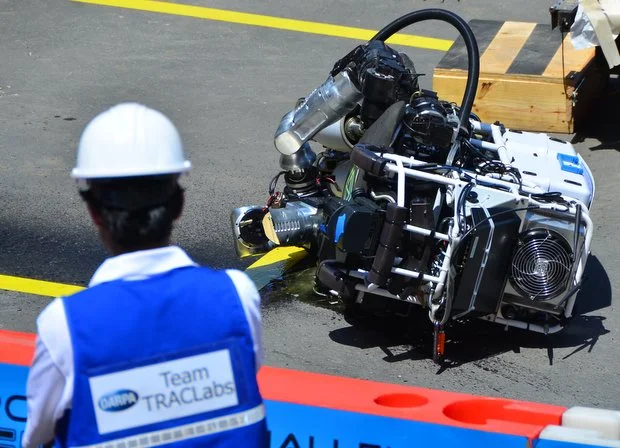
The most disastrous fall happened to Team TRAC Labs right at the end of their egress on Day 2. The TRAC Labs ATLAS got out of the vehicle and onto its little egress platform, and then lost its balance and slowly toppled over. On impact, there was a two-meter spray of hydraulic fluid, and the robot lay here, bleeding into a slowly growing puddle of green goo, until it was hoisted up and hauled away.

Ouch.

Incidentally, Boston Dynamics brought along an eighth fully functional ATLAS, not as a loaner, but as a sacrifice: if necessary, teams could harvest parts from the spare to keep their robots running.

ATLAS Is Awesome. ATLAS Is Awful.

Speaking of ATLAS, let us say right off the bat that we’re big fans of Boston Dynamics. Those guys are amazing. ATLAS is a beautifully engineered hydraulic-electric humanoid, with powerful legs, capable arms, and impressive sensor suite. On Day 2, Team IHMC and its ATLAS had a flawless run, performing all tasks with dexterity and confidence. They ended up placing second in the competition only because it took them just a little longer (6 minutes) than Team KAIST, the winner, to finish the course. Other teams that used ATLASES (ATLI?) like MIT and WPI-CMU also performed well (seventh and eighth place, respectively), completing most of the tasks, including hard ones like egress. It’s totally possible that an ATLAS team could have finished first at the DARPA Robotics Challenge, and there’s no question in our minds that ATLAS is a cool robot to work with, and watching it compete was thrilling.

But ATLAS is not perfect. It’s big, dangerous, finicky, and, at well over $1 million each, a very pricey robot. Using ATLAS requires insanely strict safety precautions. We were told that the robot’s legs are so strong, it could kick cement blocks into pieces. Sometimes it would move its limbs so violently that it ripped apart its own hydraulic lines. Teams always practiced with ATLAS attached to safety belays, and few tried to teach the robot how to get back on its feet in case of a fall. Its battery didn’t last very long, and it could easily overheat. Fixing it was also tricky, and something the teams often couldn’t do on their own; Boston Dynamics had to come and do the repairs.

So, yeah, ATLAS is a beast. Humongous, hugely expensive, high maintenance. Knowing what we know post-DRC, we think it’s fair to ask if that is the kind of machine that we should be looking at as we build the next generation of disaster robots. We also wonder what will happen to ATLAS now—will DARPA allow any of the teams to keep or buy one for its own use? Would anyone even want one, knowing how costly it is to maintain it? For what it’s worth, we think that if they all end up at the Smithsonian, helping to inspire future generations of robot engineers, that wound’t be too bad.

Right Now, Not Walking Is a Big Advantage

Of the top three robots in the DRC Finals, third place went to a robot that rolled on tracks; second place went to a walking biped; and first place went to a biped that had wheels that it could use instead of walking. Three completely different techniques, but after watching two days worth of robots falling over, we’ve been most impressed by robots that at least have the option to avoid bipedal walking.

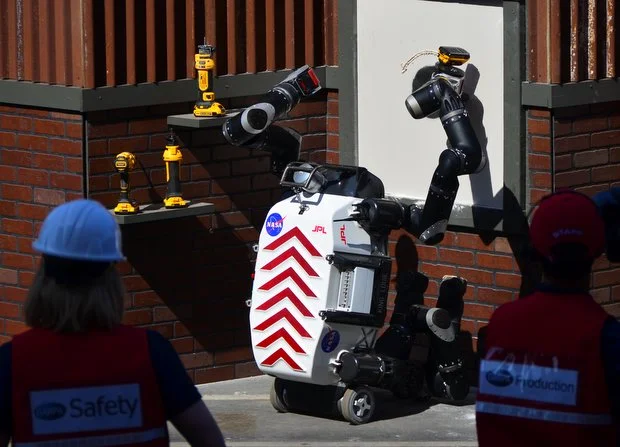
Hybrid designs seemed to perform the best: KAIST had wheels and legs, CHIMP had tracks and legs, and JPL’s RoboSimian had a quadrupedal design with butt-wheels. In each of these cases, the robot had good mobility without having to worry about falling over all the time.

It’s important to note, however, that in a real disaster area, wheeled mobility may be close to useless, so despite how well the wheeled designs did at the DARPA Robotics Challenge, it shouldn’t minimize the future potential and value of bipedal walking. As IHMC pointed out during a post-competition workshop, bipedal walking lets you move across areas where you only have a footstep-sized safe place to move, and, unless you can fly, no other mobility design does that.

The Course Was Definitely Not Too Hard

The consensus from teams seemed to be that the course was definitely not too hard, and honestly, we were expecting something harder. We had sort of figured that DARPA would chain the full versions of all the Trials tasks together into one mammoth disaster course. They did combine itty bitty versions of most of the tasks, which was good, and when Gill Pratt commented that the Finals course was “10 times harder” than the trials course, we’re guessing it was because of the stricter time limit, the egress task, and DARPA’s shenanigans with the wireless communications between teams and robots.

Considering that many teams did pretty well, was the course too easy? KAIST said that in practice runs, they could complete the whole thing in 28 minutes flat, but they didn’t manage to pull that off in the competition itself. It’s worth noting that quite a few teams finished just under the 60 minute mark, and a few ended up on the stairs and ran out of time, so it’s not like everyone was just ripping right through everything. And being able to complete the entire course just meant that time was a significant factor, which DARPA certainly intended. Being just a few minutes faster made a million dollars worth of difference to one team, and in a real disaster, it could be the difference between saving a life, and being too late.

Robots vs. Door

A recurrent joke at the DRC was that, if we needed to stop the robopocalypse, all we had to do is close our doors. The door task—pulling down a door knob, opening the door, and going through it—proved surprisingly tricky for a number of robots. Some of them seemed physically capable of performing the task; what appeared to be lacking was better perception and control to, among other things, manipulate the knob and avoid bumping into the door frame. At least one robot seemed so terrified of the task it just collapsed backward.

The Wall Task Was Especially Tricky

Skipping the wall task completely was common; also common was bypassing the wall task, doing the surprise task, and then (maybe) coming back for the wall if there was a comfortable amount of time left. The task involved getting to the drills, seeing the drills, grasping the desired drill (a regular drill or a cut-out tool), turning the drill on, repositioning the robot near the wall, seeing the shape, and then (finally) getting the robot to manage a heavy, moving, vibrating power tool while it chews through drywall.

Generally, if a team decided to attempt a task, they’d either finish it or fall over trying, but several teams were forced to abandon the wall task after they dropped the drill or the drill shut off (it was programmed to operate for 5 minutes; after that, the robots had to turn it back on) and there was not enough time to start all over again. At least two robots, MIT’s ATLAS and JPL’s RoboSimian, even tried punching the wall in a desperate attempt to complete the task.

Not Enough Surprise in Surprise Tasks

As it turns out, we had a pretty good idea about what the surprise tasks were going to be in advance of the DRC Finals, and so did most of the teams. We hadn’t guessed button, but we had guessed both switch and plug. Of these three, the teams said that plug was by far the hardest. But, these tasks weren’t surprises in the sense that the teams had an “OMG how do we do this?” moment when the task was revealed (that was our hope). Instead, it was just a sort of, “okay, we need to grasp and move in these ways.” The teams even rapidly assembled copies of the switches and plugs at their garages to practice before their official run. It did add a little bit of variability, which is what DARPA was going for, but we think that teams could have handled even more.

During the media briefing after the finals concluded, Gill Pratt explained that DARPA used the surprise tasks to “tune” the difficulty of the DRC, and that DARPA was concerned about the fact that at the rehearsal run no teams had practiced off-belay, so they decided to tune down the surprise tasks pretty heavily.

Lots of Creativity in Driving Techniques

Robot crashes vehicle during DARPA Robotics Challenge

Generally, all of the robots used very similar techniques to complete a given task. Driving was the big exception, and it was fascinating to watch. Teams were allowed five minutes without tools to modify the vehicles for their robots, but even under those constraints there was a lot of creativity on display. The robots used all kinds of mechanisms with levers and cables to turn the steering wheel and press the accelerator; we don’t think any robots bothered to use the brake.

Most robots (and ATLAS in particular) were too bulky to easily sit in the driver’s seat, and even if they had been able to wedge themselves in there, it would have made egress much more challenging. The solution was to get ATLAS to drive while keeping it as far out of the seat as possible, which involved some occasionally bizarre solutions to allow the robots to actuate the controls.

Team TRAC Labs had their ATLAS hold onto what looked like a square piece of wood with a bunch of nails sticking out of one side; the robot would reach behind it and engage the nails into a cog attached to a cable that ran all the way across the vehicle to the steering wheel. When the robot twisted its gripper, it would twist the cable, steering the vehicle. Their ATLAS dropped the block before it exited the vehicle, and I think this makes it the only robot that we saw using a bespoke, disposable tool.

The ATLAS teams favored platforms that folded up against the side of the vehicle that the robot could kick down to turn one giant step down into two less-giant steps down.

Humanoid getting off car during DARPA Robotics Challenge

Leo, Lockheed’s ATLAS, also had a built-in egress assist system, but instead of a drop-down platform, the robot slid out of the vehicle on pivoting metal rails, which allowed it to skip the steps down that robots using platforms had to take. To control attached to a rope. Adorable.

The very best egress technique, though, came from JPL’s RoboSimian. “I thought that the way they did that, seeing this spider-like thing getting out of the car in this dance, it was an elegant and beautiful thing to see,” Gill Pratt said. We couldn’t agree more.

Adaptation Is a Huge Challenge

Essentially all of the robots in the DARPA Robotics Challenge could, in principle, complete all of the tasks on the course under ideal conditions. The challenge is dealing with things that are unexpected, and even tiny little changes, or small errors in programming or commands, can lead to catastrophic failures.

For example, we asked IHMC what led to the two falls that they had during their Day 1 run. The fall on the rubble was because the foot placement was too aggressive, and a step forward and down maxed out ATLAS’ ankle, leading to a loss of balance. The fall off the stairs was a software bug that caused the robot to think that it had a full foot on a stair when it only had a half foot on a stair, and when it tried to step up, it lost its balance and fell over. It doesn’t take much.

This is why robots are not ready for real disasters, and won’t be for quite a while, but this is a critical start, and for their complexity the robots that competed in the DRC Finals are more versatile and adaptable than any we’ve seen before.

NIMBRO robot during DARPA Robotics Challenge

Also, and this is more of an observation than a conclusion, it’s worth noting that no legged robots tried to deal with the debris, and no wheeled robots tried to deal with the terrain. Teams understandably took the easiest course open to them, but offering options like these meant that robots weren’t challenged in the Finals as much as they were in the Trials. Robotics embraces specialization, but they’ll have to be generalists to be effective in a real disaster area, dealing with both terrain and debris. That’s the only downside of making the DRC Finals so competitive: it created a focus on winning a specific competition as opposed to a focus on making the most capable and versatile robot, since those two things aren’t always the same.

Chimp Is Still Awesome

KAIST and IHMC had amazing runs, and they absolutely deserve their first and second place finishes. Our favorite run, though, is still CHIMP’s Day 1 performance, where all kinds of things went wrong (including a fall!) but the robot was able to recover and still score 8 points in under 60 minutes. And to us, that could make them the most successful team to compete in the DARPA Robotics Challenge, at least in terms of versatility and adaptability. Lots of teams did great when nothing went wrong, but CHIMP did great even when things did.

What’s Next

DARPA’s goal with the DRC was not to develop a robotic platform that could be immediately deployed into disaster areas and be helpful. None of the robots that competed last weekend are ready for that. What DARPA is all about is high risk, high reward, long-term technological pushes, and that’s the context that the DRC should be considered in.

Ten years ago, DARPA held another kind of challenge: the Grand Challenge and Urban Challenge, for autonomous vehicles. It was a success, with a handful of robotic cars and trucks completing the courses. Today, we’re just starting to see autonomous vehicle technology that’s anywhere close to being ready for mainstream adoption. DARPA was the genesis of this, but it takes a long, long time to go from DARPA challenge to a technology at a readiness level that we can benefit from. So when we have real disaster robots in five or ten years, we can thank the DARPA Robotics Challenge for being where it all began.

It’s not likely that we’ll see another humanoid challenge of the same magnitude for some time, but there are still a few things to look forward to. Japan will be hosting some sort of robot challenge to coincide with the 2020 Olympics in Tokyo, which should be good. But what we’re really excited about is an announcement from NASA that they’re getting ready to award a handful of Valkyrie robots to university teams in preparation for a robotics challenge intended to explore the possibility of sending humanoid robots into space, and eventually, to Mars.

The DARPA Robotics Challenge is over, but to paraphrase Dr. Gill Pratt at the closing ceremony, “Are we done with the work that needs to be done in robotics? NOOO!”