The 'New World Order'

 
Home Page 2 Page 3 Page 4 Page 5 Page 6 Page 7 God's Plan
The New World Order

The CFR And The Media

Largely unbeknownst to the general public, executives and top journalists of almost all major US news outlets have long been members of the influential Council on Foreign Relations (CFR).

Established in 1921 as a private, bipartisan organization to “awaken America to its worldwide responsi­bilities”, the CFR and its close to 5000 elite members for decades have shaped US foreign policy and public discourse about it. As a well-known Council member famously explained, they transformed the American republic into a global empire, albeit a “bene­volent” one.

Based on official membership rosters, the following illustration depicts for the first time the extensive media network of the CFR and its two major international affiliate organizations: the Bilderberg Group (mainly covering the US and Europe) and the Trilateral Commission (covering North America, Europe and East Asia), both established by Council leaders to foster elite cooperation at the global level.

The CFR and the Media on Foreign Relations (CFR).
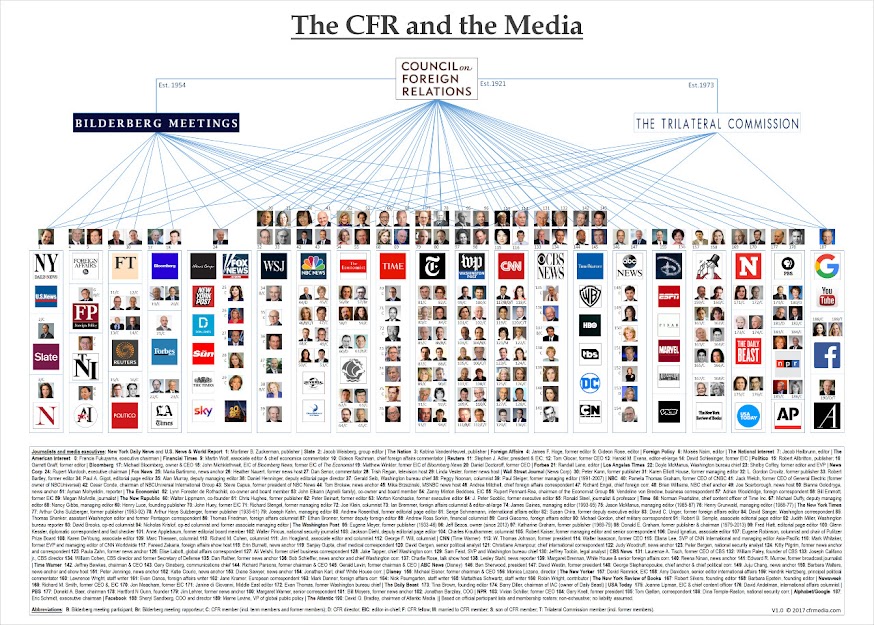
Click On Image To Enlarge

In a column entitled “Ruling Class Journalists”, former Washington Post senior editor and ombudsman Richard Harwood described the Council and its members approvingly as “the nearest thing we have to a ruling establishment in the United States”.

Harwood continued: “The membership of these journalists in the Council, however they may think of themselves, is an acknowledgment of their active and important role in public affairs and of their ascension into the American ruling class. They do not merely analyze and interpret foreign policy for the United States; they help make it.  They are part of that establishment whether they like it or not, sharing most of its values and world views.”

However, media personalities constitute only about five percent of the overall CFR network. As the following illustration shows, key members of the private Council on Foreign Relations have included: several US Presidents and Vice Presidents of both parties; 

almost all Secretaries of State, Defense, and the Treasury; 

many high-ranking commanders of the U.S. military and NATO; 

some of the most influential Members of Congress (notably in foreign & security policy); 

almost all National Security Advisors, CIA Directors, Ambassadors to the U.N., Chairs of the Federal Reserve, Presidents of the World Bank, and Directors of the National Economic Council; 

many prominent academics, especially in key fields such as Economics and Political Science; 

many top executives of Wall Street, policy think tanks, universities, and NGOs; 

as well as the key members of both the 9/11 Commission and the Warren Commission (JFK) 

Harvard economist and Kennedy supporter, John K. Galbraith, confirmed the Council’s influence: “Those of us who had worked for the Kennedy election were tolerated in the government for that reason and had a say, but foreign policy was still with the Council on Foreign Relations people.”

Princeton University professor and former CFR member Stephen F. Cohen described the Council as “America’s single most important non-govern­mental foreign-policy organization”, whose primary role is to “define the accepted, legitimate, orthodox parameters of discussion.” According to Cohen, “the CFR really is what the Soviets used to call the very top-level of the Nomenklatura.”

And no less than John J. McCloy, the longtime chairman of the Council and advisor to several U.S. presidents, recalled about his time in Washington: “Whenever we needed a man we thumbed through the roll of the Council members and put through a call to New York [i.e., the CFR headquarters].”
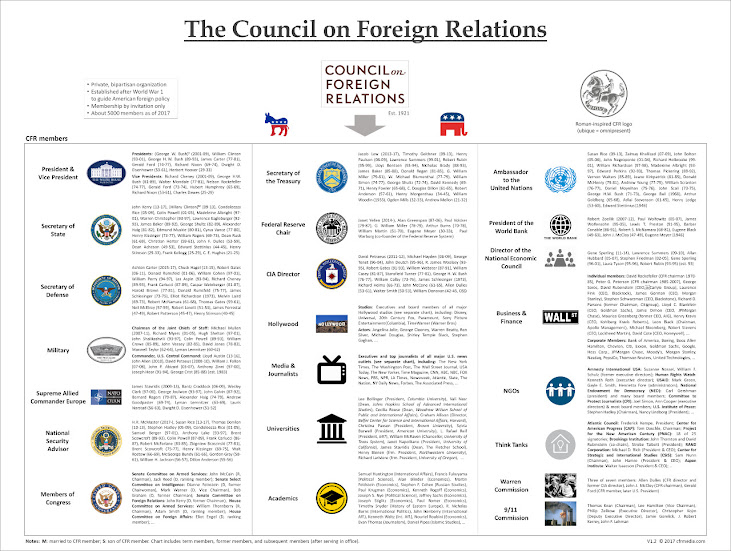
 Click On Image To Enlarge

German news magazine Der Spiegel once described the CFR as the “most influential private institution of the United States and the Western world” and a “politburo of capitalism”. Both the Roman-inspired logo of the Council (top right in the illustration above), as well as its slogan (ubique – omnipresent), appear to emphasize this ambition. In his famous article about “The American Establishment”, political columnist Richard H. Rovere noted: “The directors of the CFR make up a sort of Presidium for that part of the Establishment that guides our destiny as a nation. [I]t rarely fails to get one of its members, or at least one of its allies, into the White House. In fact, it generally is able to see to it that both nominees are men acceptable to it.”

Until recently, this assessment indeed was justified. Thus, in 1993 former CFR director George H.W. Bush was followed by CFR member Bill Clinton, who in turn was followed by CFR “family member” George W. Bush. In 2008, CFR member John McCain lost against CFR candidate of choice, Barack Obama, who received the names of his entire Cabinet already one month prior to his election by CFR Senior Fellow (and Citigroup banker) Michael Froman. Froman later negotiated the TPP and TTIP trade agreements, before returning to the CFR as a Distinguished Fellow. 

It was not until the 2016 election that the Council couldn’t, apparently, prevail. At any rate, not yet.
Canada’s Vaccine Passport, ArriveCan, Faces Major Investigations

The invasive attack on civil liberties is also accused of being a waste of public resources.

Over last week’s end, Canadian Information Commissioner, Caroline Maynard, announced the inception of a probe into claims of the obliteration of federal government records surrounding the government’s controversial vaccine passport app, ArriveCan.

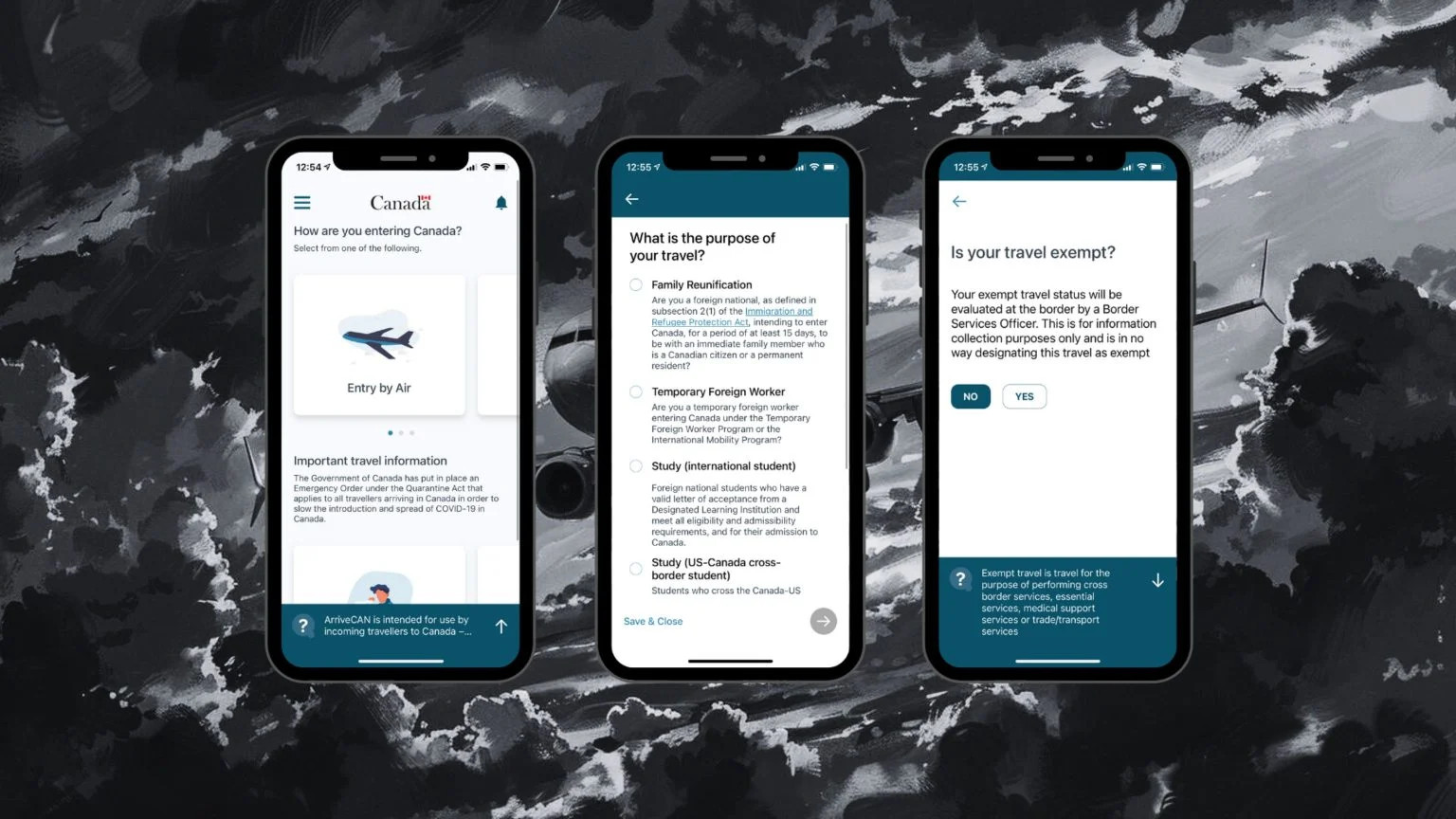
ArriveCAN is a mobile application that was initially launched in April 2020 as a tool to assist border guards in Canada. It was designed to determine if people were eligible to enter Canada and whether they met strict COVID-19 requirements.

The app became mandatory for all air travelers seven months later and was expanded to include those crossing the border by land in March 2021. It collects personal data such as name, telephone number, address, and vaccination status to help public health officials enforce government quarantine rules​.

Aside from the obvious constitutional concerns, there was much debate among experts about whether the app’s requirement for travelers to remain in their homes, especially following a glitch that incorrectly notified thousands of fully vaccinated travelers to quarantine, could be a form of unlawful detention.

The ArriveCan app, which was originally budgeted at $80,000, has seen its costs balloon to over $60 million.

The public backlash against the invasive and dictatorial app, resulted in a major investigation into the app. But now, the focal point of this investigation is the destruction of documentation associated with the creation of the ArriveCan app and its principal contractor, GC Strategies.

The investigation follows last month’s reports by The Globe and Mail which presented an internal grievance from a Canada Border Services Agency (CBSA) employee. The agency staff member purported that Minh Doan, Canada’s chief technology officer, modified data files in a manner that resulted in the disappearance of emails and documents potentially tied to GC Strategies.

The House of Commons, led by Conservative MP Kelly McCauley, has taken a firm stance against the perceived negligence in the management of the ArriveCan app. The passing of McCauley’s motion now authorizes the sergeant-at-arms to detain GC Strategies contractors if they ignore a summons to testify before a parliamentary committee. This bold step underlines the gravity of the situation, echoing concerns raised in the auditor general’s report about the app’s problematic contracting and oversight.

The House of Commons’ decision to potentially arrest non-compliant contractors is a watershed moment in Canadian legislative history.

For clarity, Doan held the position of CBSA vice-president and chief information officer when they engaged GC Strategies to create the ArriveCan app.

Interestingly, the documents claimed to have been eradicated might have been responsive to inquiries to access information about the agency’s dealings and interaction with GC Strategies. An emerging scandal surrounds this two-person tech firm, which has generously received government contracts worth millions since 2017.

The Information Commissioner shared minimal details in her press release last Friday due to the strict confidentiality provisions of the Access to Information Act. However, it was noted therein that an investigation could be launched under section 30(3) of the Act if there are plausible grounds related to securing access to records.

The auditor general, Karen Hogan, did not shy away from waving ethical concerns regarding government staff who accepted gifts from vendors without making necessary disclosures. In her words, the fact that there was an emergency didn’t justify the despising of conventional public service guidelines. She lamented the inadequacy in the levels of public service and declared her expectations for an improved performance.

Trudeau Government’s Quiet Push for Vaccine Passports: Plot To Integrate into Digital ID Revealed

Government documents reveal the quiet expansion of vaccine passports into a framework for nationwide digital IDs.

In March 2021, newly-released documents reveal that the Trudeau administration was quietly advancing plans for a national vaccine passport system, part of a broader push toward integrating Canadians into an international digital ID framework.

These early discussions, uncovered through an Access to Information request and reported by Rebel News, show that the groundwork for linking vaccination status to digital credentials was being laid months before the program was publicly announced in July of that year.

At a time when Canadians were contending with strict lockdowns and travel restrictions, senior government officials were actively planning a vaccine certification framework. Their aim was to synchronize Canada’s efforts with international vaccine credential standards, aligning with global initiatives. This initiative, however, extended beyond public health concerns, as documents show industries like aerospace and automotive were lobbying for measures to restore business travel.

The emergence of Canada’s vaccine passport system, and its integration into broader digital platforms like the ArriveCAN app, highlights growing concerns about privacy and the persistent push by governments to implement expansive digital ID frameworks. Under the guise of public health measures, governments are steadily normalizing systems that collect, store, and link sensitive personal data, creating the infrastructure for a future dominated by digital surveillance and control.

Digital ID systems like these go far beyond COVID-19. By embedding such infrastructure within everyday activities, governments are positioning themselves to expand digital ID usage into other areas, including access to public services, financial systems, and even employment. Once such systems are in place, their scope inevitably broadens, as governments and corporations find new uses for the collected data.

The ArriveCAN app serves as a stark example of how quickly digital tools can be repurposed. Initially introduced as a pandemic tracking tool, it soon became mandatory for travelers to upload sensitive vaccination information, tied to their official identification. The app’s troubled rollout further underscored the risks: technical glitches resulted in thousands of travelers being erroneously ordered into quarantine, and revelations about skyrocketing costs, questionable contracts, and potential misuse of funds fueled public distrust.