The 'New World Order'

 
Home Page 2 Page 3 Page 4 Page 5 Page 6 Page 7 God's Plan
The New World Order

Insane But True DARPA Projects

In the scifi TV series Fringe, the government gives a couple geniuses a lab and a mandate to come up with crazy technologies to defend America.

DARPA (the Defense Advanced Research Projects Agency) is kind of like that, only it has a $3.2 billion annual budget, hundreds of geniuses and it’s real.

A part of the Department of Defense, DARPA was founded in the 1950’s in response to the Soviet Union’s Sputnik program. Since then, DARPA has birthed a collection of revolutionary technologies, including the internet and stealth airplanes.

DARPA’s legal exemptions

Part of what makes DARPA so successful is that it’s exempt from laws that stifle most government agencies. Specifically, DARPA isn’t subject to Title V of the Federal Acquisition Streamlining Act of 1994, which sets up all sorts of red tape for hiring and managing personnel. DARPA also has the option of funding projects through “other transactions,” which is a special power granted by Congress to avoid the red tape normally associated with federal grants.

As a result, DARPA has a largely unrestricted $3.2 billion pot of money to use much like a venture capital firm would, doling it out to high-risk, high-reward projects, expecting a minority of them produce amazing results. Much of the money is granted to civilian firms all over the country who are free to operate their businesses as they please (as long as they produce results), which is why DARPA has been called “100 geniuses connected by a travel agent.”

Current projects

DARPA shoots for revolution, not evolution in technology. That means DARPA is working on some pretty off-the-wall stuff — the kinds of things that sound like science fiction, but aren’t. Here are 12 insane but true DARPA projects currently in the works:

1) Synthetic blood

In HBO’s True Blood series, vampires drink synthetic blood so that they don’t have bother with draining people. We’re soon going to see the real version of that, albeit not for vampires. You see, donating blood is inefficient and problematic (match types, diseases and short shelf life). These problems are especially bad for US soldiers abroad, because most blood they receive is donated in the US and has to be shipped overseas. That’s why DARPA has developed synthetic blood for battlefield applications. In the not too distant future we might think how primitive it was to have people line up to physically donate blood.

2) Sensors that can see underground

Going underground has been a way to hide from the enemy, since, well, the beginning of time. Not anymore. DARPA has developed a gravity sensor that will give pilots a real time view of underground tunnels. Combine this sensor with bunker busting bombs and underground hiding places become a thing of the past.

3) Powered exoskeletons

How much gear soldiers can carry is limited by how much they can physically lift. But what if it wasn’t? Soon soldiers could be wearing super strong exoskeletons that allow them to carry hundreds or even thousands of pounds with ease.

4) America’s manufacturing base 2.0

America’s manufacturing base has pretty much withered away and died compared to our World War II days. Aside from economic implications, this poses a threat to our national security. After all, are we going to have our weapons manufactured in China or South America? But in true DARPA fashion, the agency isn’t just trying to revive American manufacturing circa 1940. It’s investing a billion dollars to come up with new, streamlined, modular ways of manufacturing, powered by the internet and social networks.

5) Robot cyborg insects

Unmanned drones are all the rage, but unfortunately they’re big and enemies can see them. That’s why DARPA wants to turn insects into cyborg weapons. Even cooler, these cyborg insects could be mass produced using 3D printer technology. The implications of this are amazing, from a military and civilian point of view. For example, no one can find Osama Bin Laden because he’s supposedly hiding in a cave that’s hard to access. That’s no problem for an army of 1000 flying bugs! The same technology could be used in civilian rescue applications.

6) Remote controlled A-10 Warthogs

For a soldier, it’s great knowing that you can radio in an air strike. However, it’s not as easy as making a phone call. You have to go through several people, get a plane in the air, and try not to accidentally blow up yourself or your buddies. Wouldn’t it be great if a soldier could simply point and click on a map, and then a remote controlled airplane dropped bombs in exactly the right spot? It could happen. DARPA has a project in the works to use remote controlled A-10 Warthog airplanes for this purpose.

7) Mind-controlled artificial arms

Current prosthetic arms may look advanced, but without the ability control them they’re dead weight. DARPA wants to plug artificial arms into the human brain so that they can be controlled just like a natural arm. The most obvious use here is for amputees, but there are some crazy potential military applications as well, especially if this technology is combined with exoskeletons for soldiers.

8) Cars for blind people

No, this is not a joke. DARPA is looking into technology that could allow blind people to drive by combining non visual sensors (like lasers) with tactile indicators (like a glove that vibrates telling you to turn). While this is a lofty goal, the implications for this technology could drastically increase car safety in years to come, eventually moving us to a kind of car “auto pilot” that renders human drivers unnecessary.

9) A flying submarine

As any comic book super hero already knows, air planes should be able alternate between flying and going under water. DARPA is trying to make a flying submarine (or a submersible plane) a reality. Military applications for such a machine are obvious, but perhaps one day we can also look forward to a civilian flight that includes an underwater tour?

10) Programmable shape-shifting matter

In the movie Terminator 2, Arnold Schwarzenegger explains that a cyborg is made of malleable metal and can form itself into “knives and stabbing objects” (/Austrian accent). DARPA is working on the real thing with programmable shape shifting matter. In its plainest form, such material could be used to change an antenna’s shape for maximum effectiveness depending on location and circumstances. Or in the case of the military, you could make something that looks innocent, like a cupcake, that suddenly changes shape and stabs you in the face.

11) Robots that walk and balance like animals

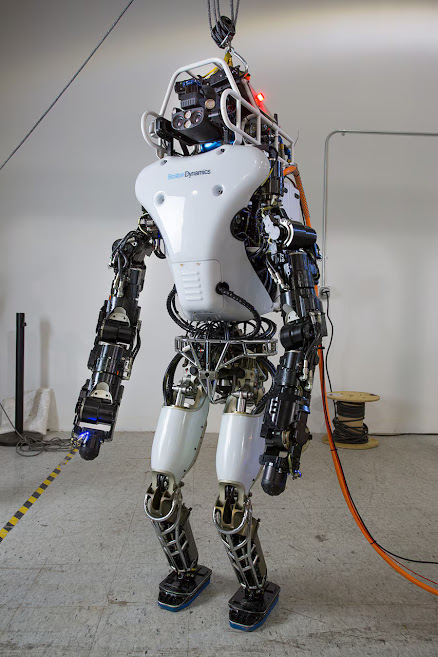
Although robots have come a long way in the last several decades, they’re still really clumsy. DARPA has changed all that and created what can only be called the creepiest robot in the entire world. This thing looks and act like a headless dog, plus it makes a whirling sound that will give you nightmares. Just look at what happens when a man tries to kick this thing over. Like an abused, docile animal, it simply recovers its balance and continues moving — it’s probably saving up all its rage for when it becomes sentient and murderous.

12) Laser guided bullets

Humans have made amazing progress with bombs over time. We’ve gone from indiscriminate carpet bombing to laser guided, heat seeking, bunker busting “smart” bombs. Bullets, however, are still quite stupid. DARPA wants to make smart bullets that are guided in mid flight. Well it’s about time! If DARPA has its way, that little red laser dot won’t just be a cheesy fixture in 80’s and 90’s movies. It’ll actually guide bullets through wind, rain and humidity to always hit their target.

What will the future hold?

Two of the greatest things about DARPA are that it only goes after projects that seem a little far fetched, and it uses crowd sourcing to find tomorrow’s Einsteins whether they’re in a dingy garage or a state of the art lab. With a ton of money, boundless imagination and an outsourced army of geniuses, who knows what tomorrow will hold.

Thanks, DARPA, for doing your part to make the future look like the movies and thinking of crazy ways to kill people that also turn into useful civilian technologies!


Also:


DARPA inventions: how they were made and what happened to them

What is DARPA and what are some of the technologies it invented?

DARPA, or the Defense Advanced Research Projects Agency to give it its full name, is the source of some of the most important technologies upon which our society is built today.

Founded in 1958 as ARPA as a direct response to the launch of Sputnik by the USSR and the start of the Space Race, it’s a petri dish of experimental technology, much of which takes decades to reach to the civilian sphere – and when it does, there’s every chance most people don’t know it originated in DARPA at all.

Here are just 10 of the amazing inventions created by DARPA, how they were made and what’s happened to them.

Probably the best known invention to come out of DARPA is the internet. Indeed, if it weren’t for ARPANET, as the internet’s ancestor was known, you wouldn’t be reading this article right now.

The seeds of ARPANET were sown by JCR Licklider, a psychiatrist and computer scientist who in a 1963 memo to colleagues at ARPA described the concept of an “Intergalactic Computer Network”, where many computers are networked together. While he acknowledged some of the limitations of existing programming languages and technology to create such a network, Licklider managed to persuade fellow ARPA scientists Ivan Sutherland and Bob Taylor of the importance of developing the technology.

In 1966, funding was secured to create a computer network and three years later, ARPANET truly came online. It wasn’t until the creation of the World Wide Web at CERN in Geneva in 1990 by Tim Berners-Lee, thought, that the internet really started to explode from the world of research institutions and some businesses into the ubiquitous utility it is today.

When you’re punching a destination into a navigation app on your phone or a dedicated SatNav system and following its directions, you probably don’t give much thought to how it works. But the technology behind it has come a long way since it started its journey at ARPA.

The idea of using a constellation of satellites for navigation and tracking stretches all the way back to the 1940s, but the GPS project proper was launched in 1973. For the first decade of its existence, it was only available to the United States military, but when Korean Airlines flight was shot down in 1983 after accidentally straying into the airspace of the USSR, the technology was made freely available for civilian use. Today, it’s still the most widely used satellite navigation system in the world, although the EU’s Galileo satellite system, which went live in 2016, hopes to offer an alternative.

Even if you don’t know its name, you have almost certainly seen videos of BigDog, the quadruped robot created by Boston Dynamics. Throughout its history, DARPA has funded private enterprises to research technologies with potential military applications, and this unsettling, headless creature is one such effort.

BigDog was designed to carry heavy loads for military ground units travelling on foot and its four-legged build gave it stability, enabling it to navigate uneven terrain more easily. By all accounts, it was quite good at all these things, but it had one terminal flaw – it was too loud as it moved around, which in a combat situation could give away the location of the humans it was accompanying. And so BigDog has gone to live on a farm with all the other not-fit-for-purpose military dog robots.

If you thought a headless dog robot was strange, the research DARPA has done into insect sentinels is even weirder. In 2006, the organisation announced it was looking for researchers who would help it find a way to implant technology into an insect’s body while it’s in its pupa, thus turning it into a cyborg.

Successful entrants had to deliver the insect to within 5m of a target, using either remote control or GPS – and the results are predictably horrifying and somewhat impractical. While it’s unclear if DARPA ever learnt anything useful from the initiative and indeed one researcher told New Scientist he didn’t think cyborg insects would ever become fully-fledged surveillance instruments as it’s impossible to create a power pack that will run the electronics for a long enough time without also being too heavy for the insect to move while wearing it.

Some 13 years later, another call was put out involving insects, this time with the intention of creating conscious robots by mapping the creatures’ brains. In a January 2019 the agency published a brief for artificial intelligence exploration (AIE) proposals involving insects, explaining that their brains could solve the problem of how much energy and time it takes to train increasingly complex AI systems. It also touched on the fact these animals have subjective experiences, and that researching this particular aspect of insect brains “could lead to capability of inference, prediction, generalization and abstraction of problems in systematic or entirely news ways in order to find solutions to compelling problems".

The project has in the intervening year and a half become µBRAIN

Moving away from DARPA’s creepier creations and investigations, it is also behind something we’re all familiar with – the graphical user interface, or GUI (pronounced ‘gooey’), and mouse.

This technology is almost certainly much older than most people realise, having been created by Douglas Engelbart in the 1960s, who gave the first public demo of the technology in 1968. It was rather more basic than what we think of as a computer interface now, but it laid the foundations for the desktop metaphor we use on our computers today, and the swipeable interface on smart devices.

Even if you’ve never used the Tor browser, you’ve probably heard of it – often in the context of cyber crime. But the technology behind Tor – which stands for ‘the onion routing’ – came from DARPA.

Research into onion routing, so named because every message sent is wrapped in layers of encryption, began in the mid-1990s at the US Office of Naval Research (ONR) with the objective of finding a way to secure US intelligence communications online. In 1997, it attracted funding from DARPA specifically focused on the robustness aspects of onion routing.

Research continued on the project, papers were published throughout the decade on various aspects of its development, and a working prototype of onion routing was created. In 1999, however, all work on it was suspended. This may sound nefarious at first, but in reality, the majority of principal researchers had left the ONR and no more funding was made available – that is until 2001, when DARPA resumed investment, albeit from a different funding pot than had been used in the 1990s. Ultimately, in October 2003, the Tor network was deployed and Tor code released under the MIT free and open license. Anyone can download it and start using it straight away, although don’t expect the Tor Browser to be quite as speedy as your regular browser.

The Human Universal Load Carrier is an exoskeleton intended to help soldiers carry a load of up to 90kg at a speed of up to 10mph.

Shortened to HULC (and pronounced ‘hulk’), the invention debuted on the public stage in 2009 and licensed by Lockheed Martin. Unfortunately, however, the project has been deemed a failure – while it works technically, it was found to restrict the wearer’s movements in some cases and actually increased the strain on muscles. Nevertheless, Lockheed Martin, which was HULC’s primary developer, is looking at other applications, such as using it as the basis of a wearable sensor array for soldiers or for medical or industrial applications in the civilian sphere.

Yes, that Siri. Apple’s digital virtual assistant started life as a DARPA project in the early 2000s, known as CALO – ostensibly an acronym for Cognitive Assistant that Learns and Organizes, but also a nod to the Latin word for a soldier’s servant.

The name is no accident, as the research that spawned it originally focused on providing better technology to soldiers in the field via a technology that could learn from experience, take instructions, explain what it’s doing and reflect on the experience it just had.

The CALO project lasted five years, from 2003 to 2008. Various technologies were spun out of it, including Siri, which was launched on the iOS App Store in February 2010 and acquired by Apple just two months later. Just over a year later, it was integrated into the iPhone 4s and is now a key part of Apple’s device ecosystem.

HAARP, or the High-frequency Active Auroral Research Program to give it its full name, is a scientific research station and magnet for conspiracy theories. Located in Gakona, Alaska, this joint project between the US Air Force, US Navy, DARPA and University of Alaska Fairbanks investigates the very highest layer of earth’s atmosphere, the ionosphere.

Work began on HAARP back in 1993, although the current facility dates from 2007. It uses high frequency radio waves directed at the ionosphere to glean insights both about the layer itself, but also the effects it has on radio communications and how to mitigate them. It’s also looked into other atmospheric events, though, like the creation of plasma trails by lightning.

The military withdrew from the project and the facility was shut down in 2014. While the original plan was to dismantle it, it was handed over to the University of Alaska Fairbanks completely, which now allows researchers to use it on a pay-per-use basis.

In the 1980s, DARPA, the US Navy and military hardware manufacturer Lockheed (now Lockheed Martin) came together to develop an experimental stealth boat.

DARPA was no stranger to creating stealth vehicles, having funded the creation of several stealth planes such as the B-2 Spirit bomber and F-117 Nighthawk fighter, which was also a collaboration with Lockheed. But this was the first attempt at creating a stealth boat that it had been involved in.

The result of the project was the Sea Shadow (IX-529), a twin-hulled ship that was described by Mercury News as looking like “Darth Vader’s personal yacht”.

It could hold a crew of 12 (plus a microwave, fridge and small table), and was seaworthy even in very rough seas. And while official reports are hard to come by, it seems it was also able to avoid radar detection.

But it was only ever an experiment and as such the Sea Shadow had probably the most ignoble end of all the inventions on our list, however. The US Navy originally tried to sell it to the highest bidder in 2006… only there were no bidders. Ultimately, the decision was taken to sell it for scrap instead and it was eventually purchased and dismantled in 2012.


Also:


More DARPAs Projects

1.100G program The 100G program is exploring high-order modulation and spatial multiplexing techniques to achieve the 100 Gb/s capacity at ranges of 200 km air-to-air and 100 km air-to-ground from a high-altitude (e.g. 60,000 ft.) aerial platform. The program is leveraging the characteristics of millimeter wave (mmW) frequencies to produce spectral efficiencies at or above 20 bits-per-second per Hz. Computationally efficient signal processing algorithms are also being developed to meet size, weight, and power (SWaP) limitations of host platforms, which will primarily be high-altitude, long-endurance aerial platforms.

2.ACCESS

The ultimate goal of the DARPA Accelerated Computation for Efficient Scientific Simulation (ACCESS) is to demonstrate new, specialized benchtop technology that can solve large problems in complex physical systems on the hour timescale, compared to existing methods that require full cluster-scale supercomputing resources and take weeks to months

3.Active Social Engineering Defense

This one especially interesting because the definition of "attacker" could easily shift to "dissenter" enabling complete control over the currently unregulated spread of politically inconvenient ideas through the internet

The Active Social Engineering Defense (ASED) program aims to develop the core technology to enable the capability to automatically elicit information from a malicious adversary in order to identify, disrupt, and investigate social engineering attacks. If successful, the ASED technology will do this by mediating communications between users and potential attackers, actively detecting attacks and coordinating investigations to discover the identity of the attacker.

4.Advanced Plant Technologies

Now you will have to be suspicious of new weeds popping up your backyard

The Advanced Plant Technologies (APT) program seeks to develop plants capable of serving as next-generation, persistent, ground-based sensor technologies to protect deployed troops and the homeland by detecting and reporting on chemical, biological, radiological, nuclear, and explosive (CBRNE) threats. Such biological sensors would be effectively energy-independent, increasing their potential for wide distribution, while reducing risks associated with deployment and maintenance of traditional sensors. These technologies could also potentially support humanitarian operations by, for example, detecting unexploded ordnance in post-conflict settings. DARPA’s technical vision for APT is to harness plants’ innate mechanisms for sensing and responding to environmental stimuli, extend that sensitivity to a range of signals of interest, and engineer discreet response mechanisms that can be remotely monitored using existing ground-, air-, or space-based hardware.

5.ARES This one has a neat picture

https://imgur.com/a/no7OHl2 ARES is a vertical takeoff and landing (VTOL) flight module designed to operate as an unmanned platform capable of transporting a variety of payloads. The ARES VTOL flight module is designed to have its own power system, fuel, digital flight controls and remote command-and-control interfaces. Twin tilting ducted fans would provide efficient hovering and landing capabilities in a compact configuration, with rapid conversion to high-speed cruise flight.

6.ALASA

The goal of DARPA’s Airborne Launch Assist Space Access (ALASA) program is to develop a significantly less expensive approach for routinely launching small satellites, with a goal of at least threefold reduction in costs compared to current military and U.S. commercial launch costs. Currently, small satellite payloads cost more than $30,000 per pound to launch, and must share a launcher with other satellites. ALASA seeks to propel 100-pound satellites into low Earth orbit (LEO) within 24 hours of call-up, all for less than $1 million per launch.

7.Nanoscale Products

The A2P program was conceived to deliver scalable technologies for assembly of nanometer- to micron-scale components—which frequently possess unique characteristics due to their small size—into larger, human-scale systems. The goal of the A2P program is to achieve never-before-seen functionality by using scalable processes to assemble fully 3-dimensional devices that include nanometer- to micron-scale components.

8.ADEPT

The ADEPT program’s four thrusts cover simple-to-use, on-demand diagnostics for medical decision-making and accurate threat-tracking; novel methods for rapidly manufacturing new types of vaccines with increased potency; novel tools to engineer mammalian cells for targeted drug delivery and in vivo diagnostics; and novel methods to impart near-immediate immunity to an individual using antibodies.

9.Battlefield Medicine

the Pharmacy on Demand (PoD) and Biologically-derived Medicines on Demand (Bio-MOD) initiatives. The combined efforts seek to develop miniaturized device platforms and techniques that can produce multiple small-molecule active pharmaceutical ingredients (APIs) and therapeutic proteins in response to specific battlefield threats and medical needs as they arise. PoD research is aimed at developing and demonstrating the capability to manufacture multiple APIs of varying chemical complexity using shelf-stable precursors, while Bio-MOD research is focused on developing novel, flexible methodologies for genetic engineering and modification of microbial strains, mammalian cell lines, and cell-free systems to synthesize multiple protein-based therapeutics

10.BRICS

The Biological Robustness in Complex Settings (BRICS) program aims to transform engineered microbial biosystems into reliable, cost-effective strategic resources for the Department of Defense (DoD), enabling future applications in the areas of intelligence, readiness, and force protection. Examples include the identification of the geographical provenance of objects; protection of critical systems and infrastructure against corrosion, biofouling, and other damage; sensing of hazardous compounds; and efficient, on-demand bio-production of novel coatings, fuels, and drugs.

11.Bigs

The Big Mechanism program aims to develop technology to read research abstracts and papers to extract pieces of causal mechanisms, assemble these pieces into more complete causal models, and reason over these models to produce explanations. The domain of the program is cancer biology with an emphasis on signaling pathways. Although the domain of the Big Mechanism program is cancer biology, the overarching goal of the program is to develop technologies for a new kind of science in which research is integrated more or less immediately—automatically or semi-automatically—into causal, explanatory models of unprecedented completeness and consistency. Cancer pathways are just one example of causal, explanatory models.

12.Blue Wolf

Unmanned underwater vehicles (UUVs) have inherent operational and tactical advantages such as stealth and surprise. UUV size, weight and volume are constrained by the handling, launch and recovery systems on their host platforms, however, and UUV range is limited by the amount of energy available for propulsion and the power required for a given underwater speed. Current state-of-the-art energy sources are limited by safety and certification requirements for host platforms. The Blue Wolf program seeks to develop and demonstrate an integrated UUV capable of operating at speed-range combinations previously unachievable on current representative platforms, while retaining traditional volume and weight fractions for payloads and electronics.

13.CRASH

The Clean-Slate Design of Resilient, Adaptive, Secure Hosts (CRASH) program will pursue innovative research into the design of new computer systems that are highly resistant to cyber-attack, can adapt after a successful attack to continue rendering useful services, learn from previous attacks how to guard against and cope with future attacks, and can repair themselves after attacks have succeeded. Exploitable vulnerabilities originate from a handful of known sources (e.g., memory safety); they remain because of deficits in tools, languages and hardware that could address and prevent vulnerabilities at the design, implementation and execution stages. Often, making a small change in one of these stages can greatly ease the task in another. The CRASH program will encourage such cross layer co-design and participation from researchers in any relevant area.

14.CWC

The Communicating with Computers (CwC) program aims to enable symmetric communication between people and computers in which machines are not merely receivers of instructions but collaborators, able to harness a full range of natural modes including language, gesture and facial or other expressions. For the purposes of the CwC program, communication is understood to be the sharing of complex ideas in collaborative contexts.

15.SocialSim

A simulation of the spread and evolution of online information, if accurate and at-scale, could enable a deeper and more quantitative understanding of adversaries’ use of the global information environment than is currently possible using existing approaches. At present, the U.S. Government employs small teams of experts to speculate how information may spread online. While these activities provide some insight, they take considerable time to orchestrate and execute, the accuracy with which they represent real-world online behavior is unknown, and their scale (in terms of the size and granularity with which populations are represented) is such that they can represent only a fraction of the real world. High-fidelity (i.e., accurate, at-scale) computational simulation of the spread and evolution of online information would support efforts to analyze strategic disinformation campaigns by adversaries, deliver critical information to local populations during disaster relief operations, and could potentially contribute to other critical missions in the online information domain.

16.Satellite Repair

Recent technological advances have made the longstanding dream of on-orbit robotic servicing of satellites a near-term possibility. The potential advantages of that unprecedented capability are enormous. Instead of designing their satellites to accommodate the harsh reality that, once launched, their investments could never be repaired or upgraded, satellite owners could use robotic vehicles to physically inspect, assist, and modify their on-orbit assets. That could significantly lower construction and deployment costs while dramatically extending satellite utility, resilience, and reliability.

17.Deep Exploration

Automated, deep natural-language processing (NLP) technology may hold a solution for more efficiently processing text information and enabling understanding connections in text that might not be readily apparent to humans. DARPA created the Deep Exploration and Filtering of Text (DEFT) program to harness the power of NLP. Sophisticated artificial intelligence of this nature has the potential to enable defense analysts to efficiently investigate orders of magnitude more documents so they can discover implicitly expressed, actionable information contained within them.

ElectRX The Electrical Prescriptions (ElectRx) program aims to support military operational readiness by reducing the time to treatment, logistical challenges, and potential off-target effects associated with traditional medical interventions for a wide range of physical and mental health conditions commonly faced by our warfighters. ElectRx seeks to deliver non-pharmacological treatments for pain, general inflammation, post-traumatic stress, severe anxiety, and trauma that employ precise, closed-loop, non-invasive modulation of the patient’s peripheral nervous system.

19.Engineered Living Materials

The Engineered Living Materials (ELM) program seeks to revolutionize military logistics and construction in remote, austere, high-risk, and/or post-disaster environments by developing living biomaterials that combine the structural properties of traditional building materials with attributes of living systems, including the ability to rapidly grow in situ, self-repair, and adapt to the environment. Living materials could solve existing challenges associated with the construction and maintenance of built environments, and introduce new capabilities to craft smart infrastructure that dynamically responds to its surroundings

20.Enhanced Attribution

The Enhanced Attribution program aims to make currently opaque malicious cyber adversary actions and individual cyber operator attribution transparent by providing high-fidelity visibility into all aspects of malicious cyber operator actions and to increase the government’s ability to publicly reveal the actions of individual malicious cyber operators without damaging sources and methods. The program will develop techniques and tools for generating operationally and tactically relevant information about multiple concurrent independent malicious cyber campaigns, each involving several operators, and the means to share such information with any of a number of interested parties.

21.EXACALIBUR

Handheld Laser guns yo

The DARPA Excalibur program will develop coherent optical phased array technologies to enable scalable laser weapons that are 10 times lighter and more compact than existing high-power chemical laser systems. The optical phased array architecture provides electro-optical systems with the same mission flexibility and performance enhancements that microwave phased arrays provide for RF systems and a multifunction Excalibur array may also perform laser radar, target designation, laser communications, and airborne-platform self protection tasks.

22.Xsolids

Materials with superior strength, density and resiliency properties are important for the harsh environments in which Department of Defense platforms, weapons and their components operate. Recent scientific advances have opened up new possibilities for material design in the ultrahigh pressure regime (up to three million times higher than atmospheric pressure). Materials formed under ultrahigh pressure, known as extended solids, exhibit dramatic changes in physical, mechanical and functional properties and may offer significant improvements to armor, electronics, propulsion and munitions systems in any aerospace, ground or naval platform.

23.GREMLINS

DARPA has launched the Gremlins program. Named for the imaginary, mischievous imps that became the good luck charms of many British pilots during World War II, the program envisions launching groups of UASs from existing large aircraft such as bombers or transport aircraft—as well as from fighters and other small, fixed-wing platforms—while those planes are out of range of adversary defenses. When the gremlins complete their mission, a C-130 transport aircraft would retrieve them in the air and carry them home, where ground crews would prepare them for their next use within 24 hours.

24.HAPTIX

HAPTIX builds on prior DARPA investments in the Reliable Neural-Interface Technology (RE-NET) program, which created novel neural interface systems that overcame previous sensor reliability issues to now last for the lifetime of the patient. A key focus of HAPTIX is on creating new technologies to interface permanently and continuously with the peripheral nerves in humans. HAPTIX technologies are being designed to tap into the motor and sensory signals of the arm to allow users to control and sense the prosthesis via the same neural signaling pathways used for intact limbs. Direct access to these natural control signals will, if successful, enable more natural, intuitive control of complex hand movements, and the addition of sensory feedback will further improve hand functionality by enabling users to sense grip force and hand posture. Sensory feedback may also provide important psychological benefits such as improving prosthesis “embodiment” and reducing the phantom limb pain that is suffered by approximately 80 percent of amputees.

25.IVN

The IVN Diagnostics (IVN:Dx) effort aims to develop a generalized in vivo platform that provides continuous physiological monitoring for the warfighter. Specifically, IVN:Dx investigates technologies that incorporate implantable nanoplatforms composed of bio-compatible, nontoxic materials; in vivo sensing of small and large molecules of biological interest; multiplexed detection of analytes at clinically relevant concentrations; and external interrogation of the nanoplatforms without using implanted electronics for communication. The IVN Therapeutics (IVN:Tx) effort seeks unobtrusive nanoplatforms for rapidly treating disease in warfighters. This program is pursuing treatments that increase safety and minimize the dose required for clinically relevant efficacy; limit off-target effects; limit immunogenicity; increase effectiveness by targeting delivery to specific tissues and/or uptake by cells of interest; increase bioavailability; knock down medically relevant molecular target(s); and increase resistance to degradation. If successful, such platforms will enable prevention and treatment of military-relevant illnesses such as infections caused by multi-drug-resistant organisms.

26.MemeX

DARPA has launched the Memex program. Memex seeks to develop software that advances online search capabilities far beyond the current state of the art. The goal is to invent better methods for interacting with and sharing information, so users can quickly and thoroughly organize and search subsets of information relevant to their individual interests. The technologies developed in the program would provide the mechanisms for improved content discovery, information extraction, information retrieval, user collaboration and other key search functions.

27.Light-matter Interactions

Recent advances in our understanding of light-matter interactions, often with patterned and resonant structures, reveal nascent concepts for new interactions that may impact many applications. Examples of these novel phenomena include interactions involving active media, symmetry, non-reciprocity, and linear/nonlinear resonant coupling effects. Insights regarding the origins of these interactions have the potential to transform our understanding of how to control electromagnetic waves and design for new light-matter interactions. The goal of NLM is to bring together and integrate these emerging phenomena with fundamental models that can describe and predict new functionality. These models will provide design tools and delineate the performance limits of new engineered light-matter interactions. Important applications to be addressed in the program include synthesizing new material structures for sources, non-reciprocal behavior, parametric phenomena, limiters, electromagnetic drives, and energy harvesting.

28.NESD

The Neural Engineering System Design (NESD) program seeks to develop high-resolution neurotechnology capable of mitigating the effects of injury and disease on the visual and auditory systems of military personnel. In addition to creating novel hardware and algorithms, the program conducts research to understand how various forms of neural sensing and actuation might improve restorative therapeutic outcomes. The focus of the program is development of advanced neural interfaces that provide high signal resolution, speed, and volume data transfer between the brain and electronics, serving as a translator for the electrochemical language used by neurons in the brain and the ones and zeros that constitute the language of information technology. The program aims to develop an interface that can read 106 neurons, write to 105 neurons, and interact with 103 neurons full-duplex, a far greater scale than is possible with existing neurotechnology.

29.Neuro - FAST

Military personnel control sophisticated systems, experience extraordinary stress, and are subject to injury of the brain. DARPA created the Neuro Function, Activity, Structure, and Technology (Neuro-FAST) program to begin to address these challenges by combining innovative neurotechnology with an advanced understanding of the brain. Using a multidisciplinary approach that combines data processing, mathematical modeling, and novel optical interfaces, the program seeks to open new pathways for understanding and treating brain injury, enable unprecedented visualization and decoding of brain activity, and build sophisticated tools for communicating with the brain.

30.PHOENIX

Satlets: A new low-cost, modular satellite architecture that can scale almost infinitely. Satlets are small independent modules (roughly 15 pounds/7 kg) that incorporate essential satellite functionality (power supplies, movement controls, sensors, etc.). Satlets share data, power and thermal management capabilities. They also physically aggregate (attach together) in different combinations that would provide capabilities to accomplish a range of diverse space missions with any type, size or shape payload. Because they are modular, they can be produced on an assembly line at low cost and integrated very quickly with different payloads. DARPA is presently focused on validating the technical concept of satlets in LEO.

Payload Orbital Delivery (POD) system: The POD is a standardized mechanism designed to safely carry a wide variety of separable mass elements to orbit—including payloads, satlets and electronics—aboard commercial communications satellites. This approach would take advantage of the tempo and “hosted payloads” services that commercial satellites now provide while enabling lower-cost delivery to GEO.

31:Revolutionary Prostetics

Revolutionizing Prosthetics performer teams developed two anthropomorphic, advanced, modular prototype prosthetic arm systems, including sockets, which offer users increased dexterity, strength, and range of motion over traditional prosthetic limbs. The program has developed neurotechnology to enable direct neural control of these systems, as well as non-invasive means of control. DARPA is also studying the restoration of sensation, connecting sensors to the arm systems and returning haptic feedback from the arm directly back to volunteers’ brains. The LUKE Arm system was originally developed for DARPA by DEKA Research and Development Corporation. The modular, battery-powered arm enables dexterous arm and hand movement through a simple, intuitive control system that allows users to move multiple joints simultaneously. Years of testing and optimization in collaboration with the Department of Veterans Affairs led to clearance by the U.S. Food and Drug Administration in May 2014 and creation of a commercial-scale manufacturer, Mobius Bionics, in July 2016. In June 2017, the first two LUKE Arm systems were prescribed to veterans. The Modular Prosthetic Limb, developed for DARPA by the Johns Hopkins University Applied Physics Laboratory, is a more complex hand and arm system designed primarily as a research tool. It is used to test direct neural control of a prosthesis. In studies, volunteers living with paralysis have demonstrated multi-dimensional control of the hand and arm using electrode arrays placed on their brains, as well as restoration of touch sensation via a closed-loop interface connecting the brain with haptic sensors in the arm system.

32.SAFEGENES

Safe Genes performer teams work across three primary technical focus areas to develop tools and methodologies to control, counter, and even reverse the effects of genome editing—including gene drives—in biological systems across scales. First, researchers are developing the genetic circuitry and genome editing machinery for robust, spatial, temporal, and reversible control of genome editing activity in living systems. Second, researchers are developing small molecules and molecular strategies to provide prophylactic and treatment solutions that prevent or limit genome editing activity and protect the genome integrity of organisms and populations. Third, researchers are developing “genetic remediation” strategies that eliminate unwanted engineered genes from a broad range of complex population and environmental contexts to restore systems to functional and genetic baseline states.

33:TNT

The Targeted Neuroplasticity Training (TNT) program supports improved, accelerated training of military personnel in multifaceted and complex tasks. The program is investigating the use of non-invasive neurotechnology in combination with training to boost the neurochemical signaling in the brain that mediates neural plasticity and facilitates long-term retention of new cognitive skills. If successful, TNT technology would apply to a wide range of defense-relevant needs, including foreign language learning, marksmanship, cryptography, target discrimination, and intelligence analysis, improving outcomes while reducing the cost and duration of the Defense Department’s extensive training regimen. TNT focuses on a specific kind of learning—cognitive skills training. The premise is that during optimal times in the training process, precise activation of peripheral nerves through stimulation can boost the release of brain chemicals such as acetylcholine, dopamine, serotonin, and norepinephrine that promote and strengthen neuronal connections in the brain. These so-called neuromodulators play a role in regulating synaptic plasticity, the process by which connections between neurons change to improve brain function during learning. By combining peripheral neurostimulation with conventional training practices, the TNT program seeks to leverage endogenous neural circuitry to enhance learning by facilitating tuning of the neural networks responsible for cognitive functions.

34:SD2

The Synergistic Discovery and Design (SD2) program aims to develop data-driven methods to accelerate scientific discovery and robust design in domains that lack complete models. Engineers regularly use high-fidelity simulations to create robust designs in complex domains such as aeronautics, automobiles, and integrated circuits. In contrast, robust design remains elusive in domains such as synthetic biology, neuro-computation, and polymer chemistry due to the lack of high-fidelity models. SD2 seeks to develop tools to enable robust design despite the lack of complete scientific models.

35:SeeMe

DARPA’s SeeMe program aims to give mobile individual US warfighters access to on-demand, space-based tactical information in remote and beyond- line-of-sight conditions. If successful, SeeMe will provide small squads and individual teams the ability to receive timely imagery of their specific overseas location directly from a small satellite with the press of a button — something that’s currently not possible from military or commercial satellites. The program seeks to develop a constellation of small “disposable” satellites, at a fraction of the cost of airborne systems, enabling deployed warfighters overseas to hit ‘see me’ on existing handheld devices to receive a satellite image of their precise location within 90 minutes. DARPA plans SeeMe to be an adjunct to unmanned aerial vehicle (UAV) technology, which provides local and regional very-high resolution coverage but cannot cover extended areas without frequent refueling. SeeMe aims to support warfighters in multiple deployed overseas locations simultaneously with no logistics or maintenance costs beyond the warfighters’ handheld devices.

36.StarNET

Working together, DARPA, along with companies from the semiconductor and defense industries—Applied Materials, Global Foundries, IBM, Intel, Micron, Raytheon, Texas Instruments and United Technologies—have established the Semiconductor Technology Advanced Research Network (STARnet). This effort builds a large multi-university research community to look beyond current evolutionary directions to make discoveries that drive technology innovation beyond what can be imagined for electronics today. The universities are organized into six centers, each focused on a specific challenge.

Function Accelerated nanomaterial Engineering (FAME) focuses on nonconventional materials and devices incorporating nanostructures with quantum-level properties to enable analog, logic and memory devices for beyond-binary computation.

Center for Spintronic Materials, Interfaces and Novel Architectures (C-SPIN) focuses onelectron spin-based memory and computation to overcome the power, performance and architectural constraints of conventional CMOS-based devices.

Systems on Nanoscale Information fabriCs (SONIC) explores a drastic shift in the model of computation and communication from a deterministic digital foundation to a statistical one.

Center for Low Energy Systems Technology (LEAST) pursues low power electronics. For this purpose it addresses nonconventional materials and quantum-engineered devices, and projects implementation in novel integrated circuits and computing architectures.

The Center for Future Architectures Research (C-FAR) investigates highly parallel computing implemented in nonconventional computing systems, but based on current CMOS integrated circuit technology.

The TerraSwarm Research Center (TerraSwarm) focuses on the challenge of developing technologies that provide innovative, city-scale capabilities via the deployment of distributed applications on shared swarm platforms.

37.Z-Man

The Z-Man programs aims to develop biologically inspired climbing aids to enable warfighters to scale vertical walls constructed from typical building materials, while carrying a full combat load, and without the use of ropes or ladders. Geckos, spiders and small animals are the inspiration behind the Z-Man program. These creatures scale vertical surfaces using unique systems that exhibit strong reversible adhesion via van der Waals forces or hook-into-surface asperities. Z-Man seeks to build synthetic versions of these biological systems, optimize them for efficient human climbing and use them as novel climbing aids.

China Boasts Of 'Mind-Reading' Artificial Intelligence That Supports 'AI-tocracy'

An artificial intelligence (AI) institute in Hefei, in China’s Anhui province, says it has developed software that can gauge the loyalty of Communist Party members – something that, if true, would be considered a breakthrough, but has sparked public outcry.

Analysts said China has improved its AI-powered surveillance, using big data, machine learning, facial recognition and AI to “get into the brains and minds of its people,” building what many call a draconian digital dictatorship.

Smart thought education?

The institute posted a video called “The Smart Political Education Bar,” on July 1 to boast about its “mind-reading” software, which it said would be used on party members to “further solidify their determination to be grateful to the party, listen to the party and follow the party.”

In the video, a subject was seen scrolling through online material that promotes party policy at a kiosk, where the institute said its AI software was monitoring his reaction to see how attentive he was to the party’s thought education.

The post, however, was taken down shortly after sparking a public outcry among Chinese netizens.

Hung Ching-fu, a professor of political science at National Cheng Kung University in Tainan, in southern Taiwan, said that the Communist Party has abused technological advances to serve its own political interests.

“It has used cutting-edge technology to empower its party state. China has upgraded from early-day facial recognition to AI programs that try to get into brains and minds (more) than meet the eye. Its adoption of advanced AI will reinforce its total controls,” Hung told VOA over the phone.

Hung added China’s AI-fueled police state will weigh on its people, who are likely to self-censor or live in fear.

Digital repression

But he cast little confidence in what he called China’s digital repression, which he said will likely put the Communist Party in the “dictator’s dilemma” – a political term that describes a government leader’s failure to win the hearts and minds of its people.

“The taller you build your wall [of power], the further you’re cut off from the people… This constitutes what we call the ‘dictator’s dilemma’ in politics. That is, despite their enormous powers, dictators keep out of touch with the people. I don’t think any political systems that are against human nature will sustain,” Hung added.

VOA’s calls and emails to the Hefei-based institute for comment went unanswered.

The so-called mind-reading software is but the latest digital control China has implemented.

China reportedly has long deployed facial recognition in Xinjiang to keep tabs on ethnic Uyghurs while having enhanced its surveillance in recent years with “one person, one file” software to make it easier to track its people.

Late last year, authorities in Henan province reportedly launched a similar system to track what they see as “suspicious” journalists, foreign students and women. At the same time, prosecutors in Shanghai reportedly adopted AI prosecutors, who can file indictments on eight criminal offenses, including credit card fraud and charges of picking a quarrel and provoking trouble.

Chinese online newspaper The Paper reported that a Communist Party school in Sichuan had developed “Smart Red Cloud” as early as 2017, which was already able to monitor party member reaction to its political education and “calculate” their loyalty.

Victims of China’s surveillance system

Several rights lawyers and activists told VOA on the condition of anonymity that they fell victim to China’s digital surveillance system.

A rights activist from Wuhan, Hebei, said he was once taken away by police who were able to identify him after a roadside camera captured his face while he was on the street.

A Beijing-based rights lawyer complained that he was unable to post online messages or make an online registration as a result of China’s tight censorship and digital tracking system.

Another rights lawyer revealed that China’s police have been illegally collecting biometric data from the pupils of people’s eyes, fingerprints and urine samples of those in its custody to enhance what he called a “precise but evil” surveillance.

China’s widespread application of AI technologies, however, is stimulating the sector’s innovation, according to the findings of recent research by author Martin Beraja, an assistant professor of economics at the Massachusetts Institute of Technology and three other scholars at Harvard University and The London School of Economics and Political Science.

Their research concluded, while new technology bolsters autocratic power and autocratic demand stimulates innovation, “this mutuality of advantage may even generate long-term, sustained AI innovation in China, creating what they call an ‘AI-tocracy.’”

AI-tocracy

“In the process of procuring that government contract, they [AI firms in China] get access to this data that allows them, of course, to innovate for the government application that has to do typically with public security or preventing crime, or the like. This has spilled over to their commercial innovation, because, potentially, they may use either the same government data or, if that’s restricted, they may use the same algorithms that were trained with that data to develop commercial products that are used in the private sector,” Beraja told VOA.

One such commercial software, for example, is used in supermarkets to track consumers as they move along the aisles, the professor added.

Beraja, however, expressed concerned over China’s AI exports, which he found in his research are likely aiding other repressive governments.

“One thing that we do observe is that the countries that are more autocratic or relatively weak democracies are indeed importing more facial recognition AI from China, more likely facial recognition AI from China than other technologies. And to me that says that there is a sense in which these technologies indeed are used for surveillance and repression,” Beraja added.

Zola, a prominent blogger from China who is now a citizen of Taiwan, said that most netizens in China oppose the country’s digital suppression although their opposition is often muted.

He questioned the sustainability of China’s AI-tocracy.

“China may be exporting these technologies to other countries. But in the long run, such a governance model will lead a society to go to extremes…repeating the irrational policymaking pattern during the (China’s) Cultural Revolution period. That will lead to its own collapse,” Zola told VOA.


Also:


Researchers in China claim they have developed 'mind-reading' artificial intelligence that can measure loyalty to the Chinese Communist Party, reports say

Researchers in China claim they have developed "mind-reading" AI, multiple outlets have reported. In a now-deleted video, they reportedly said the software could be used to measure party loyalty. Last year, the US sanctioned 11 Chinese institutes for developing "purported brain-control weaponry."

Researchers at China's Comprehensive National Science Center in Hefei claimed to have developed "mind-reading" artificial intelligence capable of measuring citizens' loyalty to the Chinese Communist Party (CCP), The Sunday Times UK first reported.

Researchers in China claim they have developed "mind-reading" AI, multiple outlets have reported.

In a now-deleted video, they reportedly said the software could be used to measure party loyalty.

Last year, the US sanctioned 11 Chinese institutes for developing "purported brain-control weaponry."

Researchers at China's Comprehensive National Science Center in Hefei claimed to have developed "mind-reading" artificial intelligence capable of measuring citizens' loyalty to the Chinese Communist Party (CCP), The Sunday Times UK first reported.

In a now-deleted video and article, the institute said the software could measure party members' reactions to "thought and political education" by analyzing facial expressions and brain waves, according to The Times.

The results can then be used to "further solidify their confidence and determination to be grateful to the party, listen to the party, and follow the party," the researchers said, per the report. The post was taken down following public outcry from Chinese citizens, according to a VOA article published Saturday.

Dr. Lance B. Eliot, an AI and machine learning expert, wrote in Forbes last week that without knowing the specifics of the research study, it's impossible to prove the validity of the institute's claims.

"This is certainly not the very first time that a brainwave scan capability was used on human subjects in a research effort," he wrote. "That being said, using them to gauge loyalty to the CCP is not something you would find much focus on. When such AI is used for governmental control, a red line has been crossed."

Late last year, the US Department of Commerce sanctioned several Chinese institutes for helping develop biotechnology including "purported brain-control weaponry," as Insider previously reported.

The Chinese government has come under fire for using AI and facial recognition systems to track and control Uighurs, an ethnic minority group. Between 1 million and 3 million Uighurs have been detained by the Chinese Communist Party in "reeducation camps," according to the Senate Foreign Relations Committee.

"The scientific pursuit of biotechnology and medical innovation can save lives," US Secretary of Commerce Gina M. Raimondo said in a press release announcing the sanctions. "Unfortunately, the [People's Republic of China] is choosing to use these technologies to pursue control over its people and its repression of members of ethnic and religious minority groups."


Also:


Tyranny of City Brain: How China Implements Artificial Intelligence to Upgrade its Repressive Surveillance Regime

Despite a growing body of research on Chinese mass artificial intelligence (AI) surveillance, there is hardly any study that analyzes its technological architecture and its exact implementation to advance authoritarianism at home and abroad. This article examines the use of AI within Chinese mass surveillance, focusing on its technological architecture, implementation, and impact. The article also explores how Chinese mass AI surveillance grows exponentially, creating its home ecosystem, the all-encompassing smart city, governed by City Brain. The study draws on evidence using in-depth qualitative analysis of key Chinese AI companies and their surveillance technologies verified through their primary research on AI. This evidence helps analyze the implementation of AI surveillance and its impact on civil liberties. The study argues that mass AI surveillance is a means, not an end, a part of a broader goal to create smart cities to forge a home ecosystem for next-generation smart authoritarianism. It is essential to understand Chinese AI surveillance, its implementation, and its impact, as this can be replicated anywhere in the world with China’s export of surveillance technologies. The study findings highlight a close relationship between Chinese AI and a quest to develop precision authoritarianism to crush freedom and exert precision social control that can be exported worldwide.

Shixian and Zhen, writing in the People’s Weekly in 2017, explained the Chinese Skynet (天网 Tiān wǎng) in simple terms: “The 50,000 surveillance cameras are like 50,000 sleepless police officers, remembering faces when people pass by.” They explain the Skynet, which is a countrywide motor vehicle and pedestrian detection and recognition system with 20 million surveillance cameras.

Shixian and Zhen’s analogy stands out as it emphasizes the bottlenecks of mass surveillance. Millions of surveillance cameras are far less useful without an effective real-time monitoring system for their footage. Who will do the monitoring? This study examines how artificial intelligence (AI) steps in to create benchmarks for a new authoritarianism of precision control. This new authoritarianism, or what this study calls “smart authoritarianism,” attains the pinnacle of authoritarian power, reaching beyond human abilities to exert precision social control.

This study analyzes the rollout of AI in Chinese state surveillance, focusing on its technological architecture, implementation, and impact. In essence, authoritarianism is a centralized power of repression with a natural urge for control. AI and cloud computing raise the bar, offering ubiquitous precision control to upgrade not only Chinese mass surveillance but authoritarianism itself. AI surveillance in its home ecosystem of the futuristic smart city transforms brute force authoritarianism into smart authoritarianism. The study is significant due to the lack of research on the Chinese AI surveillance architecture to assess its implementation and impact. The article provides evidence to prove how exactly China uses AI to upgrade mass surveillance, its technological architecture, AI implementation, its impact on civil liberties, and how AI transforms authoritarianism, boosting its capacity to become a sophisticated model of oppression, which is ideal for denying freedom to millions of people with precision.

First, the article includes a literature review and methodology. Second, it investigates how AI upgrades Chinese mass surveillance, assimilating it into smart cities. Third, it analyzes the practical implementation of AI and its impact. It also shows how China exports not only technologies, but Chinese surveillance rules (algorithms), and the impacts of this abroad. The article establishes that China upgrades mass surveillance and exports AI algorithms, replicating repressive surveillance abroad. Illiberalism and Chinese AI Surveillance

Doctrinal liberalism builds on a quest to safeguard individual liberty, while illiberalism advances ideals that promote centralized, traditional hierarchies. Illiberalism wages a metapolitical cultural battle to bring atomized liberal loyalties centered on individual rights back to group loyalties envisioned in the “nation, [the] sovereign,” strongman leaders, “culture, and tradition.” Laruelle conceptualizes illiberalism as an “ideology” rather than a “regime type”: it is a “doctrinally fluid, and a (thin) ideology” that varies in different contexts, but it always relates to its antithesis, which is liberalism. Laruelle’s definition of illiberalism has it characteristically confronting liberalism in different ways in different contexts to promote ideals antithetical to liberalism. Chinese President Xi Jinping fully embraces what Laruelle observes as a “backlash against today’s liberalism,” which occurs in and is fanned by the context of the global rise of authoritarianism. Xi’s illiberalism goes beyond that of China’s regime type. He advances a global quest for digital social control as opposed to individual freedoms. Chinese mass AI surveillance shows a clear practice of illiberalism as it confronts liberal loyalties, squeezing out individual rights and freedoms. China wipes out political freedoms and civil liberties, targeting minorities and demonstrating the rise of technological illiberalism borne out of rapidly evolving technologies such as AI and big data analytics.

China offers algorithms to promote illiberalism and controls people through algorithm-guided AI, exerting social control that serves illiberal ends alongside autocratic, ultranationalist, anti-Western, and traditionalist group loyalties, but above all, it is in confrontation with liberal ideals and norms. AI and big data, the tools of technological illiberalism that can be deployed in both liberal democracies and illiberal states, have become instrumental for mass surveillance. However, as Feldstein notes, illiberal states tend to use such technologies to erase already scarce political freedoms, abusing technologies to achieve coercive control over people.

This article shows how state actors wield AI for political and social control, using surveillance to suppress civil liberties, human rights, and political dissent, and to repress minorities. States are defined as illiberal not by regime type but by ideology-driven, real-world policy practices such as implementing AI for coercive social and political control (illiberalism is as illiberalism does). This article contributes to the idea of technological illiberalism proposed by Laruelle and Dall’Agnola in this special issue, demonstrating how AI enables the rise of technological illiberalism. Technological illiberalism is a policy practice that one must be wary of in different contexts. However, it takes on its definitive form in terms of the algorithms that govern AI surveillance systems. Chinese tech giants shape a form of technological illiberalism, producing mass AI surveillance systems and smart cities ruled by illiberal algorithms to exert precision social control.

This study surveys the Chinese AI surveillance architecture, providing evidence of AI technologies forging ahead, exerting technological illiberalism. China aims to create a world based on diverse civilizations while reviving its own cultural nationalism to justify authoritarianism. At its core is the spirit of illiberalism, aimed at crushing any traces of the struggle to maintain and spread individual liberty.

AI Surveillance in China

AI is revolutionizing surveillance technology, and China has wasted no time in implementing AI to fine-tune its vast surveillance ecosystem. This article uses the Chinese AI development framework to analyze how China uses AI to push the limits of surveillance. AI development depends on big data, which indicates the substantial value, variety, volume, and velocity of massive datasets vital to train AI. AI is trained on large datasets to identify patterns, following algorithms or sets of rules. Beraja et al. examine big data, which is essential for developing AI to reveal how the availability of government data to tech firms fast-forwards AI innovation in China. AI development is a policy priority of the Chinese government since it relies on AI, such as face recognition, to suppress social unrest. Ding analyzes China’s AI strategy, which is a state-led “national-strategic level priority,” and China’s aim to become the world’s primary AI innovator by 2030. But neither Beraja et al. nor Ding analyze how AI upgrades mass surveillance in China.

Chin and Lin examine the Chinese surveillance state through the eyes of its victims. Theirs is a vital account of how the surveillance state infiltrates people’s lives in China. They analyze how this big data collection impacts ethnic Uyghurs in China’s western Xinjiang province. The Chinese state takes Uyghurs’ blood samples and biometrics, monitors their whereabouts through GPS, and tracks their travel history, online habits, religious practices, and nearly every aspect of their lives.[14] Algorithms guide AI in analyzing personal data, providing parameters for selecting the unsafe ones. Their evidence reveals how AI becomes an authoritarian governance mechanism for social control. However, Chin and Lin do not provide evidence on how AI transforms the surveillance state itself. Peterson examines AI surveillance in China, focusing on “mass control and behavior modification,” a surveillance goal disturbingly common in Xinjiang, and how AI exports replicate similar practices of Chinese mass surveillance in other countries. Feldstein examines how AI empowers autocrats, focusing on big data, machine learning, and algorithm development. China is the leading supplier of AI surveillance technology; however, Japan and the US are also major suppliers. In contrast to democracies, autocracies, illiberal regimes, and regimes with a record human rights abuse show a high probability of using AI technologies for the suppression of civil liberties. Surveillance can face public backlash from civil society and human rights groups. Political pluralism hinders mass surveillance. These constraints are mainly absent in non-democracies.

Addressing the conflicting interests of security, surveillance, and human rights, Human Rights Watch (HRW) reverse-engineered a mass surveillance app used by the Xinjiang Police. The app communicates with “the Integrated Joint Operations Platform (IJOP),” a big data analytics system in Xinjiang. HRW reveals how China’s AI capabilities translate as a form of authoritarian social control in practice. Focusing on the impact of AI surveillance on civil liberties, Qiang examines how China’s surveillance state abolishes freedom. Heeks et al. analyze Chinese digital technology proliferation along the Digital Silk Road (DSR), contributing to the scarce knowledge on this accelerating phenomenon.

This study differs from the above sources as it analyzes the real Chinese AI surveillance architecture, its implementation, and impact. The existing literature mainly focuses on the impact of surveillance. This knowledge base mainly examines the clash of security, surveillance, and human rights. The literature on China’s AI technological architecture, which is largely shrouded in mystery, is scarce. Without analyzing China’s AI surveillance architecture, it is impossible to fully understand its implementation, impact, and how AI enhances authoritarian governing practices. This study contributes to the literature by focusing on two clear aspects to provide a complete picture of: (1) Chinese AI capabilities, and (2) China’s AI implementation, as mapped out using its impact on human rights. It offers clear insights into how exactly AI upgrades both mass surveillance and authoritarianism, allowing it to wield formidable precision control over people.

Methodology

This study: (1) examines Chinese AI surveillance architecture, and (2) analyzes evidence for its use. The study adopts Mantelero and Esposito’s Human Rights Impact Assessment (HRIA), a “methodology and a model” to assess the impact of data-intensive AI systems. HRIA offers a framework with which to: (1) examine the varieties and key characteristics of AI products in use, and (2) to assess their impact on human rights. The methodology offers a robust model to analyze: (1) Chinese AI surveillance capabilities and (2) China’s AI implementation, exposed through its impact on human rights. The study uses a qualitative approach. Thematic and keyword analysis are used to establish patterns, connections, meaning, ideas, and concepts across the dataset, which creates a comprehensive story concerning AI surveillance architecture, its implementation, and its impact.

This study develops its epistemological position, or its way of knowing AI surveillance in China, identifying three phenomena that resolutely work to build the AI surveillance architecture in China: (1) AI companies, (2) AI technologies, and (3) research. These are the workhorses that build the AI surveillance architecture, offering fundamental insights into mass surveillance in China. The study derives evidence using in-depth qualitative analysis of leading AI companies designated as the national AI team, and their AI technologies, verified through essential research published by their scientists and the critical research of the Chinese Academy of Sciences Institute of Automation (CASIA), the leading national AI research center, with a reputation for its brain-inspired research. The study uses Chinese- and English-language sites of AI companies, and their technologies showcased at the World Artificial Intelligence Conference (WAIC), Hunan Security Expo, and Security China Expo. The study then analyzes evidence for AI implementation, examining its impact on human rights in China and beyond. The study uses original accounts from three witnesses: Abduweli Ayup (a former political prisoner in Xinjiang), Ramila Chanisheff (President of the Australian Uyghur Tangritagh Women’s Association), and Wendy Rogers (chairperson of the International Advisory Board of the International Coalition to End Transplant Abuse in China [ETAC]), along with several secondary witness accounts and reports from human rights groups, revealing the true impact of Chinese AI surveillance in China and abroad.

Chinese AI Upgrade: Technological Architecture

China aims to achieve optimal social control through AI surveillance. The focus is on monitoring people, a practice justified as “grassroots stability maintenance,” aiming to “establish a hyper-stability structure with new technologies.” The Skynet project, initiated in 2005 with 20 million surveillance cameras, marked the initial phase of mass surveillance. It was upgraded to the Sharp Eyes program in 2015, which included initial AI implementation. AI outperforms non-AI surveillance standards. This section analyzes how AI upgrades mass surveillance, eliminating the bottlenecks of real-time analytics of massive surveillance data and producing benchmarks for precision social control.

China’s AI national team includes leading e-commerce giant Alibaba, Internet service provider Baidu, Video technology giant Tencent, AI technology provider iFlyTek, leading AI company SenseTime, surveillance equipment supplier Hikvision, telecommunications giant Huawei, AI technology developer Megvii, and AI technology producer Yitu. Alibaba’s Technology Forecast 2023 features “cloud-native security,” which refers to security platforms accessible over the Internet, making them ubiquitous and deployable anywhere. Alibaba highlights “Dual-engine Decision Intelligence,” data-driven and mathematical models that optimize AI’s decision intelligence. Alibaba notes the revolutionary advancements of computational imaging that surpass conventional imaging technologies as it analyzes the “light field information” for error-free surveillance. Faraday first proposed the concept of a light field, identifying light as an electromagnetic field transferred through vibration. Gershun defined the light field as “the amount of light travelling in every direction through every point of space.” Computational imaging and machine vision capture light field information digitally, offering a detailed and comprehensive view.

AI upgrades the core technologies of mass surveillance. AuthenMetric produces industry-standard face recognition and video surveillance systems for AI pattern recognition. AI pattern recognition has made groundbreaking advancements in anti-counterfeiting, vehicle analysis, video analysis, pedestrian detection, and optical character recognition (OCR, a way of converting text images to machine-readable format), among other computer vision areas. DeepEyes Binocular Depth Learning is a face anti-counterfeiting technology that penetrates spoofing, such as glasses, hats or face covering. AuhtenMetric produces the Aojing series Binocular Anti-Counterfeiting Camera, Witness Verification and Live Anti-Counterfeiting Software System, Face Authentication Private Cloud Platform, and Intelligent Monitoring and Detection Platform. These AI systems are instrumental in face detection, comparison, anti-spoofing, and face verification. Deep learning AI detects faces, analyzes facial attributes, and checks age, gender, expression, emotion, appearance, skin condition, and related characteristics to retrieve similar faces from the database for comparison and verification, analyzing multiple factors in real time in a lightning-fast detection, analysis, retrieval, comparison, and a verification process. According to AuthenMetric, the face recognition speed is so fast—just a millisecond response—that it produces beyond-human capability to manage multiple face recognition scenarios in large crowds.

Megvii is a global leader in machine vision and AI face recognition systems. Megvii face technology is based on MegEngine, its proprietary deep learning system. It provides accurate face detection, face attributes analysis, and facial attributes recognition, penetrating any spoofing. Megvii Intelligent IP camera is loaded with algorithms for face recognition through visible and infrared light, intelligent sensing, and rapid detection in complex environments. It includes face capture, face clustering, face anti-spoofing, object linking, detection, and other intelligent operational capabilities. Megvii face recognition uses a database of 10 billion faces to identify face matches; the time for such operations is lightning-fast and works down to milliseconds.

Cloudwalk develops “closed loop” (continuous machine feedback without human intervention) AI systems, which learn rapidly. Systems map data, learn, and gain insights, providing intelligent decisions. Cloudwalk closed-loop technology has multimodal perception, such as “visual cognition, language cognition, and environmental cognition, [working as an] intelligent decision-making system.” It can be used for “in vivo (physiological) detection, object detection, voice recognition, language processing, optical character recognition, automated feature generation, video structuring, and machine learning.” Cloudwalk partners with the Shanghai Centre for Brain Science and Brain-Inspired Technology to produce AI systems with human-like perception, cognition, contextual awareness, and intent mapping capabilities.

Cloudwalk AI Definition Box, with algorithm engines, performs full target and attribute detection and behavior analysis of humans and vehicles. Huawei produces AI network cameras that capture human figures, motion, and behavior based on behavior trajectories. These cameras can flag behavior as suspicious to send an alarm through the system. China deploys over 500 million security cameras. AI optimizes these cameras, analyzing real-time data and comparing images against massive databases. Huawei produces a cloud Graph Engine Service (GES), a complete AI system with reasoning abilities that emulates the human brain, but with machine precision. Huawei HoloSens intelligent video and data analysis products lead the market. For example, the Huawei HoloSens Intelligent Vision Software Defined Camera (SDC), equipped with an AI processor and recording modules, is not just another surveillance camera but an AI camera with perception.

Hikvision specializes in imaging, video, and AI technologies such as high-definition (HD) and low-light imaging, image stabilization, video streaming with Ultra HD multi-dimensional perception, multi-lens synergy, AI analysis, and cloud computing. Hikvision multi-dimensional perception uses sensing, working beyond visual range as it picks up X-rays, visible light, infrared rays, millimeter waves, sound waves, and temperature variations, sensing the environment. Hikvison thermal imaging and radar-assisted video push the boundaries of surveillance, detecting and tracking movements in real time. Hikvision Intelligent Security Camera is a multi-eye system that uses infrared, starlight, full color, smart, and intelligent image capture capabilities, using smart analysis servers to analyze real-time footage. Hikvision multi-lens cameras capture panoramic and zoom images in real time, adding many inputs for analysis. Hikvision Network Video Recorders (NVR) and analyzers, especially its DeepMind series, offer image-processing AI modules to analyze footage. AI detects objects and movements even in low light conditions using Hikviosn ColorVu and DarkFighterX cameras while deep learning to gain insights. These systems enable a powerful machine perception through deep learning AI.

Smart City

Powerful microprocessors bring AI to life guided by algorithms, offering deep learning systems with machine vision and cognition. Smart city automates city functions through digital technology and AI. Smart city is behind a revolution in urban management with its ability to oversee city functions, offering a one-stop solution for city management. In China, the concept of intelligent urban governance is behind its smart city, envisioned to create a world with ubiquitous intelligence. China wants context-aware machines to maintain precision control—and AI comes in handy for this task. The smart city is the blueprint behind the Chinese dream of achieving total control through AI and is the Chinese Communist Party’s (CCP) brainchild for its next-generation smart authoritarianism. Smart city comes with safe city technologies. The future of authoritarianism is built into the safe city functions of a smart city, exerting smart authoritarianism.

Cloudwalk’s smart city solutions transform governance through big data and AI. It integrates public security systems, enabling full-scale AI surveillance. Megvii “Wanxiang,” which translates to English as “panoptic,” is a comprehensive city governance software platform. Megvii smart city technology integrates functions such as traffic management, city services, government services, city security, and infrastructure maintenance, implementing AI for comprehensive urban management. Huawei’s smart city technology offers integrated digital government, safe city functions, and other city services, seamlessly optimized by AI to ensure the ultimate city function, enhancing its precision governance. Its Intelligent Operations Center (IOC) integrates the city’s functions through interagency and interregional collaboration. The SenseTime Urban Management Platform and SenseFoundry Software Platform, with SenseCore AI Cloud, also enable smart cities. AI analyzes real-time city data for insights, alerts, and actions. These systems provide data on city services, mobility, traffic management, emergency responses, security, and environmental protection, integrating services and demands into a smart city AI solution.

Hikvision provides depictions of its formidable safe city AI platform, revealing its characteristics. It is not just another city security platform—it applies unfailing machine learning and machine cognition to several layers of formidable safe city apparatus, which creates benchmarks for smart authoritarianism. It is the ultimate total control ecosystem overseen by the ever-growing perception of AI.

Hikvision’s safe city program is part of its smart city technology. It has many layers of security: (1) the air control system has high zoom, panoramic series cameras, and drones for ground surveillance; (2) the mobile control system is for agile surveillance; (3) the alarm layer is for emergencies; (4) the ground control system deploys a vast network of cameras and sensors citywide; and (5) the intelligent control system uses AI for analysis, learning, early warning, and response. These five layers create an advanced AI operation to absorb city security under its oversight. This is the foolproof future of smart authoritarianism, where none can hide from discerning machine vision, and the all-knowing, fast-growing, rapid responses come from the AI’s situational awareness.

Smart cities are equipped with a city brain, which is a central software system for overall management. Smart city infrastructure, including AI cameras and sensors, collects real-time city data. The city brain software processes this information, using AI, organizing and managing big data. Alibaba Cloud Intelligence Brain processes large multi-source data feeds with speed, accuracy, and efficiency. Megvii Brain++ equips smart cities with cognition, perception, comprehension, and reasoning, elevating city management to an entirely new level. Baidu Brain 6.0 comes with cognition, perception, machine vision, and a fusion of various signals, sensing, and knowledge processing to make for a comprehensive semantic awareness of its environment. Baidu Brain is based on an extensive knowledge graph with “over 550 billion facts” to develop its cognitive understanding of the world. Huawei smart city’s brain seamlessly manages 10 key city operations and 50 government services. SenseTime city brain covers “all walks of life,” offering smart city solutions with smart security, smart economy, and a smart community to realize the full potential of an integrated smart society.

What we understand as mass AI surveillance seamlessly assimilates into the smart city ecosystem. As Ding states, “The expansion of surveillance in Xinjiang is part of a broader, nationwide effort to build ‘safe’ and ‘smart’ cities.” AI surveillance increasingly occurs in rapidly expanding smart cities. Early smart cities in Xinjiang, such as Karamay, integrated all aspects of life, creating a “computerized Police State.” Feldstein underlines the key systems that propagate AI surveillance globally: (1) smart city/safe city platforms, (2) facial recognition systems, and (3) smart policing. However, facial recognition and smart policing are increasingly becoming part of the safe city technologies of the smart city.

The first batch of national smart city pilot projects was launched in August 2013. China had 290 smart city pilot projects by 2015; pilot cities are completed in 3–5 years. The national smart city pilots, under the Ministry of Housing and Urban-Rural Development and the Ministry of Science and Technology, was initiated in 2012. This initiative was part of the urbanization strategy of the CCP Central Committee and the State Council. Initially, 80 billion RMB was invested in building smart cities in China. Between 2013–2015, there were nine smart city pilot projects in Xinjiang province: in Korla, Kuitun, Ürümqi, Karamay, Yining, Changji City, Fuyun County, Altay Prefecture, and in the Xinjiang Production and Construction Corps (XPCC) localities, comprising Shihezi City and Wujiaqu City. Xinjiang’s capital, Ürümqi, was developed as a smart city in 2013. According to an article in the Xingtuan Daily, the completion of the city brain in Shihezi smart city will integrate all other sectors, such as the city’s comprehensive grid management center, emergency command center, and government service hotline center, to create a smart command center integrating “city services, social governance, and emergency command.” The grid system is a comprehensive social governance system wherein cities are divided into easily manageable units for monitoring. Smart cities are ecosystems for precision social control.

Human Rights Impact Assessment

The policy plan for AI implementation is laid out in key policy directives such as the State Council’s Next Generation Artificial Intelligence Development Plan 0f July 8, 2017. This is “the key guiding document of China’s AI strategy in both the domestic and international realms.”

The document explains how it will accelerate the in-depth application of AI to improve social governance intelligence. The directive’s instructions seek to ensure public security by establishing an “AI public security monitoring, early warning, and control system.”

Focusing on the urgent needs of comprehensive social governance, crime investigation, counterterrorism, etc., develop intelligent security and police products that integrate multiple detection and sensing technologies, video image information analysis and recognition technologies, biometric recognition technologies, and an intelligent monitoring platform.

The companies of China’s AI national team produce AI technologies, spearheading the state agenda for AI deployment. Chinese society is under the CCP’s watchful eye, snooping into every aspect of people’s lives. The Xinjiang Uyghur Autonomous Region is subjected to draconian surveillance that is justified in terms of counterterrorism and national security. Freedom House highlights the Chinese official policy of suppressing ethnic minorities in “Xinjiang, Tibet, and Inner Mongolia.” The China Cables, a trove of leaked Chinese government files, reveal how the CCP justifies mass surveillance in Xinjiang, claiming to maintain “social stability” or “grassroots stability.” The CCP uses “grassroots stability maintenance forces” and “Autonomous Regional Party Committee Command,” using the Integrated Joint Operations Platform (IJOP), a mass AI surveillance system in Xinjiang.

In 2018, the UN Committee on the Elimination of Racial Discrimination revealed that it has credible evidence that China holds one million ethnic Uyghurs in internment camps in Xinjiang. According to Human Rights Watch, by June 2022, China held around “half a million people” in arbitrary detention in a vast network of facilities in Xinjiang. The target is Uyghurs and other Turkic Muslims, whose children are removed to state-run “boarding schools” or orphanages. In collaboration with SenseTime and Megvii, Leon Technology established safe city face recognition systems in Xinjiang for mass surveillance. In 2018, the Xinjiang Police Files, a cache of leaked data from the police servers in Xinjiang, revealed to the world the true magnitude of the Chinese state’s mass incarceration of Uyghurs and other ethnic minorities. The Qaraqash List, a 137-page document leaked in 2020, further revealed mass surveillance and arbitrary detention in Qaraqash, Xinjiang.

The next section analyzes China’s AI implementation and its impact, examining what China calls “social stability maintenance,” “social governance,” and “grassroots stability maintenance,” and what the wider world has identified as mass surveillance, “mass control and behaviour modification,” and authoritarian repression.

Big Data in Practice

The Chinese State Security Police detained Abduweli Ayup, a Uyghur scholar, linguist, and poet, for 15 months from August 2013 to November 2014. He was subjected to torture and rape. His crime was starting a Uyghur-language kindergarten in Kashgar, Xinjiang. The State Security Police accused him of trying to separate Xinjiang by promoting the Uyghur language. His story reveals the true impact of mass surveillance on its individual victims.

Ayup first saw a camera that recognized him in 2005 at the Chinese Embassy in Ankara, Turkey. He was a visiting scholar in Ankara, and he went to the Chinese Embassy upon request and pressed the button on the gate. It called his name, asking him to come in. He was thinking, “How do they know?” He went inside and probed, “I just came in front of your gate, and you called my name. How do you know it’s me?” They answered, “We have a camera.” This incident left a strong impression on him. In 2008, the Chinese government installed cameras on Ürümqi streets in Xinjiang before the Summer Olympics torch relay in July 2008. When riots began in Ürümqi on July 5, 2009, many people died, and thousands were arrested. The Ürümqi riots were a direct consequence of the oppression faced by the ethnic Uyghurs in Xinjiang. “The cameras installed in 2008 for the Olympics worked well to arrest people; the Chinese government learned a lot from this protest and learned a lot about the participants because they have cameras.”

Ayup filled out a questionnaire that collected data on his religious practices: “How many Qurans do you have at home? How many times have you visited Mecca? Do you know Quranic verses? If you know, how did you learn? Who taught you?” etc. Ayup’s DNA, biometrics, and human gait were taken. Gait recognition maps the human silhouette, motion, walking posture, hip extension, or how a person stands and walks, which indicates physiological and behavioral biometrics to guide AI pattern recognition. Gait indicators are part of harvesting personal data for mass surveillance.

They collect fingerprints, saliva, blood samples, iris scans, and toe prints. They take photos and videos from every angle: walk this way, walk that way, sitting, standing, looking this and looking that, voice samples, you read a book and then they record it. For example, if I call my family, they know it’s me.

Chin and Lin also reveal how the Chinese state collects blood, fingerprints, voice samples, and recordings of facial features from different angles. After his encounter at the Chinese Embassy in Ankara, cameras started to identify Ayup. AI matches personal profiles in real time when people pass through checkpoints. According to Ayup, he swipes his ID card, and the authorities know everything: “you stayed in this hotel, you went to this place, they tell me what happened to me, where I live, where I go, everything … How do you know? Because you swipe your ID card, our camera shows up, and we will know.” Once Ayup went to another city in May 2013. The People’s Liberation Army (PLA) stopped him on the way. They asked him to stand, took a photo, and said, “You are blacklisted.” He wondered how they knew; it was only a photo, and they did not ask to swipe his ID. If they did, Ayup knew it would show up. It was the first time he heard about the Integrated Joint Operations Platform (IJOP) database. “It is called big data: your electricity card, your ID card, your bank account, library card, cell phone, shopping history, everything in one data[base]; they take a picture and know who I am, it’s called face recognition.”

The leaked “Qaraqash List” shows how IJOP even monitors personal relationships, and people were detained and sent to internment camps based on regular activities such as going abroad, going abroad for pilgrimage, having contacts overseas, having a beard, praying regularly, and even applying for a passport. In 2014, the Chinese government built walls around Uyghur neighborhoods with gates equipped with face recognition machines. People must swipe ID cards and look at the screen that takes a photo. There is a button: if it turns green, the person can go through; if it turns yellow, the person will be questioned; if it turns red, police will be there to take the person to the police station. For Uyghurs, there is a road colored in yellow and red. When they drive, they must get out and go to the machines to verify. “Lots of cameras, cameras are everywhere; if you are a blacklisted family, they install a camera at your home; every mosque had cameras to be watched and recorded.”

At the prison, the tyranny of machines reached a whole new level. There were three cameras inside the cell. Once, when the inmates were eating, a person next to him asked Ayup whether he knew about prayer times. Before Ayup answered, the camera shouted, “Shut your mouth.” Ayup assumed that the cameras were able to detect movements. He then realized that they were capable of listening. Ayup was taken out for questioning. They asked him what he was doing. He said, “I did not do anything; someone asked me a question, and before I answered, the camera watched and shouted. I wanted to say I don’t know.” They showed Ayup a big screen constituting small screens with room numbers, which can be enlarged: “Look what we have here, cameras take pictures, video, and audio. Everything you are doing here is under documentation.”

In the prison, Ayup and others were subjected to medical tests. The authorities distribute pills to prisoners to swallow in front of prison guards. Prisoners get a paper to sign but are not allowed to read it. Abuduweli revealed this experience to the journal Nature.

One person, he rejected, he just pretends to swallow it, and puts it in the mouth, and keeps it, then spit it out to the toilet. The camera watched and shouted. He was taken out. He disappeared. One Uyghur person died because he took that medicine.

The Uyghur population is under mass surveillance. Uyghurs, including children, are given questionnaires, aiming to record their behavior and religious practices. Every 10 Uyghur families were made into one unit. Once in every three weeks, everyone must write a confession letter reporting the behavior of others, such as, “My father prays at home, my sister reads Uyghur history books,” etc., which will implicate them. “People became afraid to talk to each other.” Uyghurs must download an app. The app controls everything. This is the infamous Jingwang,or the Xiangjiang police app, which is a spyware app. Rajagopalan explains how this app scans mobile phones, transferring their contents out.

The China Cables, the leaked Chinese government files, give instructions to “fully draw on grassroots stability maintenance forces and ten households joint defense [a kind of grassroots unit where the CPP organizes groups of 10 households together into a defensive unit] and combine it with [the] ‘Integrated’ [Joint Operations] platform.” It shows how the government uses Grassroots Stability Maintenance Forces and Ten Household Joint Defense to feed data into the Integrated Joint Operations Platform (IJOP), an AI analytics system at the heart of mass surveillance in Xinjiang.

When I swipe my ID card, they always arrest me. I was arrested three times. I left China in August 2015. After I got released, I had a psychological problem that I always feel that I’m under control, I’m under surveillance. I don’t feel comfortable.

Culture of Surveillance

As Ramila Chanisheff, President of the Australian Uyghur Tangritagh Women’s Association, explains:

Surveillance is all across Xinjiang. Surveillance cameras were put up, whenever they stop you, they put a software on your mobile phone, so they can keep tabs on what you say, who you talk to, and what you search; it is a part of life. … It did not start there; the whole China has always been under surveillance. It has been happening since Mao Zedong’s time. It’s neighbourhood watching, listening and dobbing in. Back then, you have these nosy grandmothers and grandpas, who come around and listen, ask questions, and report back to the local police. It was tighter during Mao Zedong’s time, because they wanted to get rid of capitalism or any kind of freedom. It’s over a billion people, that’s how they surveil them back then, it’s word of mouth. … They ask children, what did you talk about, what did you do, are your parents praying, or your parents fasting. Children don’t know, they tell them, and the whole family is subjected to investigation. It’s in Chinese culture to do this kind of things, Chinese are heavily surveilled people, people report neighbors and friends to save themselves. … During the Cultural Revolution in the 60’s and 70’s, people live[d] through this. People spent a long time in jail, without any trial or evidence, simply because someone accused them of something. My grandmother spent two years in jail because she shared the same name of someone that they called a separatist. My grandfather spent 17 years in jail because he could speak Russian, and they thought he was a Russian spy. It’s not just my family, it happened to everyone. … People disappear and are held in re-education camps. Some people are never found again; millions of Tibetan and Uyghur children are in forced orphanages.

The UN Office of the High Commissioner for Human Rights (OHCHR) has expressed serious concern about the forced separation of a million children from ethnic minority backgrounds. These children have been forcibly taken from their families and placed in state-run boarding schools as part of the Chinese government’s mandatory cultural assimilation program. Chanisheff’s account shows that China has always been a tightly controlled society, emphasizing the vast surveillance capabilities required to maintain such a draconian system of social control. Advances in AI, big data, and machine learning have now understandably enhanced this system of comprehensive social control.

Falun Gong (Falun Dafa) Incarcerations

Adherents of the Taoist-Buddhist fusion religious movement known as Falun Gong in China face the brunt of mass surveillance and consequent incarceration. An independent China Tribunal held two sessions in London to gather evidence on forced organ harvesting in China in 2018 and 2019. The tribunal investigated witness testimonies, interviewed witnesses, and systematically examined evidence. As the tribunal’s judgment states, the tribunal is convinced “beyond reasonable doubt” that the alleged crimes against humanity against Falun Gong practitioners and Uyghurs in China have indeed occurred. According to Rogers, “The Tribunal’s findings are significant as those resulted from an independent and rigorous process and involved individuals with impeccable credentials, such as Sir Geoffrey Nice.”

The collection of bio-identifiers for AI analytics serves many purposes. Rogers said, “A person testified to the tribunal, who believes that the blood samples from prisoners were added to a database; that expert thought that given the speed in which they can match recipients with organs, they must have databases to manage that information.” Providing evidence to the China Tribunal, Maya Mitalipova, the Director of the Human Stem Cell Laboratory at the Massachusetts Institute of Technology (MIT), noted in her testimony to the China Tribunal:

What for the Chinese government is using a million people’s DNA-sequenced data? … State-approved DNA sequencing of the entire Muslim population of Xinjiang without informed consent is another proof of evidence that the knowledge obtained from genomic data analysis will be used to determine if a patient and a potential donor are a better match for the long-term success of transplantation.

An evidence-based account published by the International Coalition to End Transplant Abuse in China, which became widely known as The Update, reveals the horrific details of forced organ harvesting. A witness explains how prisoners signed counterfeit voluntary donation forms without their consent. An estimated 65,000 Falun Gong members were killed for their organs, and most prisoners’ organs were removed while they were still alive. Based on his work, one of the authors, Ethan Gutmann, received a nomination for the Nobel Peace Prize in 2017. “There’s a surgeon who was involved and is now living in the West, Enver Tohti, who removed organs from someone who was not dead at the time. It was someone who had been shot, a prisoner.” The China Tribunal heard the testimony of Tohti as an eyewitness to forced organ harvesting in China. The British Medical Journal (BMJ) reported the findings of the China Tribunal.

Dolkun Isa, whose elderly mother Ia Memet died in a camp, testified to the tribunal: “Since 2017, the government took blood samples and DNA from 11 million people.” In an earlier testimony to the UK Parliament, Isa also underlined the “dual use” of the AI-managed databases:

Collecting blood samples allowed the Chinese government to establish a genetic database of the Uyghur people to further monitor, control, and repress them. This genetic information also facilitates organ harvesting, making it easier to compare blood types and compatibility of potential Uyghur victims.

These practices were mostly enabled by mass surveillance and AI big data analytics. Is this a problem specific to China, affecting only the people living there?

Chinese AI Surveillance Abroad

China follows a uniquely original model of geopolitical expansion. As Bradford notes, China transfers its “digital authoritarianism through infrastructure.” Its Belt and Road Initiative (BRI) is the largest infrastructure development project in the world, expanding into over 146 countries. BRI is at the heart of a new world being built by China for Chinese primacy. As Xi Jinping asserts, “We will work to build a new type of international relations” through BRI. The Digital Silk Road (DSR) expands digital connectivity along the colossal infrastructure route of the BRI. DSR builds smart cities, wiring the BRI landscape through Chinese digital technologies. The DSR is a vital element of China’s global ambitions; it implements technological infrastructure along with the BRI, rewriting global norms that govern such technologies. The DSR promotes political illiberalism, as digital technology plays a pivotal role in suppressing liberal values. The BRI and DSR are original models of geopolitical expansion, in which AI plays a major role in enhancing authoritarian governance and exerting social control. Alibaba’s city brain has already been implemented in 23 Asian cities. Huawei alone provides safe city solutions to more than 700 cities in 100 countries and regions. Huawei is part of China’s AI National Team, leading the CCP’s aim for global AI leadership by 2030. As Huawei asserts, “A magnificent, intelligent world is fast approaching”; it is the “intelligent world of 2030.”

China has the world’s largest mass surveillance network. Chinese surveillance technology replicates its impact abroad. Uyghurs are being extradited back to China. According to Ayup, “China sold surveillance technology to the United Arab Emirates (UAE),” and “In Turkey, they use Chinese Huawei 5G; Turkey is a dangerous place to Uyghurs because those surveillance cameras are already installed there.” Freedom House has uncovered repression against Uyghurs in Turkey. Amnesty International collected information from “approximately 400 Uyghurs, Kazakhs, Uzbeks,” and other Chinese minorities living in 22 countries, revealing China’s intimidation of them and coercion of their families back home.

The Uyghur Human Rights Project (UHRP) and the Oxus Society for Central Asian Affairs, based on their China’s Transnational Repression of the Uyghurs Database, have produced several rare and comprehensive assessments on China’s repression of Uyghurs and Chinese minorities living in the Arab world. As Freedom House notes, there is a “much broader system of surveillance” behind the repression against Chinese exiles overseas. In Southeast Asia and the Middle East, Chinese surveillance is in full swing as China works with authoritarian regimes to track down Uyghurs. Chinese tech companies are behind the “Saudi smart city projects, Morocco Digital 2025, Digital Egypt, Smart Dubai 2021, etc., which are national strategies to transform digital applications.” Saudi Arabia, Egypt, and the UAE are dangerous places for Chinese minorities.

The Shanghai Security Files, a database from the Shanghai National Police Database leaked in July 2022, included the personal information of more than one billion people. This leak showed how prominent international figures, such as former Australian Ambassador Geoff Miller, had been flagged once they visited China. The surveillance system flags people for further monitoring. Cyber security expert Robert Potter explains the leaked files as “a piece of a larger database feeding into a burgeoning mass surveillance system.” China uses the BRICS organization, the Belt and Road Initiative, the Forum for China-Africa Cooperation (FOCAC), and the China-Africa Defense Forum to promote Chinese surveillance systems on the pretext of counterterrorism and safe city projects in the Global South. Poireault delves into the I-Soon hack that occurred in 2024 and the lengths to which China goes to obtain data through cyber espionage, targeting countries worldwide. The I-Soon hack compromised the data of the Chinese security company of the same name, which serves as a contractor to China’s Ministry of Public Security (MPS), shedding light on the inner workings of the commercial cyber espionage industry in China.

UHRP and Oxus have recorded 7,078 cases of Chinese repression abroad since 1997.

The tech companies responsible for the algorithmic repression of Uyghurs in China are involved in “smart-city programs along the Digital Silk Road, including in Central Asia and Pakistan—significant hubs for transnational repression of Uyghurs.” UHRP and Oxus reveal how Ahmad Talip was imprisoned in Dubai in 2018 and forced to give a blood sample as part of China’s surveillance of Uyghurs abroad. Chinese repression overseas has become widespread since 2017 due to “algorithmic surveillance,” in which data is fed into the massive IJOP database. The IJOP algorithms-based flagging of people results in the Chinese state doing what UHRP and Oxus call “internationalizing algorithmic surveillance systems used in the Uyghur region.” “Transnational digital surveillance” is at the heart of monitoring Uyghurs living overseas. Egyptian authorities tracked down and detained Uyghurs in Egypt at the request of the Chinese state in 2017. Human Rights Watch issued a plea not to deport Uyghurs to China, witnessing one such mass detention in Jul7 2017. In an alarming development, Huawei’s role in building Hajj and Umrah digital services in Saudi Arabia resulted in the surveillance of Uyghur pilgrims. Uyghurs living in Europe faced risks when they visited Saudi Arabia for Hajj. The Chinese Security Services held Norway-based Omer Rozi’s mother during the latter’s Hajj pilgrimage in Saudi Arabia in 2008. The Chinese wanted Omer but failed to lure him into Saudi Arabia using his mother. Students Abdusalam Mamat and Yasinjan were ordered back to China from Egypt and were detained and later died under suspicious circumstances in Chinese police custody in 2015. Chinese police were present in Dubai in 2017, tracking down Uyghurs, showing how China cracks down on people across many countries. China is effectively surpassing the world in repressive technology, such as AI surveillance, which it deploys along the BRI corridors, creating digital topographies such as smart cities. All this evidence proves how Chinese smart cities proliferate repressive algorithms in China and beyond.

The Chinese surveillance state and its resulting internment camps are gross violations of the Universal Declaration of Human Rights, of which China is a signatory. Assessing the situation in Xinjiang, the UN Office of the High Commissioner for Human Rights concedes that the “Allegations of patterns of torture, or ill-treatment, including forced medical treatment and adverse conditions of detention, are credible.” It noted the large-scale arbitrary deprivation of liberty for members of Uyghur and other Muslim minorities in Xinjiang in the so-called Vocational Education and Training Centers (VETC) and other facilities. Alarmingly, China tries to alter international human rights norms and procedures, leveraging its influence over the UN human rights bodies:

the evidence considered by Tribunal members overall left them certain that throughout the last 20 years, the PRC has been in substantial breach of at least Articles 2, 3, 5, 6, 7, 8, 9, 10, 11, and 13 of the Declaration, and of Articles 6, 7, 9, 10, 12 and 14 of the International Covenant on Civil and Political Rights of 16 December 1966.

Indiscriminate DNA collection, even from children, and “genomic surveillance” grossly violate “the UN Universal Declaration on the Human Genome and Human Rights, the UN International Declaration on Human Genetic Data, the International Covenant on Civil and Political Rights, and the UN Convention on the Rights of the Child.” The evidence of the technological prowess involved, its application for draconian surveillance, and China’s mass incarceration of ethnic minorities show how algorithmic surveillance tracks down people in China and beyond. The UN human rights mechanisms need an urgent overhaul of how they deal with AI, algorithms, big data collection, and the resulting mass bio-identifier monitoring in Chinese smart cities in China and abroad.

Critique: Western Technology

Western technology companies supply products to enable the Chinese surveillance state. The American firm Thermo Fisher Scientific provides technology to China’s national DNA database, which is used for mass surveillance. The French firm Morpho has supplied face recognition products to the Shanghai Public Security Bureau, while Sweden’s AXis Communications and the Dutch company Noldus Information Technology have supplied equipment to enable Chinese surveillance. Chinese companies such as Semptian, with links to Google and IBM, have been scrutinized for enabling the Chinese surveillance state. With the rise of the CCP’s coercion, intellectual property theft, Chinese reverse-engineering of technologies, Western sanctions, and allegations of human rights abuses, many tech companies ceased doing business in China. However, China acquired market-leading Intel and Nvidia chips made in the US, as well as Dutch chip-maker Advanced Semiconductor Materials Lithography (ASML) machines.

Despite Feldstein’s argument that illiberal regimes have a high probability for abusive use of AI, Western liberal democracies are major suppliers of AI surveillance technologies. As critics such as Majerowicz and Carvalho argue, associating only Chinese AI technologies with “digital authoritarianism” does not fully reveal the reality of AI surveillance. Migliano and Woodhams note that Chinese AI surveillance technologies operate in many Western countries, including the US, Canada, the UK, and France, despite Western anti-China rhetoric on digital authoritarianism. Researchers such as Woodhams, Lugt, Pisanu et al., Feldstein, and Beraja et al. indicate the actual scenario is one of AI surveillance being exported worldwide by autocracies like China and democracies such as the US in a race to dominate frontier technologies and achieve the market lead. Evidence of how these technologies are implemented and their impact on civil liberties is hard to come by. Seonae and Velasco suggest that “a more situated and differentiated approach” is needed to analyze AI surveillance projects. Branding Chinese AI surveillance as digital authoritarianism without substantial evidence becomes rhetorical, especially in the current context of great-power rivalry and the competition between China and the West to dominate cutting-edge technologies. More research is required to examine how Western and Chinese AI surveillance technologies impact civil liberties. General references to mass AI surveillance do not help us understand AI surveillance architectures or their impact. Research must focus on real impacts with evidence on AI surveillance systems at work.

Conclusion

This study reveals how AI eliminates the technical bottlenecks previously facing efforts at mass surveillance and its trajectory toward achieving the pinnacle of authoritarian control in its all-embracing home ecosystem: smart city. AI not only upgrades mass surveillance in China but produces algorithmic rules, replicating repressive AI surveillance in China and beyond. The above evidence proves that China’s AI dream extends beyond mass AI surveillance towards building its surveillance home in smart city. China does not export mere AI surveillance; it exports smart city surveillance technologies. A new form of governance is emerging in Chinese-built smart cities, which is smart authoritarianism. Akin to the early Greek city-states, which gave birth to democracy, smart cities are rapidly emerging along the DSR and BRI corridors in defiance of democracy and conquering lands to offer the Chinese model for the world, which is none other than smart authoritarianism, touted for its stability and prosperity in an uncertain world. This phenomenon highlights the ability of opposing forms of governance, such as democracy and authoritarianism, to utilize the same city-based model (smart city vs. city-state) to proliferate and compete with one another. Unlike the early democratic origins in city-states, the contemporary emergence of intelligent authoritarianism in smart cities is characterized by its distinctive total social control, effectively enforced by pervasive AI.

The rise of AI is eradicating efficiency bottlenecks just like how the rise of industrial machines was essential in the building of the modern world, working beyond human abilities and at a whole new level of precision. With AI surveillance, individual freedoms are squeezed out of any loopholes. China continues to widen its smart city ecosystem, built with a formidable eye on every aspect of people’s lives. Western-style freedoms and democratic values remain alien in many places in the world. The CCP understands this, seizing the opportunity to export its surveillance technology mainly in the Global South. Chinese AI is the backbone of ubiquitous intelligence with worldwide connectivity, a world China has aimed to achieve by 2030. However, as a limit of this study, the Chinese smart city ecosystem is still expanding, aiming to connect across countries and regions, creating a behemoth of AI city brains to gather precision governance and surveillance under its wings. Future studies should follow the Chinese smart city ecosystem to chart its expansion, connectivity, and control, focusing on the metapolitical cultural battle confronting freedom of the world.

Smart city upgrades Chinese mass AI surveillance. Chinese mass surveillance itself is no longer the end of the researchers’ focus. Instead, mass surveillance is the means to achieving the end goal of smart authoritarianism. China has moved on, upgrading to a smart city with a vision of achieving an intelligent, smart, authoritarian world by 2030. The rise of technological illiberalism in China alone is no longer the question. The question is how China seeks to conquer the world with its smart authoritarianism pushed forward through its Digital Silk Road and Belt and Road Initiative, rolling out smart cities. Chinese smart city is a technological advancement and a form of governance—smart authoritarianism that embodies the essence of illiberalism. Chinese smart city is the modern-day city-state of next-generation authoritarianism, envisioned to expand and connect the world, absorbing the Global South in particular and making China’s vision for a smart authoritarian world a reality.