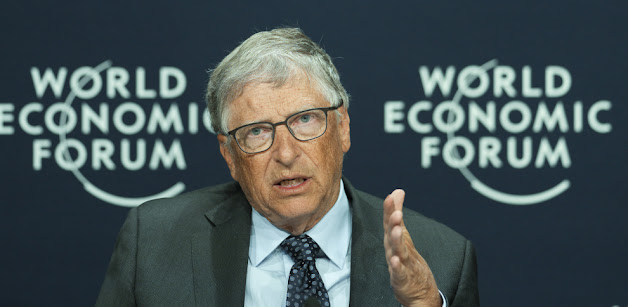
The 'New World Order'

 
Home Page 2 Page 3 Page 4 Page 5 Page 6 Page 7 God's Plan
The New World Order

Top 10: Uses Of AI In Data Centres

We explore how AI in the data centre sector is transforming data facilities, from revolutionising operations to enhancing security and more

The integration of AI in data centres is revolutionising how facilities operate, from providing unprecedented efficiency to maximising security and transforming scalability. AI technologies are stepping in as a vital solution for data centre operators, in streamlining operations and transforming various aspects of data centre management. AI's role in data centres is having an enormous impactful, with the potential still growing.

10. Training & development

According to research by digital infrastructure company Equinix, 62% of global IT decision-makers view a shortage of personnel with IT skills as one of the main threats to their business.

New AI technologies are among the most widely-cited solutions to the current talent crisis. Pioneering talent specialists across the world are utilising AI to help clients achieve a more efficient, supportive and intuitive approach to both onboarding and talent retention.

“In terms of supporting talent, AI can be very effective as a tool supporting augmented reality training scenarios, providing efficient real-time operational analytics and for attracting talent by demonstrating that a business is leveraging new and emerging technologies to provide employees with more interesting and future proof roles,” Mick Lane, the Global Technology Solutions Manager at CBRE.

9. Infrastructure management

In our Top 10 5G Infrastructure Companies we reviewed the leading companies in 5G infrastructure,with a commitment to providing better connectivity for all. Qualcomm has been developing 5G consistently for years. The company’s 5G Advanced services will support new devices, services, spectrum and deployments. It also views 5G and AI as complementary advancing together and mutually benefiting each other in terms of performance and efficiency.

8. Data processing & storage

AI supports data processing and storage for data centres in many ways. AI can continuously monitor system parameters and adjust them to optimise processing performance, which ensures that processing tasks are executed efficiently.

Data can be automatically moved between different storage tiers (such as SSDs, HDDs and cloud storage) based on usage patterns. This ensures that data accessed most frequently is stored on faster, more expensive media, while infrequently accessed data is moved to cheaper, slower media. AI can also analyse and identify redundant data and suggest compression or deduplication techniques to save storage space.

7. Smart cooling

AI and high-performance computing have put increased demand on data centre power. As a result, data centres have had to find ways to keep themselves cool, which has led to the development of smart cooled solutions. To paraphrase Plato, necessity is the mother of invention.

Smart cooling uses AI and machine learning to adjust cooling parameters, unlike traditional air and liquid cooling which rely on predefined settings and manual adjustments.

Smart cooling optimises energy use by predicting conditions and responding to them in real-time. Smart cooling can also adapt to changes in server workload and environmental conditions automatically, while traditional systems are less adaptable.

6. Power management

AI supports power management in data centres through a variety of ways. AI algorithms can allocate computing tasks based on power availability, while also making sure that power usage is balanced across the data centre. AI can also predict power usage and move non-critical tasks to off-peak times, in order to avoid excessive energy consumption and reduce costs. Data on energy consumption patterns can be collected and analysed by AI, providing insights into how power is being used and where efficiencies can be gained.

Energy performance across different parts of the data centre can be compared, identifying areas for improvement and helping set benchmarks for energy efficiency.

5. Predictive maintenance

Predictive maintenance refers to a more preemptive approach to data centre operation by utilising AI technology to predict what needs repairing. According to Deloitte, predictive maintenance is able to increase enterprise productivity by 25%, reduce breakdowns by 70% and lower maintenance costs by 25% - as opposed to reactive maintenance.

“AI needs an enormous amount of data to learn and evolve, so as data centres grow, more data will be available for AI to use,” said Flora Cavinato, Global Service Product Portfolio Director at Vertiv. “Predictive maintenance will naturally scale, which means that the more dense and varied data population there is, the better the data trending, pattern recognition, insight learning and predictions.”

4. Network automation

AI supports network automation in data centres by enhancing efficiency, reliability and performance in a range of ways. AI can automatically configure network settings based on real-time traffic, which ensures optimal network performance and reduces manual intervention. AI-driven systems can support network policies across the data centre, updating configurations automatically to comply with security policies.

AI also allows for automatic scaling of network resources in response as workloads change. This makes sure that the network can handle different levels of traffic, without manual intervention.

3. Resource optimisation

Hyperscale data centres are built by companies with vast data processing and storage needs. These firms may derive their income directly from the applications or websites the equipment supports, or sell technology management services to third parties. As they are significantly larger than enterprise data centres, they are an attractive choice for data centre operators.

Many big hyperscalers are exploring new technologies, such as AI, to further improve their data centre efficiency. For example, Meta is exploring how AI and machine learning can help it to optimise its data centre operations, especially surrounding the construction of a new data centre campus in Singapore, which will be one of the largest in the region.

2. Security

Security is a big factor in every industry, from factory floor to the CEO’s office. The use of AI in data centres strengthens security in several ways:

AI can monitor network traffic and user behaviour to spot anomalies which may suggest a security threat.

AI-powered intrusion detection and prevention systems can identify threats effectively, by adapting to new data of emerging threats.

Following a security incident, AI can automate a response, reducing the time taken to contain threats. This can help to isolate affected systems and block malicious IP addresses.

Within the data centre infrastructure, AI can help to identify vulnerabilities. Machine learning models can suggest which vulnerabilities are most likely to be targeted allowing for immediate action.

Through the automation of security tasks, AI minimises the need for manual intervention, lowers operational costs and allows security teams to put their energy into strategic activities.

1. Sustainability

Data centres which support AI are faced with the challenge of higher computational power, prompting greater changes in facility design, newer cooling technologies and greater innovation in carbon footprint reduction.

As the data centre sector is called upon to confront its sustainability challenges, Data Centre Magazine spoke with Tom Kingham, Design Lead Europe & Japan at CyrusOne. He explained how data centres are starting to evolve into renewable energy developers to confront the energy efficiency challenge, in addition to how facilities are looking to be more flexible - both digitally and environmentally.

According to Tom, data centres should continue to address the unique demands of AI workloads, including the need for ultra-high-density power usage, advanced cooling technologies and scalable designs.

“This has been an ongoing priority for CyrusOne, guiding the design of current and future projects to effectively scale their AI infrastructure,” he said. “Inevitably, we are seeing a stronger focus on sustainability, with innovations reducing physical space requirements and carbon footprints, reflecting a broader trend towards greener data centre operations.”


Also:


Data centers are sprouting up as a result of the AI boom, minting fortunes, sucking up energy, and changing rural America
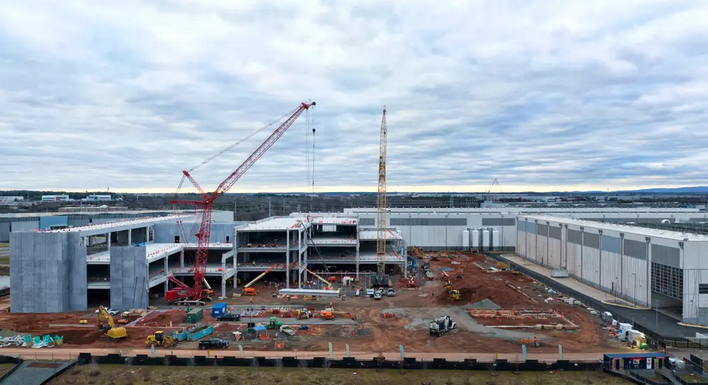
It's less than a year since ChatGPT launched to the public, triggering a boom in artificial intelligence investments, and forever changing our comprehension of the technology.

And while the rise of AI has already changed our digital realities, it's also beginning to impact our physical world, too.

The AI boom has supercharged a wave of spending on data centers. This building boom is sucking up billions of dollars, along with water, land, and energy.

"There's a well-publicized arms race happening in AI, and the major tech companies are expected to invest $1 trillion over the next five years in this area, mostly to data centers," Jonathan Gray, Blackstone's president and chief operating officer, said on an earnings call on July 20.

The data center boom is set to double or triple the amount of energy consumed by these data centers.

By 2030, data centers are expected to reach 35 gigawatts of power consumption annually, up from 17 gigawatts last year, according to McKinsey. A recent Cowen research report estimated that AI data centers could require more than five times the power of traditional facilities.

"It's staggering," said Marc Ganzi, CEO of DigitalBridge, an investment firm that owns and operates data centers, fiber networks, and other tech infrastructure. "Not sure how we do it."

Insider has been covering the data center boom at length. Here, we break down what's going on: 

AI is supercharging the data center boom

AI model training is especially energy intensive. It requires the use of graphic processing units. These GPUs are specialized chips that multitask better and work faster than central processing units, or CPUs, which run most traditional cloud services.

AI computer servers being installed in data centers are often equipped with multiple GPUs, usually supplied by Nvidia. Each GPU consumes up to about 400 watts of power, so one AI server can consume 2 kilowatts. A regular cloud server uses 300 to 500 watts, according to Shaolei Ren, a researcher at UC Riverside who has studied how modern AI models use resources.

For instance, the power consumption of Nvidia's new GH200 server cluster is about two to four times more than a regular cluster of the same physical size, he estimated.

Tom Keane, who oversaw Microsoft's cloud data centers for about two decades, recently warned about this. Microsoft is the main backer of OpenAI, creator of ChatGPT and builder of the most powerful AI models around.

"In the case of a training data center, you make that as big as possible, you put as many computers in there as possible and you're running that data center at full utilization all of the time," Keane told Bernstein analyst Mark Moerdler in a recent interview. "That physical data center starts to become more resource intensive. You start to design that AI data center very differently."

Rural America has become a hotbed

On a rolling expanse of rural Ohio land, America's digital future is being sown.

Last year, a partnership between the real estate investors Lincoln Property Company and Harrison Street purchased 190 acres in New Albany, a small city about 20 miles outside of Columbus where the pair plan to begin construction on a 200-megawatt data center by the end of the year.

The project's neighbors include Google, Meta, Microsoft, and Amazon – all of whom have similar plans, or are already underway with major data center projects.

"Our regional message is if you're a major data center developer or customer, we want to talk to you," said Matt McCollister, an executive vice president at One Columbus, a business development group in the region.

The data center industry has long been clustered in a handful of well-established markets, primarily Northern Virginia, Dallas, Phoenix, Silicon Valley, and Chicago. But the emergence of places like New Albany shows how soaring demand and the sector's voracious appetite for energy is increasingly pushing data center developers and users throughout the country.

Artificial intelligence, which requires massive computing power and energy loads, is expected to further this migration – especially as utilities in the industry's core markets have struggled to keep pace with its growth.

Wall Street is betting big

To help it reach $1 trillion in assets, Blackstone has wagered big sums on apartment buildings, warehouses, student housing, and other commercial real estate assets that proved to be shrewd investments.

Now, as borrowing costs rise, property values sink, and a once-soaring real estate market has become perilous, the investment giant is turning to ChatGPT for answers — literally.

Blackstone has been talking up data centers with expectations that the industry will benefit from a boom in artificial intelligence and become a key new area of focus in its $585 billion real estate portfolio.

Two years ago Blackstone funds, including its largest single real estate fund, Blackstone Real Estate Income Trust, known as BREIT, took the data center landlord and developer QTS Realty Trust private in a $10 billion deal that has made QTS the centerpiece of its data center ambitions.

Blackstone executives have said QTS's value has since tripled and that they plan to radically scale it beyond that with $8.5 billion of new data center projects due in the next three years and a $50 billion pipeline of longer-term development.

These complexes are hoovering up huge amounts of energy

Just a few miles from the $5 billion second headquarters that Amazon is raising outside of Washington, DC, the tech giant is in the midst of a far larger, and less conspicuous, building boom.

The company is in the process of developing $87 billion worth of data centers, a push that has already made it the biggest player in the world's largest data center market in northern Virginia. The featureless, warehouse-like structures are easy to miss on the sides of highways or tucked unassumingly amid suburban neighborhoods.

Data centers, including Amazon's, play an increasingly central, but unseen role in modern life, housing the digital infrastructure that powers critical functions such as e-commerce, autonomous vehicles, video streaming, and, now, artificial intelligence.

There is a flipside, however, to their now ubiquitous presence in places like northern Virginia. The facilities consume quantities of power so vast that they have begun to tax entire energy grids and could exacerbate the climate crisis.

Amazon does not disclose how many data centers it occupies, where they are located, or how much electricity they consume. The company's data facilities are tied to its large cloud computing business, Amazon Web Services, which offers software, storage, and other services to legions of customers.  

Based on a review of permits that Insider obtained through a Freedom of Information Act request, Amazon operates, or is in the process of building or planning, 102 data centers in northern Virginia. Together, the facilities, when they are all up and running, will have emergency generators capable of producing more than 4.6 gigawatts of power. That's almost enough backup electrical capacity to light up all of New York City on an average day.

That's forcing some utilities to delay their shift away from fossil fuels

In Phoenix and the surrounding region, data centers have attracted attention for the noise they blare, the water they guzzle, and the large tracts of land they've consumed.

Now, the prodigious power burned by this fast-growing industry threatens to overwhelm the city's utilities and stymie efforts to remove fossil fuels from the grid even as the climate crisis has flashed increasingly dire signals. This year, the daily high temperature in Phoenix reached or surpassed 110 degrees Fahrenheit for a record 54 days.

"We have about 7,000 megawatts of data center requests currently in our pipeline," Karla Moran, an executive at Salt River Project, one of two major utilities that serve the Phoenix region, told Insider. Moran noted those requests rivaled the size of the utility's entire 11,000 megawatt system.

While all of those power requests are not expected to materialize into actual development, she said the size of the interest was unprecedented. The data center industry's soaring electrical demand has been so significant, it factored into the utility's far-reaching plans, Moran said.

In October, the power company, better known as SRP, approved a significant expansion of its generating capabilities that includes the development of 2,000 megawatts of new methane gas facilities. Those plants will effectively preserve the size of its portfolio of fossil-fuel-fired infrastructure into the next decade and potentially beyond.

Moran said data centers, with their heavy, around-the-clock power use, were "one of the main reasons we look at having a resource like that."

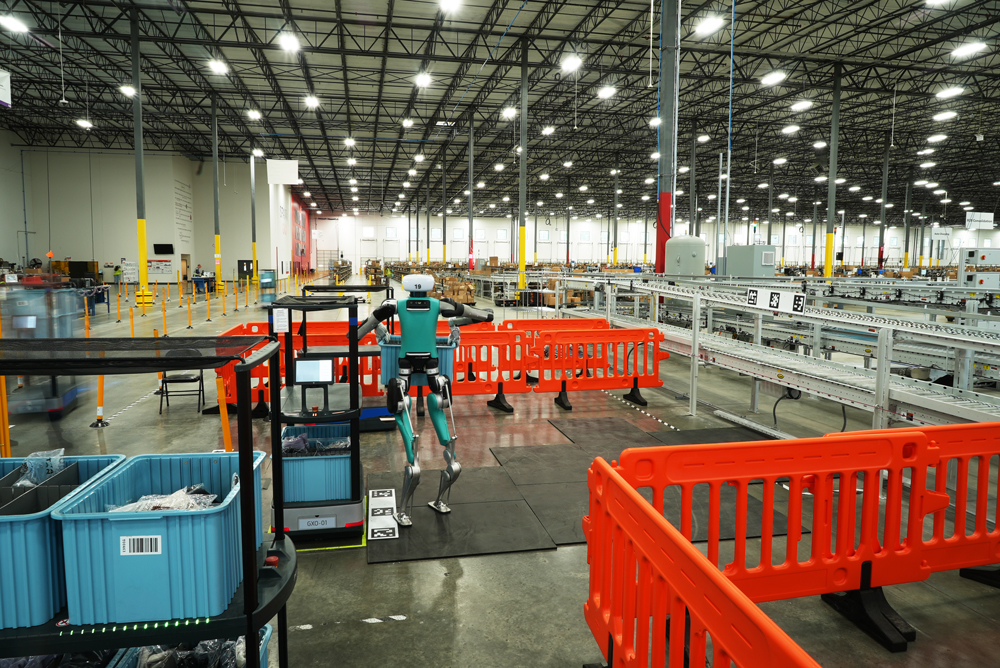


The World’s First Humanoid Robot Factory

Oregon company Agility Robotics has completed the construction of the world’s first factory for human-centric, multi-purpose robots or humanoids.

The first humanoid robot factory.

RoboFab is the first full-scale humanoid robot factory in the world. It’s the home base for producing our robot Digit and the athat go with it. Located in Salem, Oregon, RoboFab is a shining example of American manufacturing excellence.

The New RoboFab Factory

Last year, Agility began construction of a 70,000-square-foot facility that will open this year. Now, the factory has officially begun assembling robots and robotic fleets. About 30 miles from Agility’s engineering center, the facility has the capacity to produce hundreds of robots within the first year.

More than 500 workers will be able to work the factory at full capacity, in addition to Agility’s other previously built locations. Agility’s new RoboFab facility will be able to produce over 10,000 robots annually.

Agility Robotics’ Digit

Agility Robotics began as an Oregon State University spin-out in 2015. The lab’s immediate push was to create a basis for locomotion and stability in bipedal robots. In 2017, the company unveiled a full-size robot known as Digit. About six years later, in 2023, the current model of the Digit was made available.

Designed from the ground up, Digit operates the same way people do, following assignments to do tasks such as bulk material handling. Digit provides a robotic utility to take the place of humans, taking care of assigned tasks both safely and efficiently.

Once the facility moves to full capacity, Digit will be of additional value, working in the same factory as its production. The bot will be able to load and unload totes moving alongside humans, replicating simple human-centric tasks.

The Agility Robot Manufacturing System

RoboFab is a CapEx light assembly facility. That means no heavy machinery or costly industrial equipment is used to produce the Digits that come off the assembly line. The facility itself, as well as the Agility Robot Manufacturing System (ARMS), is highly scalable to meet the immense commercial demand for Digit.

At peak capacity, RoboFab can produce 10,000 robots per year. However, we will ramp up to eight units per shift in the first year, which will allow us to refine the system while we avoid wasting time and resources. More importantly, we will produce a large number of robots right out of the gate.

The assembly line is divided into work cells for the major sub-assemblies, including legs, arms, torsos, and actuators. It is designed to produce each sub-assembly in roughly the same amount of time. Our unique system is tuned for an entire robot to come together simultaneously and then move on to final testing.

Each work cell can quickly expand or be duplicated to increase production capacity. It's a structure that allows for high-rate manufacturing and producing robots in large quantities without requiring expensive modifications to the process or shutting down the assembly line to make adjustments.

With ARMS, we have a blueprint for quickly and cost-effectively building more RoboFabs as needed.

Are these tasks being done in your facility?

If so, it's time to bring Digit in to help expand your labor pool.

Tote Load & Unload:

Digit is a revolutionary piece of automation technology, the ultimate connector of existing technology and infrastructure. Digit can load and unload totes to support many different workflows.

For example, we've successfully integrated with many of the world's biggest AMR vendors, and the list is growing.

Using a mobile manipulator like Digit minimizes downtime and maximizes throughput, enhancing overall productivity. Load and unload totes from just about any source or destination: AMRs, Racks & Shelves, Units Sorters, Goods 2 Person Systems, Conveyors

Tote Recycling:

By efficiently managing the recycling of totes used for material transportation within logistics and manufacturing workflows, companies can optimize resources and re-task employees where they make the most impact.

This process minimizes downtime and enhances efficiency by ensuring totes are readily available, and at the right locations.

Tote Stacking, Tote Destacking, Tote Nesting

Tote Palletizing & Depalletizing:

By efficiently managing the recycling of totes used for material transportation within logistics and manufacturing workflows, companies can optimize resources and re-task employees where they make the most impact.

This process minimizes downtime and enhances efficiency by ensuring totes are readily available, and at the right locations.

Palletize and Depalletize from/to: Conveyors, Racks, Carts, AMRs


"World's first humanoid robot factory" will ship Digits in 2024

Agility Robotics is well into construction of a 70,000-sq-ft (6,503-sq-m) facility in Salem, Oregon, with the capacity to produce more than 10,000 units per year of the company's Digit humanoid robot – which will work alongside humans on the factory floor.

The new "RoboFab" manufacturing plant is set to open later this year, with customer deliveries expected to begin in 2024, and "general market availability" to commence in 2025. Agility expects to build "hundreds" of Digit humanoids in its first year, and scale up from there.

In the video below, Agility COO Aindrea Campbell compares the RoboFab factory to Henry Ford's first manufacturing operation.

"There was a point in time over a hundred years ago," she says, "when we had the world's first automobile factory. I think this is the same moment where we're now having the world's first humanoid robot factory, and someday, just like automobiles, humanoid robots will be all around the globe."
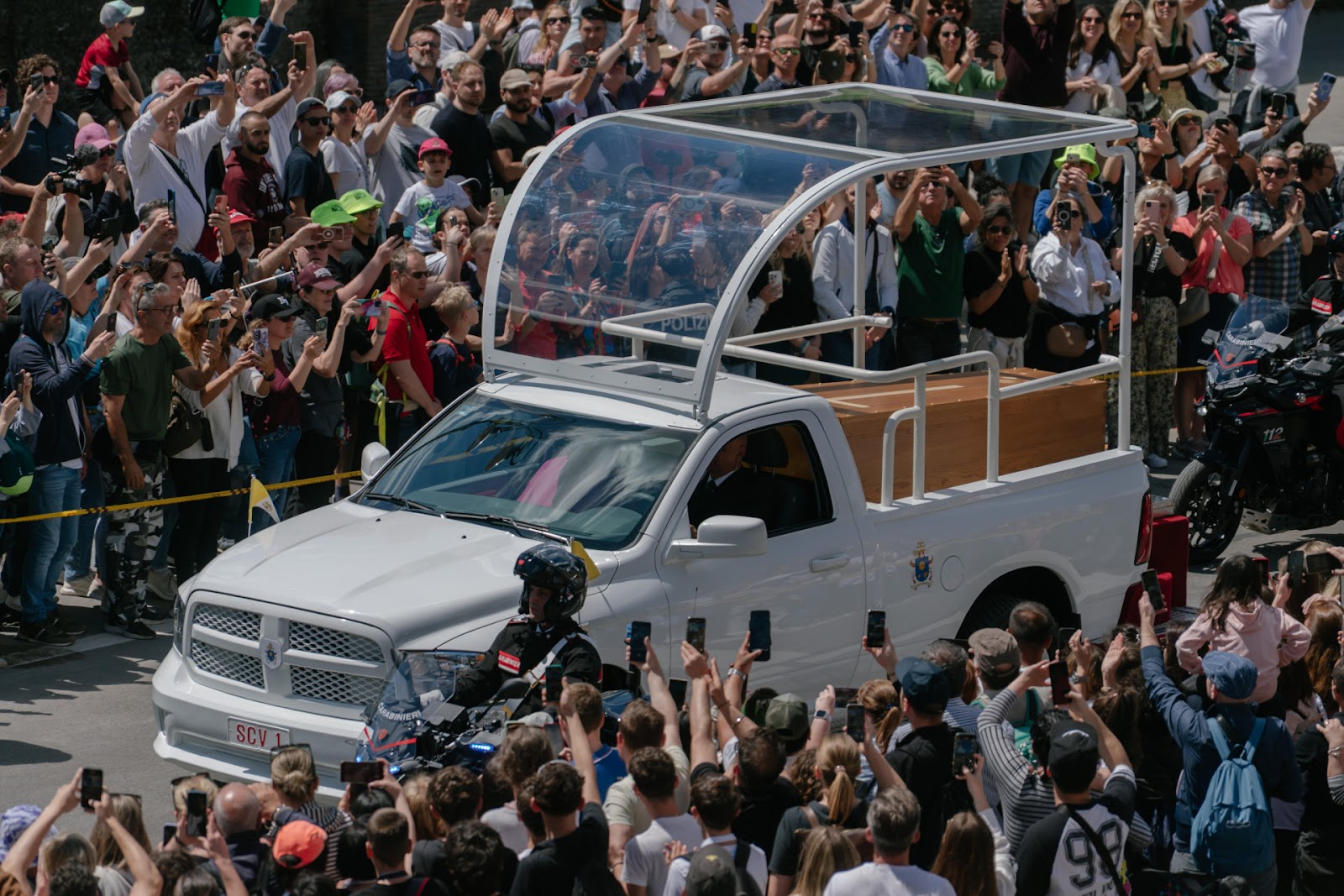
So what is Digit? Well, it's a 175-cm-tall (5-ft 9-in) tall bipedal robot weighing around 65 kg (141 lb). It can carry loads up to 16 kg (35 lb) in a pair of claw-like gripper hands, and it charges itself autonomously to theoretically stay on duty for 16 hours out of 24 – the equivalent of covering two full-time shifts.

It runs a similar set of bird-like backwards-looking legs to the company's Cassie robot, which broke the Guinness World Record for the fastest 100-meter sprint by a bipedal robot in 2022. Both have short upper legs that typically stay oriented forward in a knees-up stance, then long "calves" extending back behind the torso, and a high ankle joint where you'd normally expect to see a knee, leading down to smallish toe pads in contact with the ground.

The advantages here are that Digit can fold its legs up behind it in a way that would cause loud noises from the average human. It can also squat down in front of shelves to grab boxes without its knees protruding forward, so it can pick them up with less of a need to lean forward.

Equipped with camera vision and LiDAR, Digit has been around for several years now – you may remember it being proposed as a parcel-delivering robot by Ford back in 2019 – which would be remarkable. Who remembers things from 2019?

It can be controlled via a gamepad-style tablet (and e-stop shutdown initiator) and hard-coded with various tasks – mainly in the 'picking things up and putting them down' category. Interestingly though, in the last few months, Agility has been experimenting with using large language model (LLM) AIs, effectively to get Digit to program itself in response to natural language verbal commands.

Digit will start out moving boxes and totes around Agility's own factory, and those of its early customers. Next, the company hopes to get it loading and unloading trucks. There's little mention of more complex tasks at this point, so it seems Agility is happy to keep early use cases very constrained.

As to whether RoboFab is technically the world's first humanoid robot factory, well, that may be gilding the lily, since Chinese company Fourier Intelligence announced in July that it would have 100 of its GT-1 humanoids built and in the hands of customers by the end of this year – each with the capability to carry nearly its own weight.

Either way, it adds to a growing pile of evidence that the workforce is about to see yet another substantial change. There are now dozens of companies who have decided, and convinced investors, that the dawn of humanoid robot workers is very nearly upon us. Brace for change.


Also:


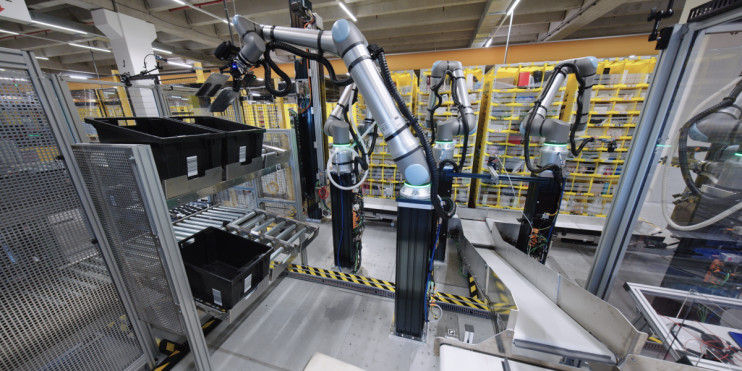
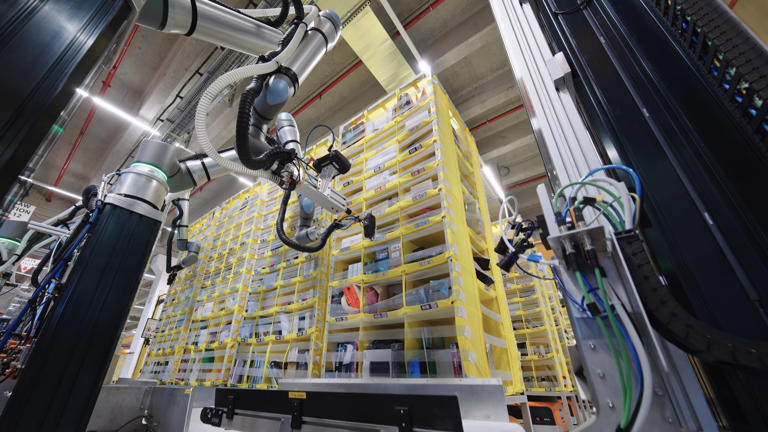
Amazon says its new warehouse robot can work 20-hour shifts and 'feel' items

Amazon's latest Vulcan robot is the company's first system that can sense touch. The devices can reach places where workers would ordinarily have to bend or climb a step-ladder. Amazon says fulfillment centers will still need human workers, especially for higher-tech roles.

Amazon warehouse workers' newest high-tech colleague has a sensitive side.

The e-commerce giant's latest robot, named Vulcan, is its first system that can sense touch, enabling it to handle a wider selection of oddly shaped items than older models.

"In the past, when industrial robots have unexpected contact, they either emergency stop or smash through that contact," Amazon director of applied science Aaron Parness said in a statement.

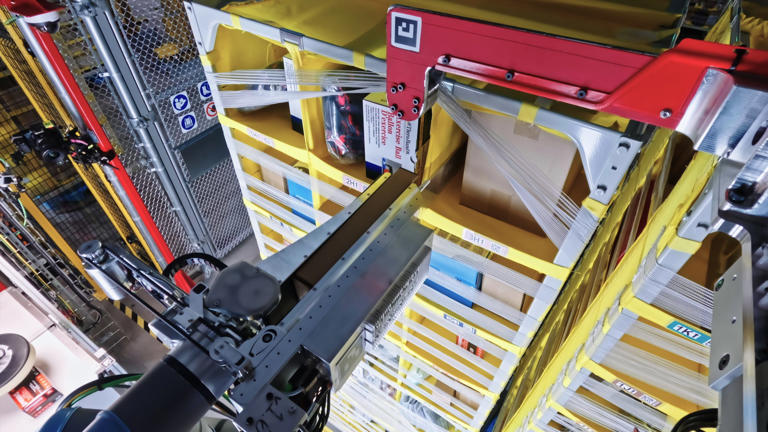
Vulcan's arm uses force-feedback sensors that allow the robot to detect how much pressure it can apply without damaging an object, and Amazon says the tech enables the robot to pick and stow three quarters of the kinds of products that are kept at a typical fulfillment center.

The tech is currently in use at centers in Spokane, Washington, and Hamburg, Germany. Amazon plans to deploy more units across the US and Europe aver the next few years.

Apart from its ability to work 20-hour shifts, Amazon also says the Vulcan robot complements human workers by helping reach items from high bins without a step-ladder, and low bins that would require crouching.

That frees up workers to focus their efforts on objects stored in mid-height bins, which the company calls their "power zone."

Vulcan works alongside our employees, and the combination is better than either on their own," Parness said.

Parness also told CNBC that Amazon fulfillment centers will still need human workers, especially for higher-tech roles that involve installing and maintaining the expanding robot fleet.

"I don't believe in 100% automation," he told the outlet. "If we had to get Vulcan to do 100% of the stows and picks, it would never happen. You would wait your entire life. Amazon understands this."


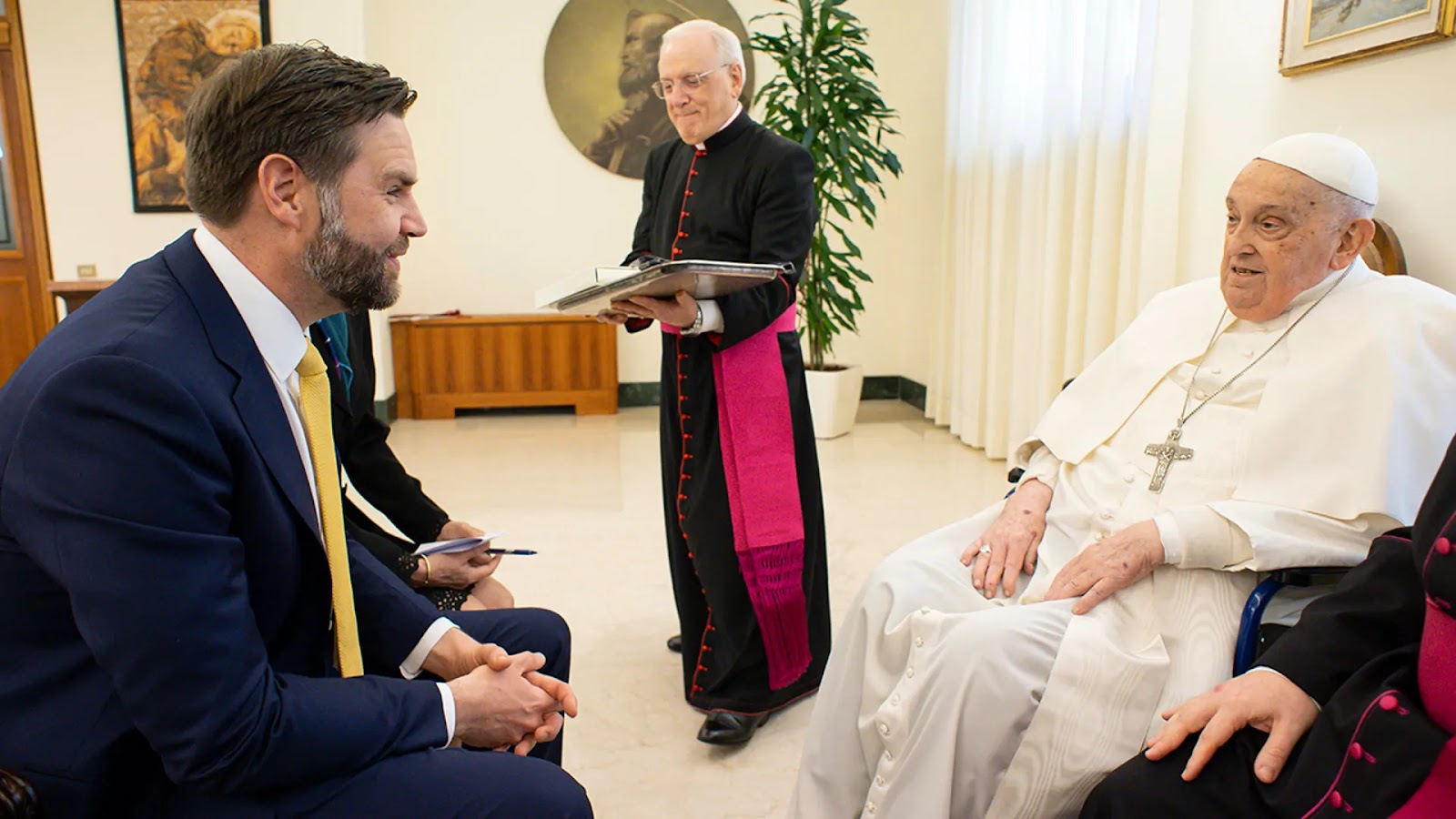
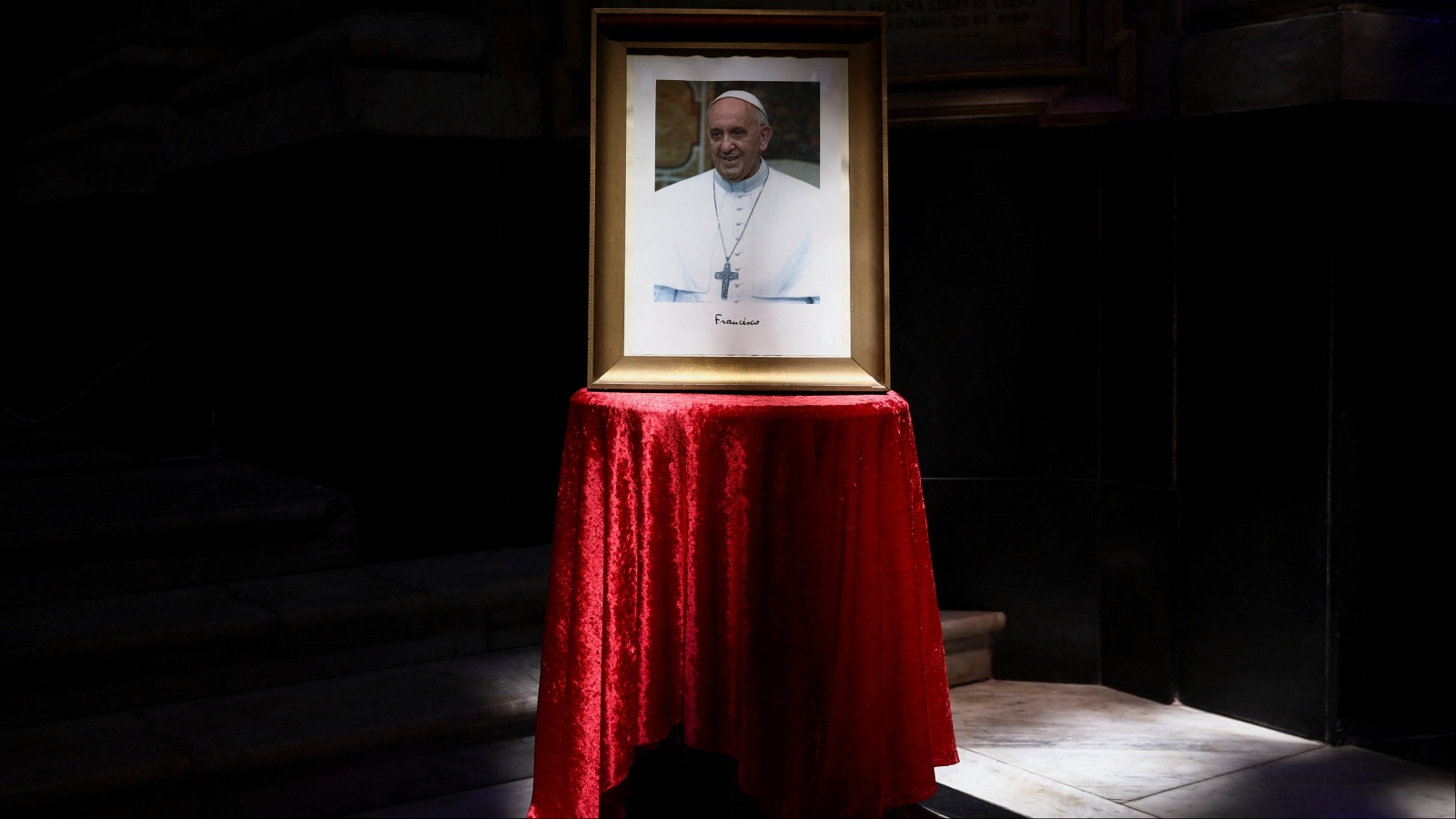
Pope Francis The First Pope From The Society Of Jesus Dies

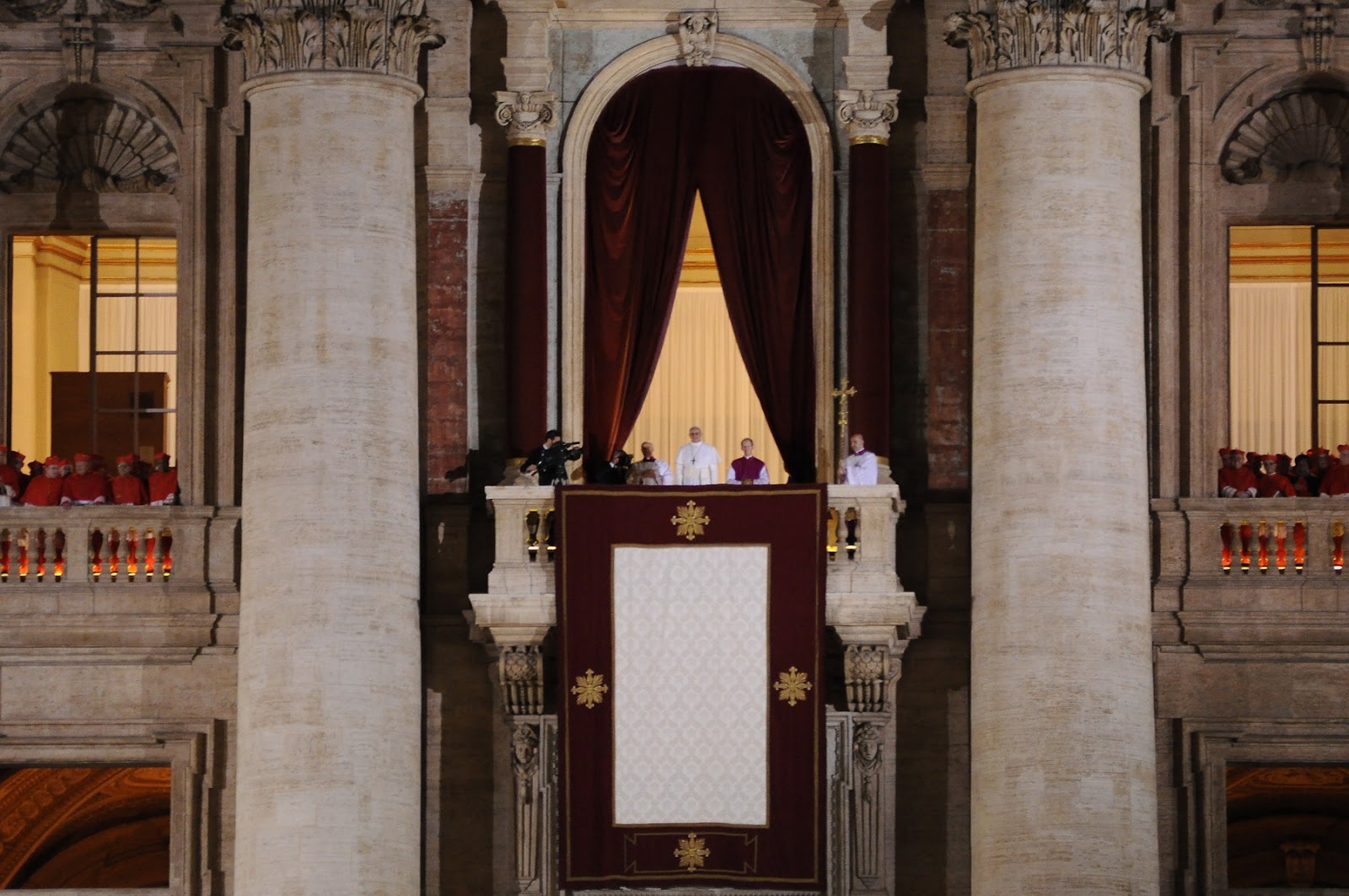
Francis appeared in public for the first time as pope, at St. Peter's Basilica balcony, 13 March 2013.

Bergoglio was elected pope on 13 March 2013, the second day of the 2013 papal conclave, after which he took the papal name Francis.

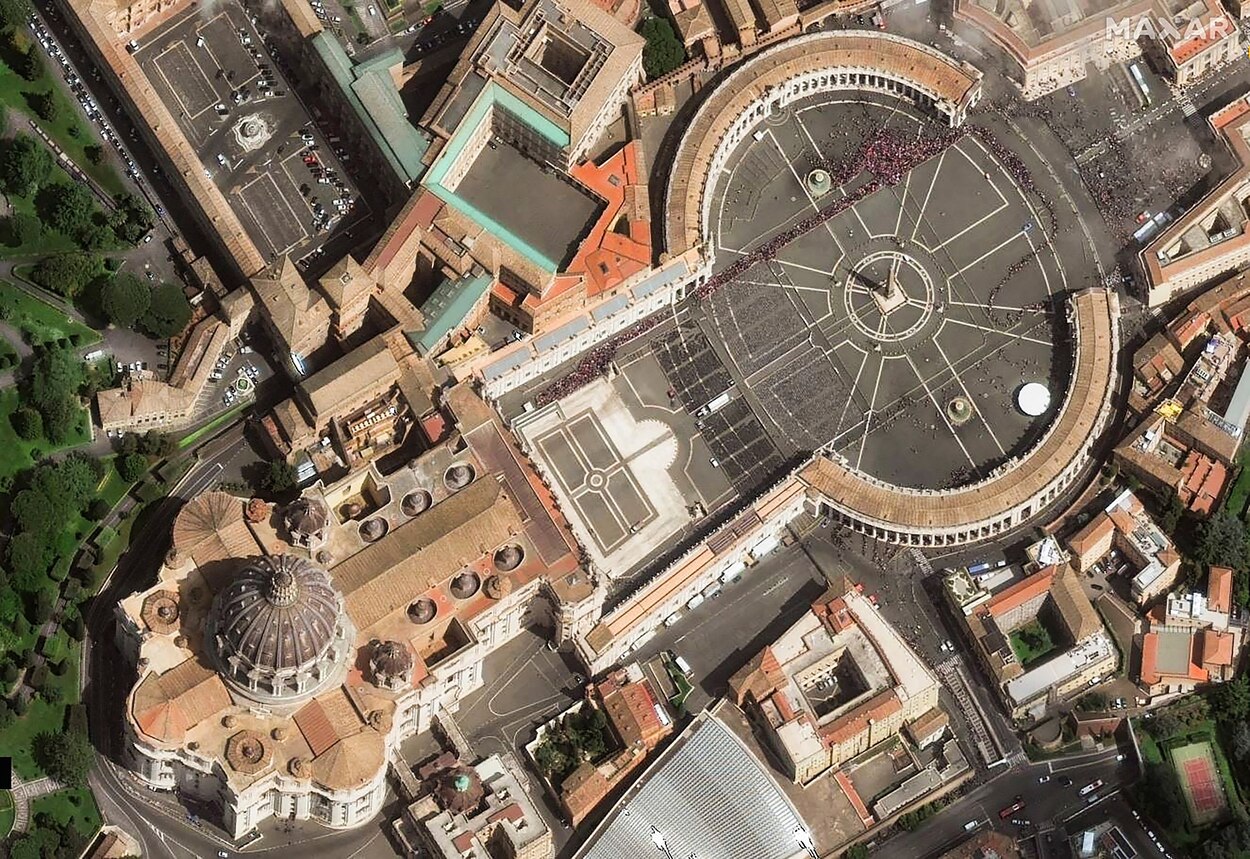
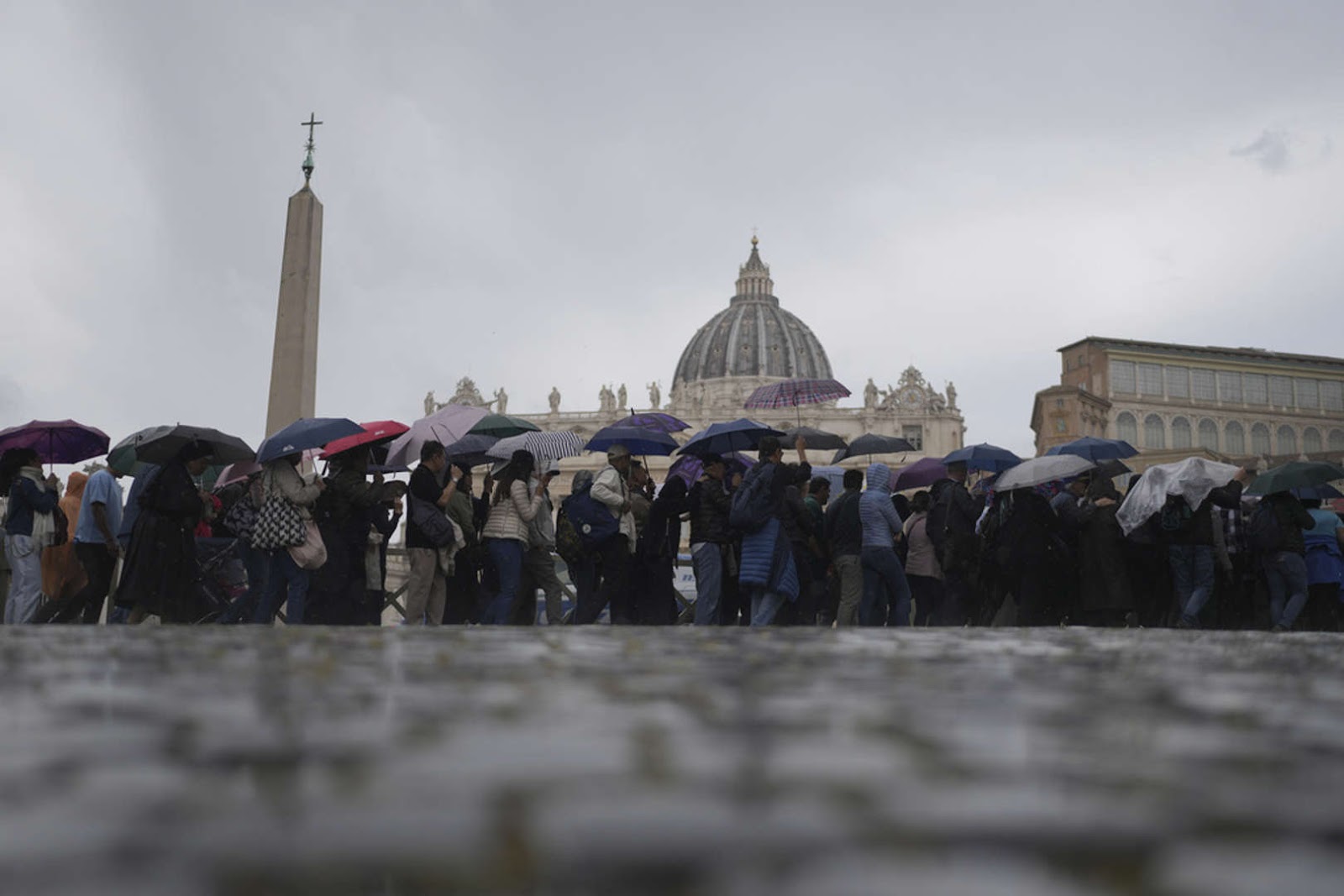
Vatican City — On Thursday morning, the queue to see the Pope, who is in an open coffin, stretched out of St Peter's Square and down the street - the longest the line had become since his body was moved to lie in state on Wednesday.

Entry to the church in Vatican City had been due to stop at midnight local time (22:00 GMT), but opening hours were extended to accommodate large crowds.

The pontiff died on Monday at the age of 88 after suffering a stroke. He had spent five weeks in hospital earlier this year with double pneumonia.

So many mourners lined up to see Pope Francis lying in state in a simple wooden coffin inside St. Peter's Basilica that the Vatican kept the doors open all night due to higher-than-expected turnout, closing the basilica for just an hour Thursday morning for cleaning.

The basilica closed from 6 a.m. until 7 a.m., the planned opening time and, according to French news agency AFP, thousands lined up early Thursday to pay their respects.

About 90,000 people have visited St. Peter’s Basilica to pay homage to Pope Francis as of Thursday Morning April 24, 2025

Pope Francis (born Jorge Mario Bergoglio; 17 December 1936 – 21 April 2025) was the head of the Catholic Church and sovereign of the Vatican City State from 2013 until his death in 2025. He was the first pope from the Society of Jesus (the Jesuit Order), the first Latin American, the first from the Americas, the first from the Southern Hemisphere, and the first born or raised outside of Europe since the 8th-century Syrian pope Gregory III.

This was a significant appointment because of the sometimes tense relations between the Society of Jesus and the Holy See. As a Jesuit pope, Francis made clear that a fundamental task of the faithful is not so much to follow rules but to discern what God is calling them to do.

He altered the culture of the clergy, steering away from what he named "clericalism" (which dwells on priestly status and authority) and toward an ethic of service (Francis says the church's shepherds must have the "smell of the sheep", always staying close to the People of God).

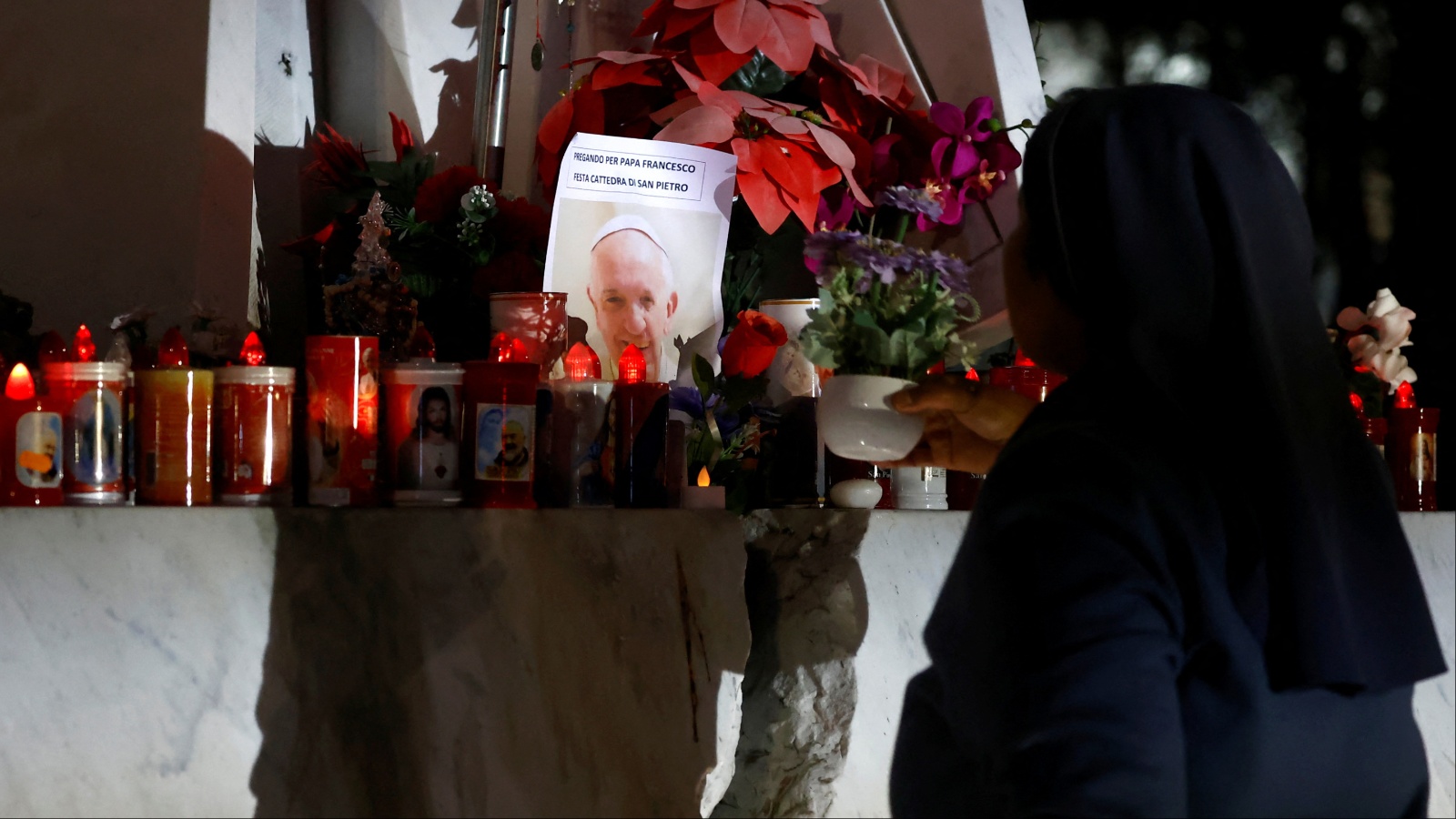
The Public Viewing Of Pope Francis - (Above)

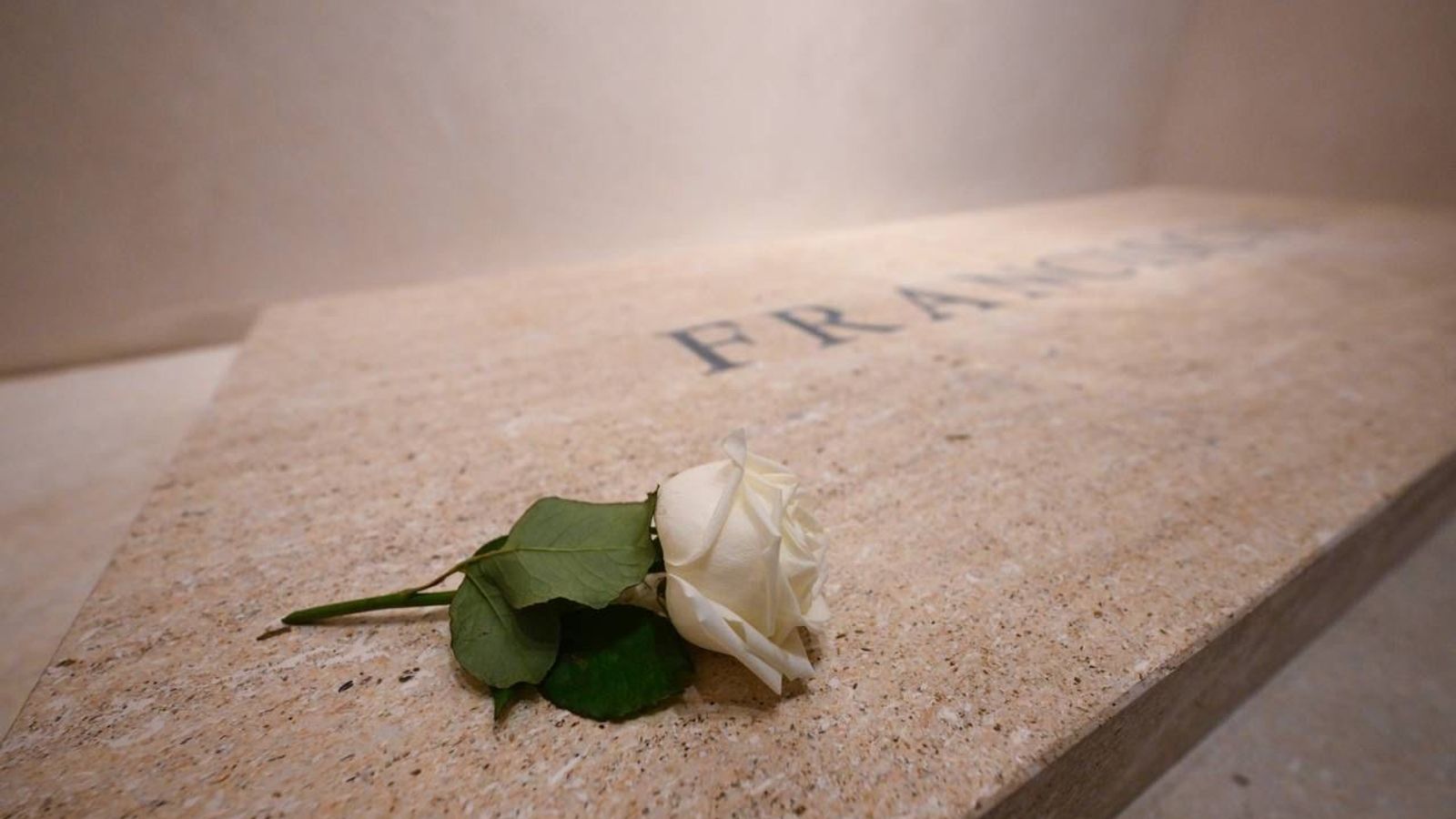
Taking the Pope to Papal Basilica of Saint Mary Major, Rome, Italy to his final resting spot - (Last Picture)

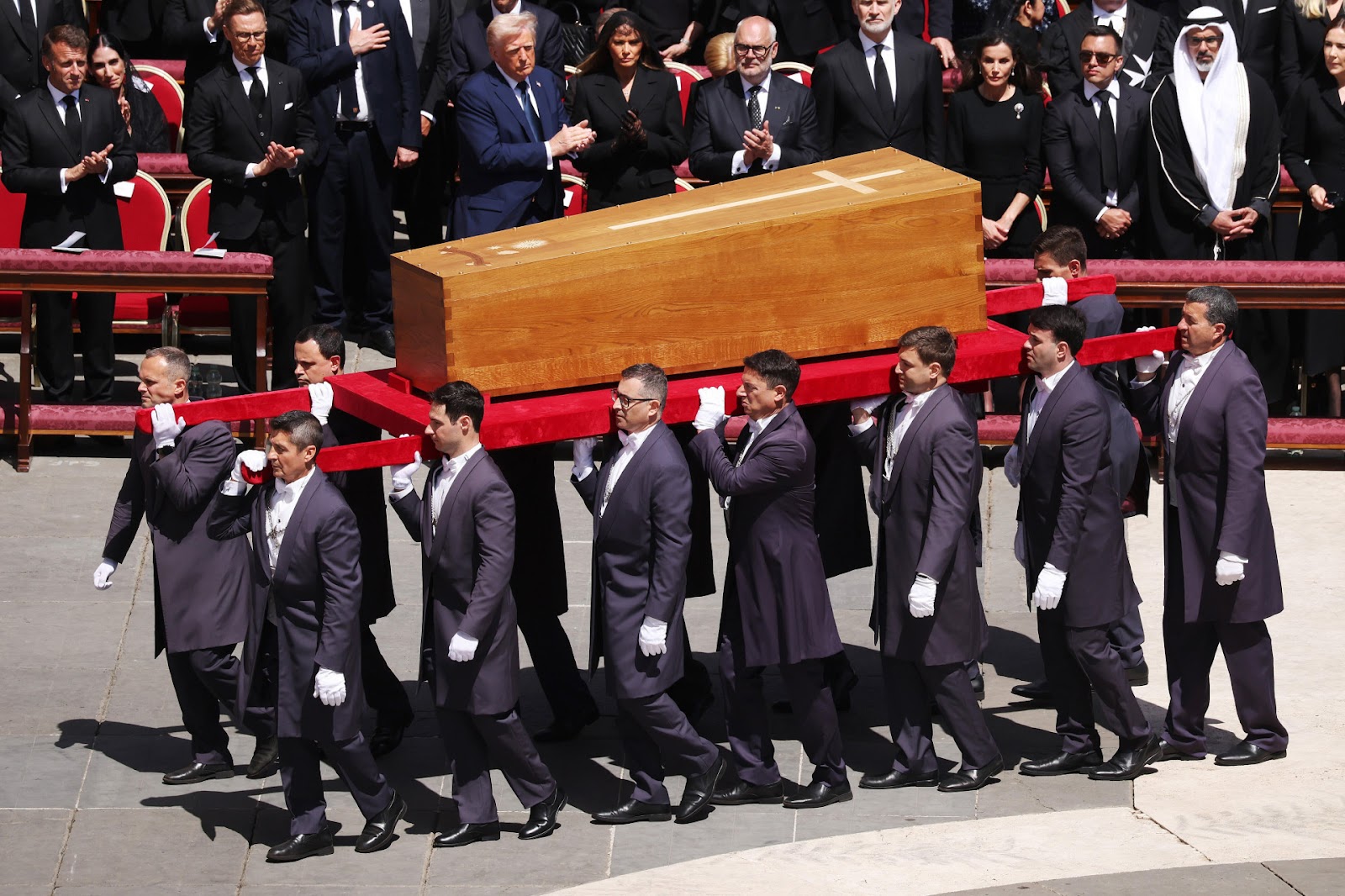
The Popes Funeral - (Above)

Pope Francis' tomb was made of marble with the inscription "Franciscus" and is located in a niche in the aisle between the Pauline Chapel and the Sforza Chapel of the Basilica of St. Mary Major.

Click on a picture to see a larger image


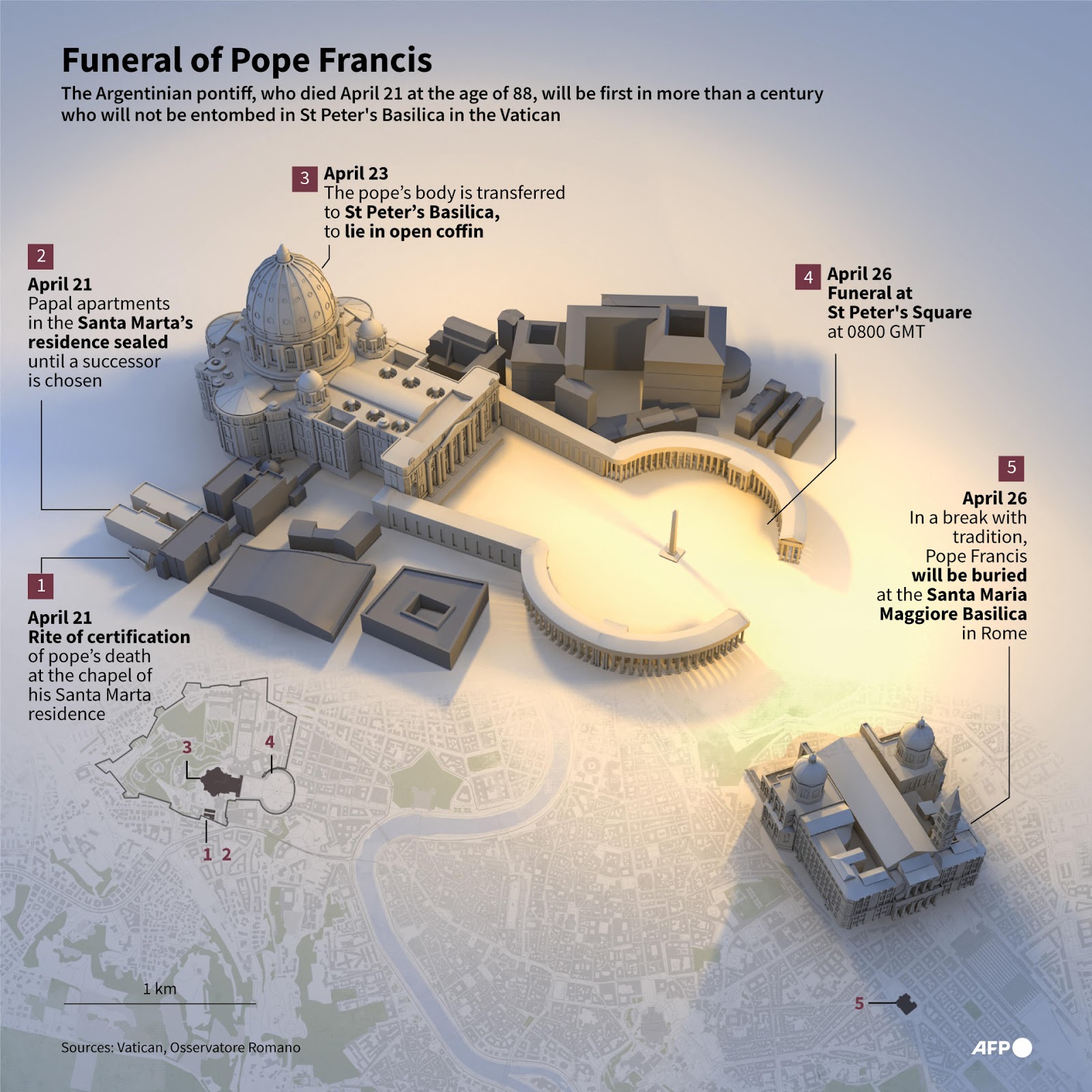
Pope Francis will be the first pontiff in more than a century to be buried outside the Vatican Grottoes. After his funeral on Saturday, he will be laid to rest in the Basilica of St. Mary Major, which stands sentinel across the city in the Esquilino district.

The decision by Pope Francis to do this, Cardinal Rolandas Makrickas told NPR, was the result of "divine intervention."

Legend has it that this fourth century church was built after the Virgin Mary appeared in a dream to an aristocrat, Giovanni, and to Pope Liberius, requesting a house of worship in her honor.

Pope Francis told Mackrikas, who is the coadjutor archpriest of the Basilica of St. Mary Major, that the Virgin Mary appeared before him, requesting that he be laid to rest in her church.


What happens after a Pope’s death

Confirmation of death

It is traditionally the job of the camerlengo (a senior Vatican official) to confirm the death of a pope. Currently, that position is held by Irish-born Cardinal Kevin Farrell, who announced the news of Francis’ death on Monday morning.

“Dearest brothers and sisters, with deep sorrow I must announce the death of our Holy Father Francis. At 7:35 this morning, the Bishop of Rome, Francis, returned to the house of the Father,” he said.

If everything went as tradition demands, Farrell will have visited Pope Francis’ body in his private chapel and called out his name to rouse him. Nowadays this is largely ceremonial, as doctors will have confirmed the pontiff’s death through more standard medical means. (An oft-repeated myth holds that the camerlengo also gently taps the pope’s head with a silver hammer; the Vatican has long denied this.)

After the pontiff fails to respond, according to tradition, his signet ring, which acts as the seal for official papal documents, is defaced or destroyed, signifying the end of his reign, and the papal apartments are sealed off. The camerlengo informs the College of Cardinals, a governing body of senior church officials, that the pope has died, before his death is announced to the world.

The mourning period

The pope’s death triggers nine days of mourning known as the Novendiale, originally an Ancient Roman custom. Italy also typically declares a period of national mourning.

His body is blessed, dressed in papal vestments and exhibited in St. Peter’s Basilica for public viewing, where hundreds of thousands will line up to pay their respects, including foreign dignitaries and world leaders. In the past, the pope’s corpse was displayed on a raised platform called a catafalque, but Francis’ simplified funeral rites will see him lying in an open coffin without so much pomp and pageantry.

Historically, popes were often embalmed and some had their organs removed prior to burial — a church near the Trevi Fountain in Rome holds the hearts of more than 20 popes in marble urns, preserved as holy relics — but these practices have fallen out of favor.

As Pope Francis lies in state, daily prayer services and Requiem Masses will be held at St. Peter’s Basilica and throughout the Catholic world. Meanwhile, the Vatican will enter a transitional period called sede vacante, meaning “while the seat is vacant,” during which the rule of the church is temporarily handed over to the College of Cardinals — though no major decisions can be made until a new pope is elected.

Meanwhile, the Vatican will enter a transitional period called sede vacante, meaning “while the seat is vacant,” during which the rule of the church is temporarily handed over to the College of Cardinals — though no major decisions can be made until a new pope is elected.

The burial

The pope’s funeral will most likely be held in St. Peter’s Square between four and six days after his death, with mourners packing into the Vatican for the service. It will be led by the dean of the College of Cardinals, currently 91-year-old Italian Giovanni Battista Re.

Traditionally, the pope is then buried in the Vatican Grottoes, the crypts beneath St. Peter’s Basilica. Almost 100 popes are entombed there, including Pope Benedict XVI, Francis’ predecessor, who resigned in 2013 and died in 2022.

But Francis said in an interview in 2023 that he had picked the Santa Maria Maggiore basilica in Rome, one of his favorite and most-frequented churches, as his final resting place, making him the first pope in a century to be interred outside the Vatican.

Past popes were entombed in three coffins: one made out of cypress, one of zinc and one of elm, nested inside each other, but Francis has ordered that he be buried in a single coffin, made of wood and zinc.

When Benedict XVI was buried, his coffin also contained coins minted during his reign, as well as a metal tube enclosing a rolled-up paper scroll, called a rogito — a 1,000-word document retelling his life and reign. Francis will likely be buried with his own rogito detailing his unique papacy.

The election

Two to three weeks after the pope’s funeral, the College of Cardinals will convene in the Sistine Chapel to hold a conclave, the highly secretive process of electing a new pope. In theory, any baptized male Roman Catholic is eligible for the papacy, but for the past 700 years, the pope has always been chosen from the College of Cardinals.

The vast majority of the 266 pontiffs elected throughout history have been European. Pope Francis, born Jorge Mario Bergoglio in Argentina, is the first non-European pontiff in 1,300 years.

Unlike in regular politics, candidates for pope do not openly campaign for the position. Vatican watchers have deemed cardinals who have a good shot at becoming pope papabile, meaning “popeable.”

On the day of voting, the Sistine Chapel, with its famed ceiling painted by Michelangelo, is physically sealed off and the cardinals, who have taken an oath of secrecy, are locked inside.

Only cardinals under the age of 80 are eligible to cast ballots. Around 120 will vote in secret for their chosen candidate, writing their name on a ballot and placing it in a chalice atop the altar.

If no candidate receives the required two-thirds majority, another round of voting takes place. There can be up to four rounds per day. The conclave that elected Pope Francis in 2013 took about 24 hours and five ballots, but the process can run longer; a conclave in the 13th century took about three years, while another in the 18th century took four months.

Once the ballots are counted, they are burned in a stove inside the Sistine Chapel, installed ahead of time by Vatican firefighters. A second stove burns a chemical sending up a smoke signal through a chimney to the outside world: Black smoke means a new pope has not been selected, white smoke means one has.

The new pope

Once a pope is chosen, a representative from the College of Cardinals reads out the Latin announcement Habemus papam, meaning “We have a pope,” from the main balcony of St. Peter’s Basilica overlooking thousands of eager faithful.

Then the freshly elected pope, having chosen a papal name (most likely one honoring a saint or predecessor) and donned a white cassock, steps out onto the balcony to give his first address to the public. And with that, the Catholic world has a new leader.

Along with setting the church’s teachings and morals, the pope wields significant diplomatic and political power in world politics, acting as a mediator in global conflicts and guiding humanitarian efforts.

Most popes serve until the day they die. Pope Benedict XVI, who resigned in 2013, aged 85, because of declining health, was the first pontiff to step down in 600 years.


Also:


What Happens After the Pope Dies?

After Pope Francis’ funeral, 135 cardinals will gather for a conclave to elect a new pope. The traditions include oaths of secrecy, paper ballots and white smoke from a chimney of the Sistine Chapel.

The funeral for Pope Francis, who died on Monday, will follow a centuries-old tradition, with rituals spanning several days and a viewing of his body for mourners from around the world.

Immediately After the Pope’s Death

Inside the Vatican, the ritual begins when a doctor is summoned to certify the pontiff’s death, and write a report. The doctor then ensures that the body will be perfectly preserved for the viewing, and the pope’s body is dressed in a white cassock. Ordo Exsequiarum Romani Pontificis, Latin for “Rite of Burial for the Roman Pontiff,” a book introduced by the Vatican last year that simplifies papal burials, allows for the confirmation of death to take place in a pontiff’s personal chapel rather than his bedroom.

The cardinal chamberlain, “camerlengo” in Italian, other Vatican officials and members of the pope’s family will congregate in the chapel for a ceremony. The body is placed in a coffin made of wood and lined with zinc. The pope will be dressed in red, with his miter and pallium, the traditional headdress worn by bishops and a strip of white wool worn like a collar, placed next to him.

The camerlengo arranges for the use of a ceremonial hammer to destroy the so-called fisherman’s ring, used by the pope to seal documents, to prevent forgeries. A new one will be forged when the next pope is elected.

The camerlengo then seals the door to the pope’s study and bedroom. The night before the funeral, the coffin will be closed and the pope’s face covered by a white silk veil. He will be buried with a bag containing coins minted by the Vatican during his papacy and a canister with a “rogito,” or deed, that briefly lists details of his life and papacy. The rogito is read aloud before the coffin is closed.

The Papal Funeral

All of the 252 cardinals across the world traditionally receive an invitation to travel to Rome after the pope’s death to attend the funeral and choose a new pontiff.

On the day chosen by the cardinals, the coffin will be brought in a procession to St. Peter’s Basilica.

The viewing inside the Basilica is expected to last a few days to allow the faithful to pay their respects.

The service, usually held between the fourth and the sixth day after the pope’s death, is marked by a public mass celebrated in front of St. Peter’s Basilica, and usually attended by world leaders and heads of state. The dean of the College of Cardinals, in this case, Cardinal Giovanni Battista Re, will preside over the mass.

The funeral begins with a procession led by a priest carrying a cross, followed by the coffin and ordained clergy. Once the coffin has been set down, a book of the Gospels will be placed on top of it. A funeral mass follows.

Previous popes were entombed in three coffins: the first made of wood, another of lead and a third, again of wood. But in 2024, Francis simplified the rules for a papal funeral, specifying that only one coffin, a wooden one lined in zinc, should be used. The seals of several Vatican officials are impressed on the coffin.

The camerlengo presides over the interment. Francis asked to be buried at the Basilica of Santa Maria Maggiore, instead of in St. Peter’s crypt, where some of his predecessors are buried.

Nine days of Masses will then be celebrated in churches in Rome.

Conclave

The Catholic church adopted new rules for the election of a pope in 1996, under Pope John Paul II, and the process has remained mostly unchanged since then. Following the death of the pope, the cardinals will hold a series of meetings called general congregations to discuss the needs and challenges facing the Church.

Fifteen to 20 days after the pope’s death, and sooner if all the voting cardinals are in Rome, they will gather for the conclave. Of 252 cardinals, only 135 are under 80 years old and therefore eligible to vote in the election of a new pope. The voting cardinals are housed in the Casa Santa Marta, where Pope Francis had lived, and will cast their ballots in the Sistine Chapel, in the Apostolic Palace.

The cardinals cannot communicate with anyone outside until a pope has been elected. The priests, secretaries, cooks and doctors working on the sidelines of the election must take an oath of secrecy, and the Sistine Chapel will be swept for wire taps or recording equipment.

On the first day of the election, a special mass is held in the morning in St. Peter’s Basilica. In the afternoon, the cardinals go to the Sistine Chapel, where they take an oath of secrecy. After the last cardinal has taken his oath, the master of liturgical celebrations gives the order in Latin, “Extra omnes” — everyone out. Everyone not taking part in the conclave must leave.

The cardinals vote by secret ballot, saying a prayer and dropping the ballot, twice folded, into a receptacle. To become pope, a candidate must receive two-thirds of the vote. Only one ballot is held in the afternoon of the first day, then two ballots are held every morning and every afternoon until someone receives enough votes.

Until a pope is elected, twice a day, wisps of smoke emerge from a chimney above the Sistine Chapel as the ballots are burned. Black smoke means no pope has been elected; white smoke means that he has. (Chemicals are added to the ballots to get the right shade of smoke.)

Once the vote is concluded, the dean of the college, or Cardinal Re, will ask the chosen successor whether or not he accepts. If he does, the dean asks for the name he wishes to be called by as pope.

The new pope will dress in a white cassock, greet the cardinals and appear for the first time on a balcony of St. Peter’s Basilica, where a senior cardinal proclaims, in Latin, “Habemus papam,” or “We have a pope.”

One Billionaire

Bill Gates Launches ‘Grand Challenge’.

While Microsoft founder and vaccine propagandist Bill Gates recently warned that the next deadly flu epidemic is just waiting around the corner and it could quickly lead to the deaths of more than 30 million people, we’re not the least bit surprised that he also claims a ‘universal flu shot’ is the answer to prevent such a deadly pandemic, this despite the fact that even medical experts claimed that this year’s flu shot was hardly a preventive and actually led to the spread of the flu.

With the Bill and Melinda Gates Foundation teaming up with Google co-founder Larry Page to launch the ‘Grand Challenge’ of what they call the ‘holy grail of influenza research‘, an attempt to develop a ‘universal vaccine‘, Gates and Page are giving out individual grants of between $250,000 and $2 million over 2 years to those attempting to develop such a universal flu shot with human testing set to begin by 2021.

Calling upon computational biology, bioinformatics, artificial intelligence, machine learning and other new technologies to be used as aids in the ongoing research, Gates and Page hope to ‘bridge the funding‘ of such projects due to what they call the “valley of death” between novel concepts and clinical trial-ready products.

And while like many globalists, Gates and Page sound ‘sincere’ in their goals to prevent the spread of an epidemic that could cull tens of millions of lives, we must always remember that Gates and the Gates Foundation are also proponents of eugenics with Gates himself coming out directly and stated the world is far too overpopulated, while his father, William H Gates Sr., was a former board member of ‘Planned Parenthood’.

Bill Gates has doubled down on his goal to depopulate the planet, using deceitful Orwellian doublespeak in a new video to bamboozle his naive followers into believing that “by making people healthier, we can reduce the world’s population”.

Make no mistake, when Gates talks about “making people healthier” what he is really talking about is enforcing the mandatory roll out of his range of experimental vaccinations. The same vaccines that have already caused mass sterilization and death on multiple continents.

The second-richest man on the planet is a committed globalist and eugenicist working towards the New World Order goal of depopulation. Lest anyone forget these facts, Bill Gates regularly goes out of his way to remind us of them.

Bill Gates and his foundation have consistently come under fire for their goal of depopulation, and now the same man who admitted in a TED talk that his goal is to eliminate a billion humans from the face of the Earth has now taken to Facebook to lecture us about why being eradicated is in our own interests.

As we report in much more detail below, as we hear in the video from the Leak Project and read in a March story from The Sun, one medical health expert is warning of a mutant virus that sounds straight from a science fiction movie, potential becoming the fastest-spreading viral killer known to the human race and as he tells us, such a killer virus outbreak could happen tomorrow.

Dr Jonathan Quick, chair of the Global Health Council, said the flu virus is “the most diabolical, hardest-to-control, and fastest-spreading potential viral killer known to humankind”.

Describing what sounds like scenes from a horror film, Dr Quick warned in The Daily Mail of starvation, medicine supplies running low, energy systems crippling under the pressure and the collapse of the global economy.

And what’s could cause such devastation, on a global scale?

“The most likely culprit will be a new and unprecedentedly deadly mutation of the influenza virus. The conditions are right, it could happen tomorrow.”

AND THEN ALSO:

The collapse of the Western financial system will wipe out the standard of living of its population while ending ponzi schemes such as the stock exchange and the pension funds. The population will be hit so badly by a full array of bubbles and ponzi schemes that the migration engine will start to work in reverse accelerating itself due to ripple effects thus leading to the demise of the States. This unseen situation for the States will develop itself in a cascade pattern with unprecedented and devastating effects for the economy.

The American standard of living is one of the highest, far more than double of the Soviets while having a services economy that will be gone with the financial system. When pensioners see their retirement disappear in front of their eyes and there are no servicing jobs you can imagine what is going to happen next. Never in human history were so many elders among the population. In past centuries people were lucky to get to their 30s or 40s. The American downfall is set to be far worse than the Soviet Union’s one. A confluence of crisis with a devastating result.

And while their expected culling of 227 million Americans isn’t quite as many as they were forecasting just weeks ago, they are still forecasting a huge drop for America’s population within less than 8 years, a population drop-off which is still unadequately explained, even using their 2014 explanation seen in the previous section of this story above.

While the mainstream media and gatekeepers such as snopes will continue to call the globalists depopulation agenda a ‘conspiracy theory’ despite the fact that its written in granite upon the mysterious Georgia Guidestones that were recently blown up and now removed, we hear from videographer Truth Happens about Gates plans for a universal vaccine with our videographer also talking with us about the globalists depopulation agenda.

And in the final video from videographer ‘Leak Project’ about the suspect ‘mutant virus’ on the loose that some warn could eventually lead to the deaths of 300 million or more, with medical experts warning the conditions for such a deadly outbreak are perfect despite the fact that they still don’t even know exactly what will cause this ‘outbreak’. 

BILL GATES CONTRIBUTIONS TO VACCINES:

Bill Gates, the Microsoft founder turned philanthropist has spent billions to help bring vaccines to the developing world, working closely with pharmaceutical executives to transform the market. In doing so, he has become one of the more powerful — and provocative — private player in global health.

HIS PAST:

The GAVI Alliance celebrated the tenth anniversary of its foundation on Jan 29 this year 2010. During its 10 years GAVI has overseen the delivery of vaccines to around 250 million children in the world's poorest countries.

To mark GAVI's birthday, the Bill and Melinda Gates Foundation announced that it will commit US$10 billion over the next 10 years to a so-called decade of vaccines—ie, research and development and delivery of vaccines to the world's poorest. As an agency whose role is vaccine delivery, rather than research and development, it is not clear how much of the Gates billions will be coming to GAVI. However, GAVI is already the foundation's largest grantee, having received $1·5 billion in its 10 year history.

Other major GAVI donors are national governments, of which 16 have contributed to the alliance plus the European Commission. Countries that have donated the most to GAVI's core funding include Canada, the Netherlands, Norway, the UK, and the USA. Although the direct donation made by Gates far outstrip those made by any national government, France and the UK have committed billions of dollars to a funding mechanism called the International Finance Facility for Immunization and other governments have promised substantial amounts to this scheme.

GAVI currently disburses around $1 billion per year among the 65 countries in which it supports vaccination programmes. The alliance focuses its activities on delivery of a childhood pentavalent vaccine that protects against diphtheria, tetanus, pertussis, hepatitis B, and Haemophilus influenzae type b. However, to roll out this vaccine to all 65 countries by 2015, plus achieve its goal of adding pneumococcal and rotavirus vaccines to the immunisation schedule, will require an additional $3 billion.

A lot more than just wishful thinking has gone into Gates' decision to donate $10 billion. A model developed at the Johns Hopkins Bloomberg School of Public Health (Baltimore, MD, USA), indicated that 90% vaccine coverage—including the rotavirus and pneumococcal vaccines—would prevent the deaths of 7·6 million children younger than 5 years between now and 2020. Adding the malaria vaccine, which is undergoing clinical trials, from 2014 could save an additional 1·1 million lives. The Gates Foundation will certainly not be funding this expansion in vaccine coverage on its own, but its financial commitment should act as an incentive for donor governments to provide the additional funds to achieve 90% coverage with childhood vaccines in developing countries within the next 10 years.

In addition to the diseases already mentioned, vaccination against measles will likely be targeted for some of the Gates' billions. Progress in preventing deaths from measles has been remarkable, with around 82% of those eligible worldwide now receiving vaccine and the number of measles-related deaths falling from around 750 000 in 2000 to 164 000 in 2008. GAVI does not currently fund measles vaccination programmes; rather, another international collaboration, the Measles Initiative, provides technical and financial support for national vaccination programmes in developing countries. Other areas that might benefit include the provision of autodisposable syringes that cannot be reused, funding for new vaccines against group A meningococcal meningitis and against tuberculosis, and perhaps even a final push to eliminate polio.

Although the life-saving benefits of vaccination are beyond question, no immunisation programme is without an element of controversy. As pointed out in Newsdesk, GAVI is optimistic about rolling out pneumococcal vaccine on a large scale to developing countries, because it believes the cost of the vaccine can be reduced by 90%; however, little research has been done on the public health effect of widespread pneumococcal vaccine use in the targeted countries—might there, for example, be replacement of the vaccine pneumococcal serotypes with other serotypes, thus making the vaccine only temporarily effective? Given the present influenza pandemic, some of the Gates money could be spent on researching the effect of influenza in developing countries and, if necessary, developing vaccines against influenza that are cheap enough for widespread use in these countries.

These caveats are, of course, minor compared with the beneficial effect on global health that the commitment made by the Gates Foundation is likely to have. The foundation does need to set out a clear plan for how it intends to disburse its money over the decade of vaccines. Nevertheless, many more national governments than are currently backing global vaccine coverage should be inspired to follow the lead taken by the foundation.

HIS FUTURE:

THE GATES FOUNDATION:

The Immunization team applies new perspectives to immunization challenges and funds solutions to improve the delivery of high-quality, affordable vaccines for more equitable coverage. We focus on reaching the most vulnerable children as well as adolescents and adults. We partner with countries, multilateral organizations, the private sector, and civil society organizations to support vaccine introductions that help reach national immunization goals. We particularly focus on high-impact efforts, including HPV vaccine introductions and measles campaigns. We believe that robust and resilient immunization programs are the cornerstone of strong primary health care systems. Our work contributes to Immunization Agenda 2030, a vision and commitment by the global community and countries to extend the full benefits of immunization to all by 2030.

We work to accelerate the introduction and use of Gavi-supported vaccines to save lives, with particular focus on HPV vaccine introductions and measles campaigns that have potential for large-scale impact. 

In collaboration with governments and other local, national, and global immunization partners, we work to strengthen immunization systems and delivery pathways to reach underserved communities, including by addressing health system constraints and barriers to care. 

We work closely with country leaders, civil society organizations, and other partners to ensure that immunization remains a high priority at the national, regional, and global levels. This work includes mobilizing funding for Gavi, supporting advocates and immunization champions, and ensuring sufficient funding and strong policies to support the introduction and scale-up of vaccines.  

The COVID-19 pandemic has reminded the world of the power of vaccines to fight disease, save lives, and create a healthier, safer, and more prosperous future. Now we must rapidly and equitably deliver COVID-19 vaccines to the world. Moving forward, strong immunization systems will be needed to ensure that people everywhere are protected against COVID-19 and other diseases. Ensuring everyone receives the vaccines they need will provide exceptional return on investment and help keep the world safe from future pandemics.

IA2030 envisions a world where everyone, everywhere, at every age, fully benefits from vaccines to improve health and well-being.

Implementation of IA2030 will initially focus on a comprehensive response to the COVID-19 pandemic. An urgent priority is the rapid and equitable scale-up of COVID-19 vaccines in all countries as well as collective action to catch up on missed vaccinations and rebuild essential services. 

IMMUNIZATION AGENDA 2030 (A global strategy to leave no one behind)  Leave no one behind, by increasing equitable access and use of new and existing vaccines.

Achieving these feats will require global collaboration on an unprecedented scale. The World Health Organization has a role to play as coordinator, but individual countries will also need to put aside national interests and work together for the greater good. 

The Gates Foundation, the “biggest funder of vaccines in the world,” has already directly donated more toward the global response to the coronavirus. This includes backing vaccine trials by companies like Inovio Pharmaceuticals, AstraZeneca, and Moderna Inc., all of which are being described as frontrunners in the race to develop the Covid-19 vaccine.

The foundation also co-founded and funds the Coalition for Epidemic Preparedness (CEPI), which is investing up to $480 million in “a wide range of vaccine candidates and platform technologies.”

Moreover, the Gates Foundation invests in these corporations directly.

Since shortly after its founding, the foundation has owned stakes in several drug companies. A recent investigation by The Nation magazine revealed that the Gates Foundation currently holds corporate stocks and bonds in drug companies like Merck, GSK, Eli Lilly, Pfizer, Novartis, and Sanofi.

The foundation’s website even candidly declares a mission to pursue “mutually beneficial opportunities” with vaccine manufacturers. 

A global research effort worth tens of billions of dollars is needed to ensure the world is better prepared for the next pandemic, which could be far worse than Covid, Bill Gates has said.

"This year is different — it's unique," Bill Gates said on a conference call with reporters ahead of the release of the Bill & Melinda Gates Foundation's Goalkeepers 2020 report. "The COVID-19 pandemic has not only stopped progress — it's pushed it backwards."

The Microsoft founder said the “completely horrific” death toll and economic damage inflicted by coronavirus should drive funding into projects aimed at improving vaccines, treatments and diagnostic tests that will be needed to contain the next pandemic more effectively.

“You know, we didn’t have vaccines that block transmission. We got vaccines that help you with your health, but they only slightly reduced transmission,” he said. “We need a new way of doing the vaccines.”

Some even believe the COVID-19 pandemic was deliberately engineered by Gates and other ‘global elites’, including the United Nations, to depopulate the world.

This idea is often referred to as ‘The Great Reset’, which was the name of the pandemic recovery initiative by the World Economic Forum (WEF), which meets annually in Davos. While theories about a depopulation conspiracy come in many different stripes, one or all of Gates, the UN and Davos usually feature in them.

Bill Gates: On Climate Change, It Could Be More Devastating Than The Covid-19 Pandemic

For the world, it will create literally tens of millions of climate refugees, because the closer you are to the equator, the more unlivable that it gets. And so it makes the pandemic look small. The death rate by the end of the century would be over five times the worst of the — what we have had in this pandemic.

Yes, so the power of innovation is very strong in the United States, the universities, the national labs, the willingness to take risks.

And so our responsibility is not just to get rid of our emissions, but also to reduce the cost of being green, to reduce the extra amount, what I call the green premium that you pay when you want to make something like steel or cement in a green fashion.

And those premiums are very, very high. And unless we get them down, the middle-income countries, like India, will continue to have emissions, which means that, as long as you have emissions, sadly, because CO2 stays in the atmosphere for thousands of years, the temperature just keeps going on up.

And that's why zero is what we need.

“As awful as this pandemic is, climate change could be worse.” So says billionaire philanthropist Bill Gates recently.

“A global crisis has shocked the world. It is causing a tragic number of deaths, making people afraid to leave home, and leading to economic hardship not seen in many generations. Its effects are rippling across the world,” Gates wrote. “Obviously, I am talking about COVID-19. But in just a few decades, the same description will fit another global crisis: climate change.”

To prevent the deaths, damage and destruction that will come with a warming planet requires innovation, he said.

That has become more clear than ever before because though the pandemic has brought travel and economic activity almost to a standstill, greenhouse gas emissions still haven’t been reduced enough to stave off the worst ramifications, Gates said.

“What’s remarkable is not how much emissions will go down because of the pandemic, but how little,” Gates wrote. “The relatively small decline in emissions this year makes one thing clear: We cannot get to zero emissions simply—or even mostly—by flying and driving less.” That’s not to say that reducing consumption of fuel that emits carbon gas emissions is not a worthy goal, just that it is not enough, Gates said.

And innovation to fight climate change must start urgently. “Unlike the novel coronavirus, for which I think we’ll have a vaccine next year, there is no two-year fix for climate change. It will take decades to develop and deploy all the clean-energy inventions we need,” Gates wrote.

Global Leaders at COP21

French President François Hollande gestures when posing with world leaders for a photo at the COP21, United Nations Climate Change Conference, in Le Bourget, outside Paris, November 30, 2015.

The Paris Agreement is a legally binding international treaty on climate change. It was adopted by 196 Parties at the UN Climate Change Conference (COP21) in Paris, France, on 12 December 2015. It entered into force on 4 November 2016.

The Agreement sets long-term goals to guide all nations to:

Substantially reduce global greenhouse gas emissions to hold global temperature increase to well below 2°C above pre-industrial levels and pursue efforts to limit it to 1.5°C above pre-industrial levels, recognizing that this would significantly reduce the risks and impacts of climate change

Periodically assess the collective progress towards achieving the purpose of this agreement and its long-term goals

Provide financing to developing countries to mitigate climate change, strengthen resilience and enhance abilities to adapt to climate impacts.

The Agreement is a legally binding international treaty. It entered into force on 4 November 2016. Today, 195 Parties (194 States plus the European Union) have joined the Paris Agreement.

Recognizing the need to accelerate action across all areas – mitigation, adaptation, and finance – by 2030, including a call on governments to speed up the transition away from fossil fuels to renewable energy such as wind and solar power in their next round of climate commitments.

Implementation of the Paris Agreement requires economic and social transformation, based on the best available science.

Also recognizing accelerated action is required to limit global warming to 1.5°C, the COP27 cover decision requests Parties to revisit and strengthen the 2030 targets in their NDCs to align with the Paris Agreement temperature goal by the end of 2023.

Although climate change action needs to be massively increased to achieve the goals of the Paris Agreement, the years since its entry into force have already sparked low-carbon solutions and new markets. More and more countries, regions, cities and companies are establishing carbon neutrality targets. Zero-carbon solutions are becoming competitive across economic sectors representing 25% of emissions. This trend is most noticeable in the power and transport sectors and has created many new business opportunities for early movers.

By 2030, zero-carbon solutions could be competitive in sectors representing over 70% of global emissions.

WHAT'S NEXT FOR BILL GATES:

Gates, the world’s fifth richest man and the second biggest contributor to the World Health Organization, believes we must also strengthen our international cooperation and global health systems to ensure the world is better prepared against biological threats.

The good news is that every little piece of work we do to prepare for future pandemics will be “extremely useful for bioterrorism,” he told the BBC.

The bad news is that “we’re not as activated [...] as I think we should be”.

Gates is also focusing on agriculture, becoming, the largest private owner of farmland in the US. Gates is now particularly active in India’s agriculture, which is currently undergoing a major crisis.

Through his company, Gates Ag One, Gates is pushing for one type of agriculture for the whole world, organized top, down. This includes (digital farming), in which farmers are surveilled and mined for their agricultural data, which is then repackaged and sold back to them.

Digital farming:

The transformation of an essential human activity aimed at feeding humans into a profitable activity aimed primarily at feeding the bank accounts of shareholders in agribusiness monopolies. 

Billionaire Bill Gates recently offered a rare glimpse into a private conversation he had with President-elect Donald Trump and a nearly three-hour dinner that left him "impressed."

"I had a chance, about two weeks ago, to go have a long and actually quite intriguing dinner with him," Gates told The Wall Street Journal.

In his interview, Gates detailed the "wide-ranging" dinner conversation, noting that he spoke with Trump about public health, which has been the major focus of Gates’ philanthropic efforts.

"I felt like he was energized and looking forward to helping to drive innovation," Gates told WSJ. "I was frankly impressed with how well he showed a lot of interest in the issues I brought up."

BILL GATES'S POST:

"Hey from Denmark, where we’re announcing a new partnership between the Bill & Melinda Gates Foundation, Novo Nordisk Foundation, and Wellcome Trust to support the next generation of solutions to some of the world’s toughest challenges".

"This three-year, $300 million commitment will fund research and development in three key areas: climate and sustainability, infectious diseases, and the interplay between nutrition, immunity, disease, and developmental outcomes. I’m grateful to our partners and to the Gates Foundation team that helped make it happen. Let’s get to work".

The Novo Nordisk Foundation, Wellcome, and the Gates Foundation Join Forces to Accelerate Global Health Equity and Impact.

The Novo Nordisk Foundation, Bill & Melinda Gates Foundation, and Wellcome Trust have announced a new partnership, committing $300 million over three years to stimulate innovative research in developing countries into three of the world’s most critical global health challenges and their interlinkages – including climate change, infectious diseases and antimicrobial resistance (AMR).

The $300 million will also support researchers and institutions in economically disadvantaged areas, a statement said.

The Wellcome Trust is the world’s second largest foundation specialising in the sciences with a portfolio of £36.8 billion. The Gates Foundation endowment stands at $75.2 billion. While Novo Nordisk, a pharma company based in Denmark, has a market value of $570 billion – bigger than the entire Danish economy.

The three foundations hinted at future potential partnerships together.

The initial three areas of this collaboration include:

Climate/sustainability: Advancing climate data, sustainable agriculture, and food systems. To better protect people globally from the devastating effects of climate change on health, solutions that draw across climate, health, and agricultural science will be needed. This initiative will help drive deeper understanding of the impacts of climate change, develop novel solutions, and strengthen available data to support environmental sustainability, build food system resilience, and protect the health of vulnerable populations around the world.

Infectious diseases: Addressing AMR, advancing disease surveillance, and developing vaccines for respiratory infections. As new pathogens emerge, persistent threats like tuberculosis remain, and the prevalence of AMR increases, infectious diseases continue to pose a significant threat to countries and regions around the world. New advances in detection and the development of vaccines and other tools can help reduce the burden of disease in LMICs and prevent outbreaks from turning into global crises.

Interactions: Understanding the interplay between nutrition, immunity, infectious diseases, cardiometabolic and other noncommunicable diseases, and developmental outcomes. Advances in nutritional science and our understanding of the microbiome and immunology create an opportunity to solve for the effects that over- and under-nutrition have on all aspects of health and development, including the risk and severity of cardiometabolic and infectious diseases.

The initiative will support interdisciplinary initiatives that advance, for instance, better collection and use of climate data, innovation in more sustainable agriculture and resilient food systems, and other measures protecting people from climate change, according to a press release by the Bill and Melinda Gates Foundation.

ABOUT THE NOVO NORDISK FOUNDATION

The Novo Nordisk Foundation is an enterprise foundation with philanthropic objectives established in Denmark in 1924. The vision of the Foundation is to improve people’s health and the sustainability of the planet. The Foundation’s mission is to progress research and innovation in the prevention and treatment of cardiometabolic and infectious diseases, as well as to advance knowledge and solutions to support a green transformation of society.

In 2023, the foundation had a net worth of $167 billion, making it the wealthiest charitable foundation in the world.

Concerns have been raised about the potential influence of the Novo Nordisk Foundation's agenda on the direction of scientific research. Critics express concerns about the potential effect of the foundation's allocation of funds on the diversity of research topics and perspectives within the Danish scientific community, as it tends to prioritize projects that align with its strategic goals.

ABOUT WELLCOME

Wellcome is a global charitable foundation, based in the UK. Wellcome supports science to solve the urgent health challenges facing everyone. We support discovery research into life, health, and wellbeing, and we’re taking on three worldwide health challenges: mental health, infectious disease, and climate and health.

ABOUT THE BILL AND MELINDA GATES FOUNDATION

Most people are aware of this organization. The umbrella reach of this organization is incredible and laudatory. And this is all thanks to the efforts of Bill and Melinda Gates. The entity comprises two aspects: Bill and Melinda Gates Foundation and Bill and Melinda Gates Trust.

The organization funds social work in diverse areas, especially toward the upliftment of the underprivileged. Massive funding to third-world countries and their projects had been initiated by the foundation. As a result, the foundation maintains a strong network in several countries.

Gates usually steps in with cash and convinces others, especially public authorities, to support his projects with government funding that will be used to fulfil his, rather than the public’s, agenda. He runs his experiments, always designed as top-down management ventures.

Bill Gates' Portfolio

Bill Gates' investment strategy. With a net worth of $132 billion, Gates invests heavily in conservative value stocks through the Bill and Melinda Gates Foundation and Cascade Investments. His top holdings, including Berkshire Hathaway, Waste Management, Caterpillar, Canadian National Railway, Walmart, and Ecolab, and a continued stake in Microsoft. He has surprisingly invested in farmland, making him the largest private farmland owner in the U.S. with over 242,000 acres. Gates also balances his wealth with 43% in cash for a defensive strategy. Beyond stocks, he owns luxurious real estate, private jets, a Porsche collection, and rare art, highlighting his diverse investment approach.